


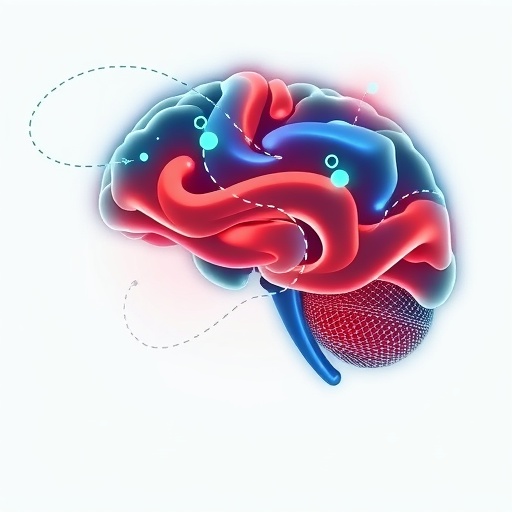
In a groundbreaking study that delves into the neural underpinnings of vocal sound perception, researchers from Eötvös Loránd University’s Department of Ethology have unveiled striking evolutionary parallels in how distantly related mammalian species process vocalizations. This pioneering investigation employed comparative electroencephalography (EEG) to explore the rapid brain responses elicited by conspecific and heterospecific vocal sounds in companion dogs, companion pigs, and humans. Their findings illuminate ancient, conserved brain mechanisms that facilitate the detection and recognition of vocal signals, providing profound insights into the evolutionary biology of communication.
Vocal communication serves as a cornerstone for social interaction and survival among mammals, enabling individuals to distinguish meaningful acoustic signals from background noise and to identify members of their own species. While the behavioral importance of these capacities is well established, the extent to which the neural substrates for voice perception are evolutionarily conserved has remained elusive—particularly across species separated by millions of years of divergent evolution. Addressing this gap, the team from the Neuroethology of Communication Lab designed an auditory paradigm that presented a diverse array of vocal and non-vocal sounds to their subjects.
The experiment encompassed human participants as well as family-owned dogs and pigs, tapping into a rarely studied triad of species that differ substantially in their evolutionary lineage yet share close domesticated bonds with humans. Sounds included species-specific vocalizations such as human sighs and coughs, dog barks, and pig grunts, alongside varied non-vocal sounds like environmental noises. By applying non-invasive EEG electrodes, the researchers continuously recorded the animals’ brain electrical activity, capturing changes with millisecond precision as subjects listened passively and without sedation or extensive training.
Analysis of the EEG data revealed a consistent two-stage neural processing pattern across all species studied. Initial responses occurring within approximately 200 milliseconds following sound onset distinctly differentiated vocalizations, regardless of species identity, from non-vocal sounds. This rapid detection mechanism appears to prioritize sound saliency, emphasizing the biological significance of vocal signals in the auditory environment. Subsequently, a later stage occurring after 300 milliseconds was identified, during which species-specific voice recognition — the ability to categorize sounds as belonging to one’s own species — was manifested, reflecting higher-order cognitive processing.
What makes these findings particularly remarkable is the similarity of these neural response patterns despite the considerable evolutionary distance separating humans, dogs, and pigs—lineages that diverged roughly 90 million years ago. Such conservation suggests that these mechanisms are deeply rooted in mammalian brain architecture, predating the diversification of these species. This shared heritage underscores the fundamental role that vocal communication has played in mammalian sociality across evolutionary time scales.
Interestingly, the study also found that neither the dogs nor the pigs exhibited enhanced brain responses to human vocalizations, even though they live intimately alongside humans and are highly socialized with their owners. This counters hypotheses that domestication may have led to heightened sensitivity to human voices at the neural level. Instead, the observed patterns suggest that voice processing abilities are innate and stable features of mammalian cognition, shaped long before domestication events.
The experimental design’s non-invasive nature and the subjects’ comfort during testing were crucial to obtaining meaningful EEG recordings. The animals’ relaxed engagement in the auditory tasks, neither sedated nor artificially trained, allowed for an authentic measurement of their brain activity in response to ecologically valid stimuli. This methodological strength enhances the reliability of the data and opens new avenues for comparative neuroethological research involving diverse mammalian subjects.
From a technical perspective, the employment of EEG enabled the researchers to capture the temporal dynamics of auditory processing with sub-second resolution, a key advantage for disentangling the rapid neural processes involved in vocal perception. The ability to detect distinct electrophysiological markers corresponding to general vocalization detection and conspecific voice recognition represents a significant step forward in understanding the neural chronology of communication processing.
These insights carry important implications for our comprehension of how complex social communication has evolved in mammals. They help bridge the gap between behavioral observations and neural mechanisms, suggesting that the auditory system’s capacity to parse vocal signals involves hierarchically organized processes conserved across species boundaries. The role of these ancestral mechanisms may extend to influencing social bonding, reproductive behaviors, and ecological adaptations that rely on vocal communication.
Moreover, the study highlights the invaluable contribution of companion animals to neuroscience research. Unlike traditional laboratory species, family dogs and pigs provide a unique vantage point due to their close affiliation with humans and naturalistic living conditions. Their participation in such experiments paves the way for ethically sound investigations that respect animal welfare while yielding highly translational data applicable to human brain function.
The leading investigators emphasize that these findings open exciting prospects for future research probing the extent to which other mammalian species share similar neural architectures for vocal processing. They advocate for expanding cross-species studies to unravel how evolutionary pressures have sculpted brain systems that facilitate social communication, potentially informing biomedical approaches to auditory and communicative disorders in humans.
In sum, this comparative EEG research not only elucidates fundamental biological principles underlying vocalization sensitivity but also serves as a testament to the enduring legacy of evolutionary forces shaping mammalian brains. By focusing on species often overlooked in cognitive neuroscience, the study cultivates a broader understanding of animal communication while reinforcing the interconnectedness of life through shared neural pathways forged over millions of years.
Cite Scienmag News
Cassandra Pierce. (September 4, 2025). Universal brain responses to voices found across mammals. Scienmag. https://scienmag.com/universal-brain-responses-to-voices-found-across-mammals/
Cassandra Pierce. "Universal brain responses to voices found across mammals." Scienmag, 4 September 2025, https://scienmag.com/universal-brain-responses-to-voices-found-across-mammals/. Accessed 3 September 2026.
Cassandra Pierce. "Universal brain responses to voices found across mammals." Scienmag. September 4, 2025. https://scienmag.com/universal-brain-responses-to-voices-found-across-mammals/


