


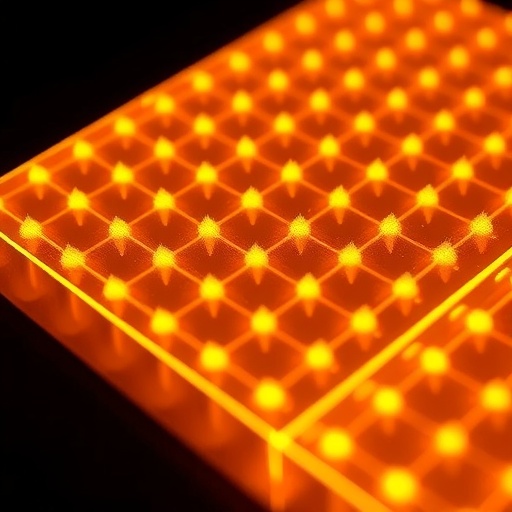
An international group of scientists specializing in photovoltaics has achieved a significant milestone in the quest to industrialize perovskite silicon tandem solar cells. This groundbreaking advancement involves demonstrating that the passivation of the perovskite top cell is feasible when combined with textured silicon bottom cells that feature larger pyramidal structures, which are already recognized as the industry standard for solar cells. The innovative research, conducted by experts from King Abdullah University of Science and Technology (KAUST), the University of Freiburg, and the Fraunhofer Institute for Solar Energy Systems ISE, highlights a series of technological and scientific advances in the passivation process of perovskite top cells, showcasing a pathway to enhance the overall efficiency of these promising solar technologies.
Perovskite silicon tandem solar cells represent a crucial leap forward in photovoltaic technology. They are composed of a perovskite top cell, which is layered atop a silicon bottom cell, a configuration that allows them to achieve significantly higher efficiency than traditional solar cells. As development efforts in silicon solar cells approach their theoretical maximum efficiency of 29.4 percent for converting sunlight into electricity, perovskite-silicon tandems offer an exciting frontier for solar energy conversion, enabling dramatic increases in energy capture potential.
One major advantage of these tandem solar cells is that they can incorporate standard silicon solar cells for the bottom layer, exploiting established manufacturing processes that are already in place. However, the texturing of silicon cells—created to increase the surface area and therefore energy absorption—complicates the deposition of the perovskite layer. Prior efforts to achieve high-quality surface passivation for the perovskite top cell on the pyramid-like textured surfaces had been largely unsuccessful. This research effort arrives as a response to those challenges, aiming to resolve issues that have hindered the full potential of cell performance.
Dr. Oussama Er-Raji, the lead author of the study and a scientist at Fraunhofer ISE, articulated the breakthrough that they achieved: “Thus far, effective passivation had not been fully applied to textured perovskite silicon tandem solar cells, as successful trials were largely restricted to flat-fronted architectures. We have successfully managed outstanding passivation by applying 1,3-diaminopropane dihydroiodide on the uneven surface of the perovskite.” This innovative passivation technique resulted in impressive conversion efficiencies, hitting a remarkable 33.1 percent, with an open-circuit voltage measured at 2.01 volts, further pushing the envelope of what is achievable with solar cell technology.
The implications of these findings extend beyond mere efficiency gains. The researchers found that passivation of the perovskite top cell also improved the overall conductivity of the solar cells, markedly affecting the fill factor—another critical metric of performance. This improvement in conductivity is attributed to a deep field effect induced by the passivation process, contrasting sharply with silicon solar cells, where passivation predominantly influences only the uppermost layers. In the case of perovskite solar cells, however, the treatment positively impacts the entire bulk of the absorber, enhancing its overall material properties and performance trajectory.
The depth of this realization cannot be overstated. According to Prof. Stefaan De Wolf, who holds a dual appointment at KAUST as a Professor of Materials Science and Engineering and Applied Physics, this discovery lays a robust foundation for future research and development in the realm of solar cell technology: “By enhancing our understanding of the processes that occur within the top cell during light conversion into electricity, we can empower scientists to utilize this knowledge to create ever more efficient tandem solar cells.”
In remarks highlighting the necessity of surface passivation in solar cell technology, Prof. Stefan Glunz, a leading figure in photovoltaic energy conversion at the University of Freiburg and presently the Director of the Photovoltaics Division at Fraunhofer ISE, emphasized, “Surface passivation is an essential enhancement, not just a desirable feature. It acts as a critical booster for efficiency and stability.” His insistence on the importance of surface passivation reflects an understanding grounded in practical applications: for silicon solar cells, successful industrial production has heavily relied on the benefits that surface passivation provides. Therefore, it is heartening for the photovoltaic industry to witness that these positive developments in surface treatment will now translate into the domain of perovskite silicon tandem solar cells.
Building on previous initiatives such as the Fraunhofer lighthouse project MaNiTU and the projects named PrEsto and Perle—both of which have received backing from the Federal Ministry for Economic Affairs and Energy—the researchers’ findings are part of a larger tapestry of development in renewable energy technologies. The pioneering efforts here are expected to ripple through the industry, inspiring further innovations and advancements in solar cell production as researchers look for ways to fine-tune and optimize both materials and methods.
This exciting research carries the promise of significantly advancing solar technology in an era where the need for renewable energy sources is more urgent than ever. By overcoming the previous limitations of surface passivation in tandem solar technologies, the discovered methodologies pave the way for scalable production processes that could ultimately make solar energy more accessible and efficient for consumers and industries alike. These efforts aptly highlight humanity’s relentless push toward sustainable energy solutions.
As the work progresses, the implications for global energy consumption and the transition toward greener alternatives become ever clearer. Perovskite silicon tandem solar cells may soon play a pivotal role in meeting the world’s energy demands while also responding to calls for environmentally friendly solutions that can mitigate the adverse effects of climate change. With advancements in efficiency and production methods, these tandem cells may very well set the pace for the next generation of solar energy technologies. Scientists and engineers in this field stand at the forefront of a revolution that will not only reshape energy paradigms but enhance the viability of renewable energy for years to come.
As these researchers continue to explore the depths of what is achievable with perovskite and silicon tandem configurations, the solar industry watches with bated breath. The path to more efficient solar technologies is fraught with complexity, yet with each breakthrough comes renewed optimism for a sustainable energy future. The potential repercussions of this innovative work transcend technical improvements; they might very well be instrumental in ushering in a new era of photovoltaic technologies that redefine how the world harnesses solar energy.
Cite Scienmag News
Denise Maddox. (September 4, 2025). Global Research Team Harnesses Passivation Techniques to Enhance Perovskite-Silicon Tandem Solar Cells. Scienmag. https://scienmag.com/global-research-team-harnesses-passivation-techniques-to-enhance-perovskite-silicon-tandem-solar-cells/
Denise Maddox. "Global Research Team Harnesses Passivation Techniques to Enhance Perovskite-Silicon Tandem Solar Cells." Scienmag, 4 September 2025, https://scienmag.com/global-research-team-harnesses-passivation-techniques-to-enhance-perovskite-silicon-tandem-solar-cells/. Accessed 5 September 2026.
Denise Maddox. "Global Research Team Harnesses Passivation Techniques to Enhance Perovskite-Silicon Tandem Solar Cells." Scienmag. September 4, 2025. https://scienmag.com/global-research-team-harnesses-passivation-techniques-to-enhance-perovskite-silicon-tandem-solar-cells/


