


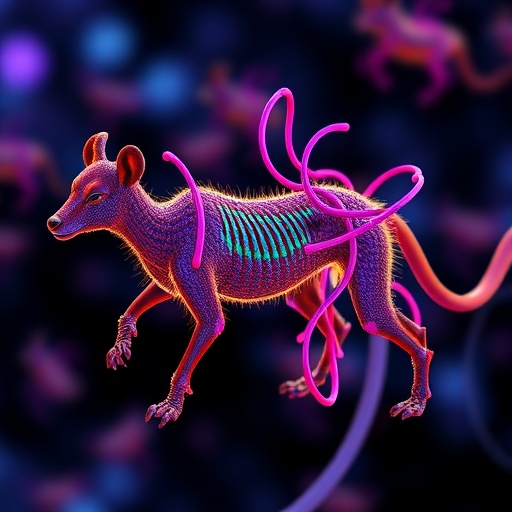
A groundbreaking advance in stem cell research has emerged with the development of a universal culture system capable of deriving and maintaining embryonic stem cells (ESCs) from a broad array of mammalian species. This innovative system, termed 6iL/E4, promises to overcome species-specific limitations that have long hindered cross-species stem cell studies, opening new frontiers in regenerative medicine and developmental biology.
Traditionally, ESC culture methods have been optimized for model organisms like mice, with protocols often failing when applied to other mammals, including humans and livestock. The new 6iL/E4 system circumvents these challenges by finely tuning the cellular environment through a combination of six small-molecule inhibitors (“6i”), leukemia inhibitory factor (LIF), and the addition of the E4 supplement. This synergy ensures the maintenance of pluripotency and self-renewal capabilities across multiple mammalian lineages.
At the heart of the 6iL/E4 medium are the six inhibitors, each targeting key signaling pathways that regulate stem cell differentiation, proliferation, and survival. By inhibiting pathways such as ERK, GSK3, and PKC, the system tightly controls the cellular milieu to maintain cells in a ground-state pluripotent condition. The LIF element provides additional support by activating the JAK/STAT pathway, essential for self-renewal, while the E4 component supplies crucial growth factors and nutrients, further refining the culture conditions.
This universal platform was rigorously tested on embryonic stem cells derived from a spectrum of mammalian species, including rodents, primates, and ungulates. Remarkably, ESCs cultured in 6iL/E4 retained hallmark features of pluripotency, expressed typical stem cell markers, and displayed robust proliferation over extended periods. The researchers also demonstrated that these cells retained full developmental potential, laying the groundwork for species-transcending applications.
The implications of this breakthrough are vast. By providing a standardized culture environment, 6iL/E4 facilitates comparative studies of embryonic development and evolutionary biology. Moreover, it accelerates the advent of personalized regenerative therapies across different species, including endangered animals and agricultural mammals. The universal nature of the system could simplify stem cell banking and genetic engineering efforts, drastically reducing costs and variability.
Furthermore, 6iL/E4 promises to streamline drug discovery and toxicity testing by enabling the cultivation of physiologically relevant ESCs from various species, broadening the scope of translational research without relying exclusively on human samples. This universality may also enhance the reproducibility of experiments, a critical factor for clinical translation.
While the 6iL/E4 culture system represents a significant leap forward, the study’s authors highlight the need for further research to optimize the medium for later stages of differentiation specific to each species. Understanding the nuanced developmental cues remains paramount to fully harnessing the potential of cross-species stem cell applications.
In sum, the emergence of 6iL/E4 heralds a new era where the challenges of species-specific pluripotency maintenance are addressed by a single, robust culture medium. This advancement not only enriches fundamental biological understanding but also sets the stage for transformative applications in medicine, agriculture, and conservation.
Cite Scienmag News
Drew Townsend. (July 13, 2026). Universal 6iL/E4 System Enables Stem Cell Growth Across Mammals. Scienmag. https://scienmag.com/universal-6il-e4-system-enables-stem-cell-growth-across-mammals/
Drew Townsend. "Universal 6iL/E4 System Enables Stem Cell Growth Across Mammals." Scienmag, 13 July 2026, https://scienmag.com/universal-6il-e4-system-enables-stem-cell-growth-across-mammals/. Accessed 4 September 2026.
Drew Townsend. "Universal 6iL/E4 System Enables Stem Cell Growth Across Mammals." Scienmag. July 13, 2026. https://scienmag.com/universal-6il-e4-system-enables-stem-cell-growth-across-mammals/


