


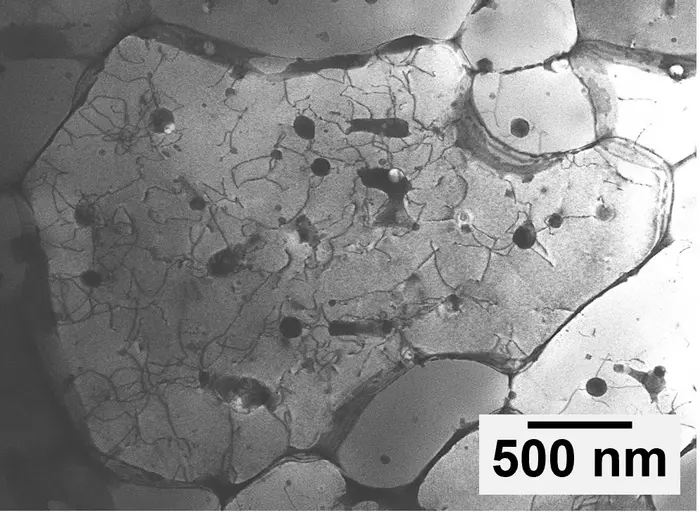
Andrew Iams, a materials research engineer at the National Institute of Standards and Technology (NIST), encountered a remarkable phenomenon while investigating a new aluminum alloy using an electron microscope. As he scrutinized the material at an atomic level, he discerned an unconventional atomic arrangement that suggested the presence of quasicrystals. This prompted a wave of excitement, as quasicrystals are renowned for their unique properties and potential applications. Iams’s observation was not merely a matter of aesthetic curiosity; rather, it has profound implications for the field of materials science and engineering, particularly regarding the development of stronger and more resilient metals.
The discovery of quasicrystals within this aluminum alloy marked a significant breakthrough in understanding how structural defects can enhance material strength. The findings were subsequently published in the “Journal of Alloys and Compounds,” offering a detailed account of their research process and results. The strength of materials is critical, especially in high-demand applications like aerospace and automotive engineering. Understanding the microstructural makeup of this aluminum alloy formed under the extreme conditions of metal 3D printing presents revolutionary possibilities for engineered parts such as aircraft components, heat exchangers, and car chassis.
Metal 3D printing represents a cutting-edge method for manufacturing components with exceptional geometries that would be challenging or impossible to achieve through traditional techniques. This process, particularly powder bed fusion, allows for layers of metal powder to be melted and fused together by a high-powered laser. Each layer is meticulously applied, transforming the powder into solid structures, thereby facilitating intricate designs that conventional manufacturing methods cannot produce. GE’s innovative fuel nozzle, which employs this technology, is a perfect example of the advantages of 3D printing in creating streamlined and lightweight components.
However, the successful application of metal 3D printing has historically been limited to a select group of metals. One of the major challenges in this area is that high-strength aluminum alloys often suffer from cracking during the printing process, rendering them unusable. NIST researchers aimed to delve into an aluminum-zirconium alloy that had shown promise in being 3D printed successfully without cracking issues—a pivotal step in expanding the range of materials suitable for additive manufacturing.
Traditional aluminum melts at around 700 degrees Celsius, yet the temperatures required for 3D printing exceed 2,470 degrees Celsius, which can significantly alter the characteristics of the material being printed. This raises questions about the metal’s thermal stability and structural integrity. Consequently, researchers like those at HRL Laboratories and UC Santa Barbara discovered that introducing zirconium could help mitigate these issues, leading to a stronger, more reliable aluminum alloy for 3D printing.
Iams and his colleagues sought to dissect the microstructural features of this newly developed alloy on an atomic scale. Their goal was to uncover the underlying mechanisms that allow quasicrystals to enhance the alloy’s strength. Their research culminated in the realization that quasicrystals disrupt the uniform crystalline pattern found in traditional metals, thus creating defects that bolster the overall strength and durability of the metal. This revolutionary insight not only highlights the unique properties of quasicrystalline structures but also paves the way for the intentional design of future alloys to incorporate quasicrystals for enhanced performance.
Using sophisticated imaging techniques, Iams examined the crystals’ symmetry from various angles, discovering that they exhibited fivefold rotational symmetry—a significant hallmark of quasicrystals. Evidence of threefold and twofold symmetry from different positional angles further confirmed their existence, providing a comprehensive understanding of these unique materials. Prior to this discovery, the scientific community held a narrow view of crystallography, constrained by traditional definitions, yet Iams’s findings challenge and expand those boundaries.
This groundbreaking research underscores the matrix of possibilities that quasicrystals offer in the realm of materials science. By validating the role of quasicrystals in enhancing aluminum alloy strength, the NIST team has set a precedent that could ignite a wave of innovation in alloy design. Future research may focus on tailoring quasicrystals for specific applications, optimizing their properties to meet the demands of an evolving technological landscape.
As the field of materials science continues to intersect with advanced manufacturing techniques like 3D printing, the knowledge derived from this study may significantly influence the design and production of stronger, lighter, and more efficient materials across various industries. The commitment to understanding atomic structures not only illuminates the mysteries of the materials we work with but also informs the engineering solutions that society needs for the future.
In conclusion, Andrew Iams and his team at NIST have opened up a new chapter in the exploration of materials science, reaffirming the potential of quasicrystals within aluminum alloys. Their findings encourage a reevaluation of how we understand material strength and the intricate details that contribute to enhancing performance. As research in this area progresses, the implications could resonate through various sectors, fundamentally transforming how components are manufactured and leading to innovations that couple performance with sustainability.
Keywords
Quasicrystals, Additive manufacturing, Alloys, Symmetry, Nobel prizes, Electron microscopy
Cite Scienmag News
Denise Maddox. (April 7, 2025). Unique Crystal Structure Discovered to Enhance Strength in 3D-Printed Metals. Scienmag. https://scienmag.com/unique-crystal-structure-discovered-to-enhance-strength-in-3d-printed-metals/
Denise Maddox. "Unique Crystal Structure Discovered to Enhance Strength in 3D-Printed Metals." Scienmag, 7 April 2025, https://scienmag.com/unique-crystal-structure-discovered-to-enhance-strength-in-3d-printed-metals/. Accessed 6 September 2026.
Denise Maddox. "Unique Crystal Structure Discovered to Enhance Strength in 3D-Printed Metals." Scienmag. April 7, 2025. https://scienmag.com/unique-crystal-structure-discovered-to-enhance-strength-in-3d-printed-metals/


