


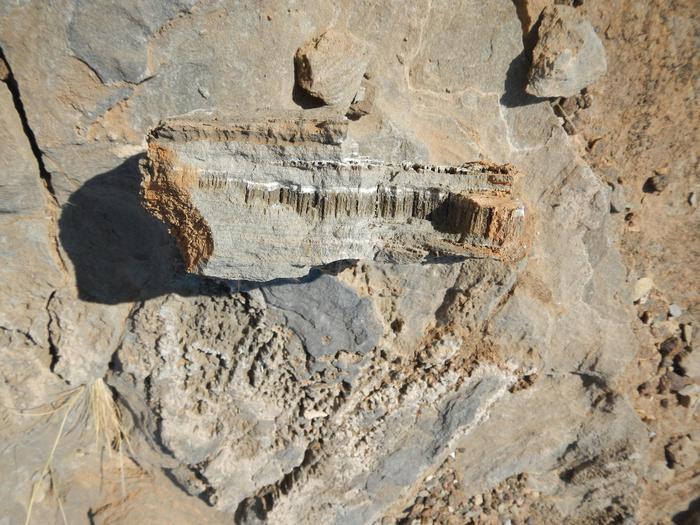
In the arid landscapes of Namibia, Oman, and Saudi Arabia, researchers have stumbled upon an intriguing phenomenon that suggests the presence of unknown ancient microbiological life forms. This discovery centers on micro-burrows—small, parallel tubes that extend through marble and limestone, which scientists believe could be remnants of microbial activity rather than the results of geological processes. This finding has sparked interest among geologists and microbiologists as it leads to potential revelations concerning the origins of life and the geological history of our planet.
Professor Cees Passchier from Johannes Gutenberg University Mainz has been at the forefront of this research for over two decades, focusing on the geological formations of these regions. His practice involves examining the structures found within ancient rocks to piece together the history of Earth’s supercontinent Gondwana, which existed around 500 to 600 million years ago. Recent fieldwork revealed features that were entirely unexpected: tubes measuring just half a millimeter in width yet extending up to three centimeters in length, all aligned in neat, parallel patterns. These structures were particularly noticeable against the backdrop of expected geological erosion surfaces, revealing a narrative of life instead of simply a story of geological processes.
Initial observations of these micro-burrows were made approximately 15 years ago, which led to ongoing investigations conducted by Passchier and his colleagues—including Dr. Trudy Wassenaar, a noteworthy figure in microbial genomics. Their studies indicate that the origins of these tubes point towards the activity of microorganisms that bored through the rock, presumably seeking essential nutrients contained within the calcium carbonate, a primary component of marble. As these organisms excavated the material, they left behind a fine powder of calcium carbonate, solidifying evidence of their existence and biological activity.
The geological context of this discovery is particularly fascinating. Studies suggest that the environments in which these structures formed were likely different from the contemporary arid climates present in the desert today. Passchier speculates that these microorganisms thrived during a time when conditions were more humid, and as climate shifts occurred, these organisms may have become extinct or retreated to other habitats. This theory raises significant questions about the adaptability and survival mechanisms of ancient life forms.
Undoubtedly, the discovery of endolithic microorganisms—organisms that dwell within the pores and cavities of rock—poses intriguing questions for the scientific community. These microorganisms are remarkably resourceful, capable of extracting energy and nutrients directly from the mineral-rich substrates in which they reside. Notably, the newly identified tubes do not contain recognizable DNA or proteins, intensifying the mystery surrounding their origin. The researchers are confronted with a dilemma: Are these organisms previously undiscovered species, or are they related to known forms of life?
The quest to decode these enigmatic tubes and their creators has implications that extend beyond academic interest. Microbial activity within rocks could hold secrets about the global carbon cycle, a critical element in managing Earth’s climate. Understanding how these microorganisms influence carbon release could have profound implications for climate science and global ecological health. As microorganisms are pivotal in regulating the equilibrium of atmospheric CO2 levels, further findings in this domain could translate to broader applications in climate modeling and environmental conservation.
Beyond implications for understanding past climates, the investigation into these endolithic microorganisms could also unveil new pathways for scientific exploration and discovery in extremophile biology. Extremophiles, or organisms thriving in perilous conditions, are often studied for traits that may illuminate survival in inhospitable environments, including those on other planets. Given the recent excitement about the potential for life beyond Earth, studies that pioneer our understanding of ancient microbial life on our own planet are not just relevant to Earth’s history but resonate with questions about extraterrestrial biology.
As the body of research surrounding these micro-burrows continues to grow, Passchier and his team carry hopes that collaboration with specialists in microbiology will yield substantial insights into the organism responsible for these structures. They believe these inquiries could benefit not only geological science but also the emerging field of astrobiology—a fusion of geology with the exploration of life beyond terrestrial bounds.
Recent research findings have been compiled and published in the Geomicrobiology Journal, emphasizing the ongoing commitment of the scientific community to unravel the secrets of our planet’s geological and biological history. Published under the title “Subfossil Fracture-Related Euendolithic Micro-burrows in Marble and Limestone,” the article aims to reach those invested in both geology and microbiology, creating a bridge between two realms of exploration that can illuminate deeper truths about life and the planet’s future.
In summary, this remarkable encounter with micro-burrows unveils not just a fascinating aspect of geology but also beckons further inquiries into the life forms that may have sculpted them. As research continues, it remains to be seen how these discoveries will reshape our understanding of life on Earth—both past and potentially future.
Cite Scienmag News
Violet Maxwell. (March 19, 2025). Unidentified Microorganisms Found Thriving in Marble and Limestone Environments. Scienmag. https://scienmag.com/unidentified-microorganisms-found-thriving-in-marble-and-limestone-environments/
Violet Maxwell. "Unidentified Microorganisms Found Thriving in Marble and Limestone Environments." Scienmag, 19 March 2025, https://scienmag.com/unidentified-microorganisms-found-thriving-in-marble-and-limestone-environments/. Accessed 3 September 2026.
Violet Maxwell. "Unidentified Microorganisms Found Thriving in Marble and Limestone Environments." Scienmag. March 19, 2025. https://scienmag.com/unidentified-microorganisms-found-thriving-in-marble-and-limestone-environments/


