


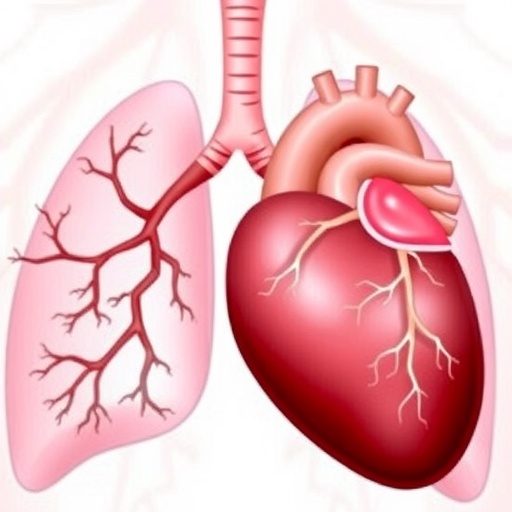
In a groundbreaking revelation that challenges long-held beliefs in organ transplantation, researchers at Washington University School of Medicine in St. Louis have identified the disruption of lymphatic vessels, rather than the recipient’s immune response, as a pivotal trigger for chronic rejection in transplanted lungs and hearts. Chronic rejection, a complex pathological condition marked by fibrosis and eventual organ failure often appearing years after transplantation, has historically been attributed solely to the immune system’s attack on foreign tissue. However, this pioneering study elucidates a novel, immune-independent pathway that fundamentally reshapes our understanding of post-transplant fibrosis.
Central to this discovery is the lymphatic system, an intricate network of vessels responsible for draining interstitial fluid, immune cells, and metabolic waste from tissues. Unlike blood vessels, lymphatic vessels in donor organs are not surgically reconnected during transplantation because their microscopic nature renders them nearly invisible to surgeons. This unavoidable lymphatic disruption creates a critical two-to-three-week window post-transplantation during which lymphatic drainage is profoundly impaired. The consequence is a detrimental accumulation of hyaluronan—a complex sugar molecule—within the transplanted tissue, fostering a microenvironment conducive to fibrosis and organ degradation.
Dr. Daniel Kreisel, the senior author of the study and an esteemed surgeon-scientist at WashU Medicine, emphasizes the significance of this work. He explains that despite aggressive immunosuppression therapies designed to curb rejection, many transplant patients experience chronic organ failure, underscoring the limitations of targeting immune responses alone. This research illuminates an alternative mechanism where mechanical lymphatic disruption induces pathological fibrosis independently of immunological factors, thereby opening avenues for therapeutic interventions beyond immunosuppression.
The investigative team utilized both human organ samples from patients undergoing retransplantation due to chronic rejection and genetically identical mouse models to eliminate confounding immune variables. In these syngeneic mouse models—where donor and recipient tissues are genetically identical and thus immunologically compatible—the hallmark fibrosis and hyaluronan accumulation persisted, providing unequivocal evidence that the fibrotic process is driven by lymphatic impairment rather than immune-mediated rejection. This revelation challenges decades of dogma and directs scientific focus towards lymphatic repair and modulation as pivotal in transplant longevity.
Further molecular characterization revealed that the pathological fibrosis correlates tightly with hyaluronan deposition within lymphatic vessel-rich zones of the transplanted organ. Hyaluronan, a glycosaminoglycan crucial in normal wound healing and tissue hydration, becomes deleterious when accumulated excessively. Its buildup, prompted by clogged or nonfunctional lymphatic vessels, initiates a cascade involving interleukin-1 (IL-1) signaling, which promotes fibroblast activation and extracellular matrix overproduction, hallmark features of fibrotic tissue remodeling. This IL-1-mediated pathway underscores the molecular basis through which lymphatic dysfunction translates into structural organ failure.
In exploring potential therapeutic strategies, the researchers identified three promising approaches to mitigate hyaluronan accumulation and preserve organ function. The first involves the use of 4-methylumbelliferone (4-MU), a hyaluronan synthesis inhibitor, which effectively prevented hyaluronan buildup in mouse lung transplants. This compound, already approved for biliary disorders in Europe and Asia with a robust safety profile, presents an attractive candidate for repurposing in transplantation medicine. The second strategy promotes lymphangiogenesis—the growth of new lymphatic vessels—thereby restoring effective drainage and preventing hyaluronan accumulation. The third intervention targets the IL-1 signaling axis, blocking the fibrotic signal cascade at its origin, but it requires precise cell-type targeting to avoid systemic side effects.
Notably, these therapeutic avenues could revolutionize transplant medicine by shifting the paradigm from lifelong immunosuppression to transient, targeted lymphatic therapies administered either to patients post-transplant or directly to stored donor organs prior to transplantation. This latter approach, involving organ perfusion with lymphatic-promoting agents during storage, could preemptively mitigate the fibrogenic process at its inception, potentially shortening or eliminating the need for chronic immunosuppression and its associated complications.
Collaboration was crucial to the success of this study, with experts across immunology, pathology, and surgery contributing their unique expertise. Co-author Dr. Gwendalyn J. Randolph lent her profound knowledge of lymphatic biology, while Dr. Kory J. Lavine provided cardiological and heart transplant insights. Additionally, advanced microsurgical techniques for murine lung and heart transplantation refined by Dr. Wenjun Li enabled the precise modeling of lymphatic disruption. Together, this multidisciplinary approach fortified the study’s rigorous exploration of the lymphatic system’s role in transplant fibrosis.
The implications of these findings are profound, as lymphatic vessels pervade all organs, suggesting that this mechanism may underlie chronic rejection beyond lungs and hearts, potentially affecting kidney, liver, and other transplants. Addressing lymphatic dysfunction may, therefore, represent a universal strategy in organ transplantation. Future clinical translation will focus on optimizing dosing, delivery, and safety of 4-MU and other modalities, along with developing biomarkers to monitor lymphatic function and hyaluronan levels in transplant recipients.
Additionally, this research invites a broader reconsideration of fibrosis in other medical contexts where lymphatic impairment may play an unappreciated role, including chronic inflammatory diseases and cancer metastasis. The linkage of IL-1 signaling to hyaluronan accumulation further connects fibrosis with the immune system’s regulatory networks, offering multifaceted therapeutic targets.
Dr. Hailey Shepherd, the study’s first author, underscores that this investigation not only unravels the fundamental biology governing transplant fibrosis but also highlights a vulnerable therapeutic window following transplantation when interventions to restore lymphatic drainage can have maximal impact. The timing and precision of these treatments will be essential to prevent irreversible tissue scarring and preserve transplanted organ function long-term.
While immunosuppressive medications remain indispensable to prevent acute rejection, this landmark study reveals that combating chronic rejection requires an integrative approach encompassing immune modulation and lymphatic system restoration. If successfully translated to clinical practice, these innovations hold the potential to dramatically improve transplant outcomes, reduce morbidity, and extend patient survival, heralding a new era in the management of organ transplantation.
News Publication Date: 25-Feb-2026
Web References:
https://doi.org/10.1126/scitranslmed.adu0358
References:
Shepherd HM, Li W, Kopecky BJ, Terada Y, Liu CR, Liu Z, Lee DD, Mineura K, Dun H, Yokoyama Y, Wong BW, Kurtoglu GK, Amrute JM, Scozzi D, Bai YZ, Bery AI, Bernadt CT, Ritter JH, Brody SL, Byers DE, Krupnick AS, Nava RG, Patterson GA, Puri V, Gelman AE, Lavine KJ, Randolph GJ, Kreisel D. Lymphatic disruption drives lung transplant fibrosis through interleukin-1-mediated hyaluronan accumulation. Science Translational Medicine. Feb. 25, 2026. DOI: 10.1126/scitranslmed.adu0358
Cite Scienmag News
Ophelia Keating. (February 26, 2026). Unexpected Factor Behind Chronic Rejection in Lung and Heart Transplants Uncovered. Scienmag. https://scienmag.com/unexpected-factor-behind-chronic-rejection-in-lung-and-heart-transplants-uncovered/
Ophelia Keating. "Unexpected Factor Behind Chronic Rejection in Lung and Heart Transplants Uncovered." Scienmag, 26 February 2026, https://scienmag.com/unexpected-factor-behind-chronic-rejection-in-lung-and-heart-transplants-uncovered/. Accessed 3 September 2026.
Ophelia Keating. "Unexpected Factor Behind Chronic Rejection in Lung and Heart Transplants Uncovered." Scienmag. February 26, 2026. https://scienmag.com/unexpected-factor-behind-chronic-rejection-in-lung-and-heart-transplants-uncovered/


