


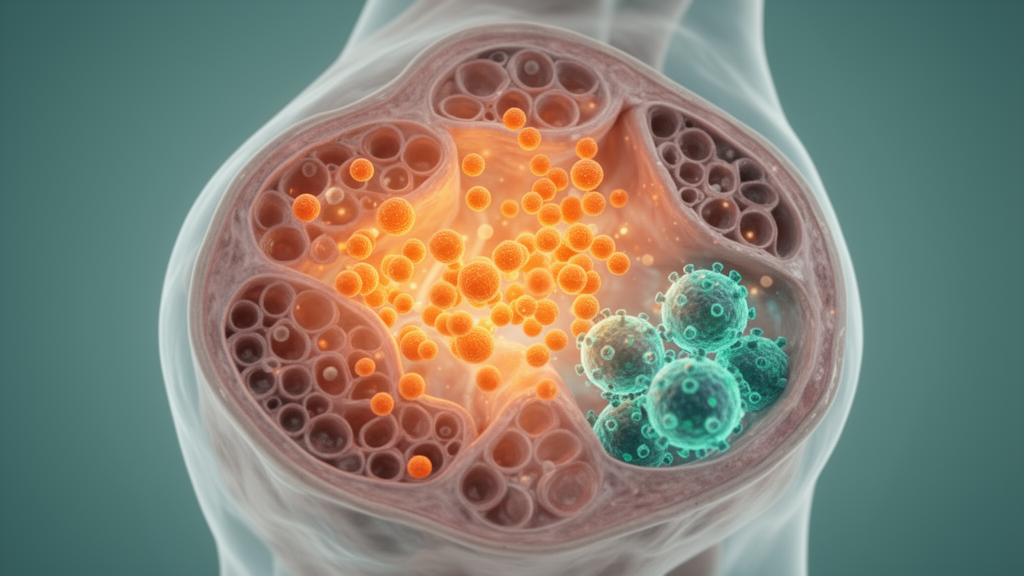
A combination of just two antiretroviral drugs appears to penetrate deep into the lymph nodes where HIV hides, according to a randomized clinical trial that used cutting-edge imaging to map exactly where the medications travel inside the body. The findings, published in Nature Communications, offer some of the most direct spatial evidence yet that a simplified two-drug regimen can exert antiviral pressure in the anatomical sanctuaries that matter most for long-term viral persistence.
The study, known as DUALITY, examined first-line therapy with dolutegravir and lamivudine, a two-drug combination that has become a recommended starting regimen for people living with HIV-1. Traditional antiretroviral therapy typically relies on three drugs from at least two classes, but dolutegravir, a potent integrase strand transfer inhibitor, has such a high genetic barrier to resistance that researchers have increasingly tested whether pairing it with the nucleoside reverse transcriptase inhibitor lamivudine could maintain full viral suppression while halving drug exposure. The approach has already proven effective at suppressing virus in the blood, but a critical question lingered: would two drugs maintain adequate concentrations in lymphoid tissue, where HIV establishes its most stubborn reservoirs?
Lymph nodes are not merely passive filters; they are the architectural hubs of the immune system, densely packed with CD4-positive T cells, the preferred targets of HIV. During untreated infection, these tissues become sites of explosive viral replication and profound structural damage. Even after years of suppressive therapy, when blood tests show no detectable virus, lymphoid tissues can harbor infected cells carrying transcriptionally silent proviral DNA. These reservoirs are the principal obstacle to any cure, and they have long raised concerns that reduced-drug regimens might leave pockets of residual replication unaddressed in tissue compartments where drug penetration could be weaker than in blood.
To address that concern, the DUALITY investigators randomized participants to initiate either the two-drug dolutegravir-lamivudine regimen or a standard dolutegravir-based triple therapy. The trial’s prespecified primary endpoint, the change in proviral HIV-1 DNA in peripheral blood CD4-positive T cells from baseline to week 48, was similar between the two groups, reinforcing earlier evidence that the simplified regimen performs comparably to conventional triple therapy in suppressing the measurable blood reservoir. But the blood is only part of the story, and the team designed a series of secondary analyses to look inside the tissues themselves.
Thirty-nine participants underwent surgical excision of an inguinal lymph node, either at the start of treatment or during the first year of therapy. These tissue samples became the foundation for a remarkably detailed multimodal imaging campaign. Using DNAscope and RNAscope, in situ hybridization techniques that can detect individual HIV-1 DNA and RNA molecules within intact tissue sections, the researchers visualized infected cells directly in their anatomical context. In parallel, they applied mass spectrometry imaging, a technology that maps the spatial distribution of small molecules across a tissue section pixel by pixel, to chart exactly where dolutegravir and lamivudine, along with other antiretrovirals, accumulated within the same lymph node specimens.
The results were striking on both fronts. First, HIV-1-infected cells declined rapidly after treatment initiation across both treatment groups, indicating that the two-drug regimen suppressed viral replication in lymphoid tissue just as effectively as triple therapy. Second, and perhaps more importantly for the field, the mass spectrometry imaging showed that antiretrovirals were widely detected within lymph node tissue regions containing HIV-positive cells or directly adjacent to them. In other words, the drugs were not merely present in the tissue in bulk; they were reaching the very neighborhoods where the virus persists, extending the picture of pharmacological coverage from the bloodstream into a key anatomical reservoir.
This spatial evidence matters because pharmacological sanctuary sites have been a persistent worry in HIV therapy design. Tissue penetration varies substantially among antiretroviral drugs, influenced by factors such as protein binding, molecular size, and active transport mechanisms at tissue barriers. If a two-drug regimen failed to achieve effective concentrations in lymphoid tissue, low-level residual replication could theoretically continue unnoticed, gradually replenishing the reservoir and eroding the durability of suppression. The DUALITY imaging data argue against that scenario for dolutegravir and lamivudine, showing co-localization of drug signal and viral signal within the same tissue microenvironments.
The technical achievement underlying these conclusions should not be understated. Detecting HIV-1 DNA and RNA by in situ hybridization in suppressed patients is analytically demanding, because infected cells are rare and the viral signal is faint. Mass spectrometry imaging of antiretrovirals in human tissue is similarly specialized, requiring careful method validation to distinguish true drug signal from background. By combining these modalities on the same lymph node sections, the research team, which spanned institutions including the University of North Carolina at Chapel Hill, Oregon Health and Science University, and the Germans Trias i Pujol research community in Badalona, Spain, could align viral geography with drug geography at a resolution that bulk tissue homogenization could never provide.
The trial was sponsored by Fundació Lluita contra les Infeccions and funded by ViiV Healthcare and the National Institutes of Health, with the academic investigator team retaining responsibility for study design, data analysis, and interpretation. As an open-label randomized study, it carries the usual caveats of unblinded design, and the number of lymph node excisions, while substantial for this kind of invasive tissue sampling, remains modest. The authors also note that the published version was shared early to accelerate access to the peer-reviewed findings. Nonetheless, the convergence of the primary blood-based endpoint and the tissue-level imaging results presents a coherent picture of two-drug therapy performing robustly across compartments.
For clinicians and patients, the findings add mechanistic reassurance to a regimen already validated by large outcome trials: dolutegravir plus lamivudine does not appear to leave the lymph nodes under-protected. For cure researchers, the study demonstrates a template for evaluating future interventions, whether simplified regimens, long-acting formulations, or reservoir-purging strategies, by directly measuring whether drugs and viral targets overlap in tissue. As the search for strategies that might eventually shrink or eliminate the HIV reservoir continues, knowing that first-line two-drug therapy reaches the cells it needs to reach is a meaningful step forward in ensuring that simplification does not come at the cost of silent viral persistence.
Subject of Research: Lymph node penetration of two-drug dolutegravir/lamivudine HIV-1 therapy and its effect on the viral reservoir
Article Title: First-line dolutegravir/lamivudine in HIV-1 infection: lymph node penetration and reservoir decline in a randomized open-label clinical trial
Article References: Rosen, E. P., Bondoc, S., Bailón, L., Blay, L., Caballero, A., García-Guerrero, M. C., Puertas, M. C., Moraes-Cardoso, I., Vazquez-Escobales, A., Blanco, J., Mothe, B., Kashuba, A. D., Estes, J. D., Martinez-Picado, J., Molto, J., On behalf of the DUALITY study group, Rosen, E. P., Bondoc, S., Bailón, L., … White, N. (2026). First-line dolutegravir/lamivudine in HIV-1 infection: lymph node penetration and reservoir decline in a randomized open-label clinical trial. Nature Communications. https://doi.org/10.1038/s41467-026-78190-9
Image Credits: AI Generated
DOI: 10.1038/s41467-026-78190-9
Keywords: HIV-1, dolutegravir, lamivudine, lymph nodes, viral reservoir, antiretroviral therapy, clinical trial, mass spectrometry imaging, DNAscope, RNAscope, proviral DNA, two-drug regimen
Cite Scienmag News
Ophelia Keating. (October 18, 2026). Two-Drug HIV Therapy Reaches Lymph Node Reservoirs, Trial Imaging Shows. Scienmag. https://scienmag.com/two-drug-hiv-therapy-reaches-lymph-node-reservoirs-trial-imaging-shows/
Ophelia Keating. "Two-Drug HIV Therapy Reaches Lymph Node Reservoirs, Trial Imaging Shows." Scienmag, 18 October 2026, https://scienmag.com/two-drug-hiv-therapy-reaches-lymph-node-reservoirs-trial-imaging-shows/. Accessed 18 October 2026.
Ophelia Keating. "Two-Drug HIV Therapy Reaches Lymph Node Reservoirs, Trial Imaging Shows." Scienmag. October 18, 2026. https://scienmag.com/two-drug-hiv-therapy-reaches-lymph-node-reservoirs-trial-imaging-shows/


