


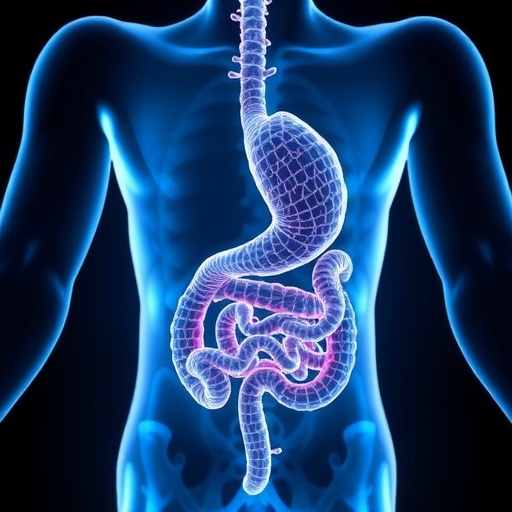
Rice straw, sugarcane bagasse and pineapple peels are usually treated as bulky agricultural leftovers, burned, composted or discarded. A new study suggests that these materials could instead become ingredients for the next generation of gut-health products. Researchers in India have extracted xylan, a plant cell-wall carbohydrate, from all three waste streams and converted it into xylooligosaccharides, or XOS—short chains of sugar molecules that beneficial microbes can use as food. In laboratory fermentation tests, the resulting compounds supported the growth of lactic acid bacteria and triggered production of several short-chain fatty acids, chemical products widely associated with microbial activity in the intestine. The work points to a possible circular-economy pathway in which crop residues are transformed into functional food or nutraceutical ingredients rather than becoming an environmental burden.
The study, led by Sabeela Beevi Ummalyma and colleagues at Rajagiri College of Social Sciences and the Indian Institute of Technology Guwahati, focuses on xylan because it is both abundant and chemically versatile. Xylan is a hemicellulose, a family of polysaccharides that occupies the space between cellulose fibers and lignin in plant tissues. Whereas cellulose consists largely of repeating glucose units, xylan is built mainly from xylose sugars and may carry side groups containing arabinose, acetyl or uronic acids. Its molecular structure varies according to the plant source, which affects how easily it can be extracted and broken down. Xylan is biodegradable and considered non-toxic, but humans do not efficiently digest many of its bonds. That makes it a candidate prebiotic: a compound that passes through the upper digestive tract and can be selectively metabolized by microorganisms in the colon.
The researchers compared three common agro-industrial materials with different chemical profiles. Pineapple peel contained the highest reported proportion of hemicellulose, at about 30 percent, while rice straw produced the highest xylan extraction yield, reported as 83 percent. Sugarcane bagasse, the fibrous residue left after juice is removed from sugarcane, was also investigated as a source of the polymer. These differences matter because biomass is not chemically uniform. A high hemicellulose content does not necessarily translate directly into the greatest recoverable xylan yield: cellulose, lignin, mineral content, particle structure and the accessibility of plant-cell-wall polymers can all influence processing. In practical terms, the findings suggest that pineapple waste may offer a rich raw material, while rice straw may be especially favorable for recovering xylan under the conditions tested.
Once isolated, xylan can be hydrolyzed—split by water-assisted chemical or enzymatic reactions—into smaller molecules. The study examined xylan hydrolysates containing XOS, whose chains are shorter than the original polymer. Their size and branching are important. Large xylan molecules may be difficult for microbes to transport into cells, whereas oligosaccharides can be taken up or cleaved by microbial enzymes more readily. In the gut, different bacteria possess different carbohydrate-active enzymes, so the precise pattern of xylose linkages and side groups can determine which organisms benefit. XOS are therefore not simply generic sugars. Their potential lies in being more selectively available to certain microorganisms than readily absorbed sugars such as glucose, which are usually consumed earlier in digestion and may not reach the colon in substantial quantities.
The team used Fourier-transform infrared spectroscopy, or FTIR, to examine the chemical signatures of the extracted material. FTIR works by measuring how a sample absorbs infrared radiation at frequencies associated with vibrations of particular chemical bonds. The extracted xylan displayed characteristic functional groups similar to those found in xylo-arabinoside structures, supporting the conclusion that the recovered material contained a xylan-related hemicellulose rather than being an unidentified mixture of plant compounds. The researchers also used scanning electron microscopy to inspect the material’s surface. The images showed aggregated particles with irregular morphologies, spherical forms and rough surfaces. Such physical features can influence how water and enzymes contact the substrate, potentially affecting hydrolysis and the accessibility of carbohydrate chains to fermenting microorganisms.
The most biologically striking results came from fermentation experiments with lactic acid bacteria. When the bacteria were grown with the xylan hydrolysate, the medium’s pH fell to 4.2, a sign that the organisms were metabolizing available carbohydrates and releasing acidic products. The researchers reported the strongest growth and highest short-chain volatile fatty acid production when probiotic microorganisms were supplied with the xylan-derived materials. Acetic acid reached 118.7 millimoles per millilitre as reported in the study, while propionic acid was measured at 62–74 millimoles per millilitre and lactic acid at 8.8 millimoles per millilitre. Although the units and concentration basis will require careful interpretation when comparing these values with other fermentation studies, the overall pattern indicates active microbial conversion of the plant-derived carbohydrates.
Short-chain fatty acids are among the key chemical links between diet and the gut microbiome. Acetate, propionate and butyrate are produced when bacteria ferment carbohydrates that escape digestion in the small intestine. They can serve as energy sources for intestinal cells, influence the acidity of the colon and affect microbial competition. Propionate and acetate can also enter circulation and participate in broader metabolic signaling. But the presence of an individual fatty acid in a test tube does not automatically demonstrate a health benefit in humans. Concentration, absorption, bacterial species, diet, host physiology and the balance of metabolites all matter. The current study therefore demonstrates prebiotic potential under controlled laboratory conditions, not a proven treatment for digestive disease or evidence that a supplement made from these materials will improve health in people.
The findings nevertheless fit into a rapidly expanding effort to turn lignocellulosic waste into higher-value products. Agricultural residues are attractive feedstocks because they are renewable, widely available and often generated close to processing facilities. Converting them into XOS could create value without requiring additional cropland, while reducing pressure to burn or dump waste. A commercial process would still need to address major engineering and safety questions, including consistent feedstock composition, energy and water use, removal of lignin-derived contaminants, purification, taste, storage stability and regulatory approval. It would also need to establish how the resulting XOS behave in real foods and whether they selectively support beneficial microbes in complex human gut communities rather than simply promoting fermentation in general.
The researchers describe the extracted xylan and its hydrolysates as promising candidates for prebiotic nutraceuticals, food, feed and pharmaceutical applications. Their results provide a biochemical proof of concept: crop residues can yield a defined class of plant polymers, those polymers can be converted into shorter carbohydrate chains, and lactic acid bacteria can use the products while generating organic acids. The next step is to move beyond flask-based fermentation toward detailed compositional analysis, microbial-community studies, animal work and controlled human trials. If those investigations confirm safety, efficacy and reliable production, the humble leftovers of rice, sugarcane and pineapple could become raw materials for microbiome-focused products—linking waste reduction with the growing global demand for foods that nourish the organisms living inside us.
Cite Scienmag News
Alan Morgan. (August 27, 2026). Turning Agro-Waste into Xylan Prebiotics Could Boost Gut Health. Scienmag. https://scienmag.com/turning-agro-waste-into-xylan-prebiotics-could-boost-gut-health/
Alan Morgan. "Turning Agro-Waste into Xylan Prebiotics Could Boost Gut Health." Scienmag, 27 August 2026, https://scienmag.com/turning-agro-waste-into-xylan-prebiotics-could-boost-gut-health/. Accessed 3 September 2026.
Alan Morgan. "Turning Agro-Waste into Xylan Prebiotics Could Boost Gut Health." Scienmag. August 27, 2026. https://scienmag.com/turning-agro-waste-into-xylan-prebiotics-could-boost-gut-health/


