


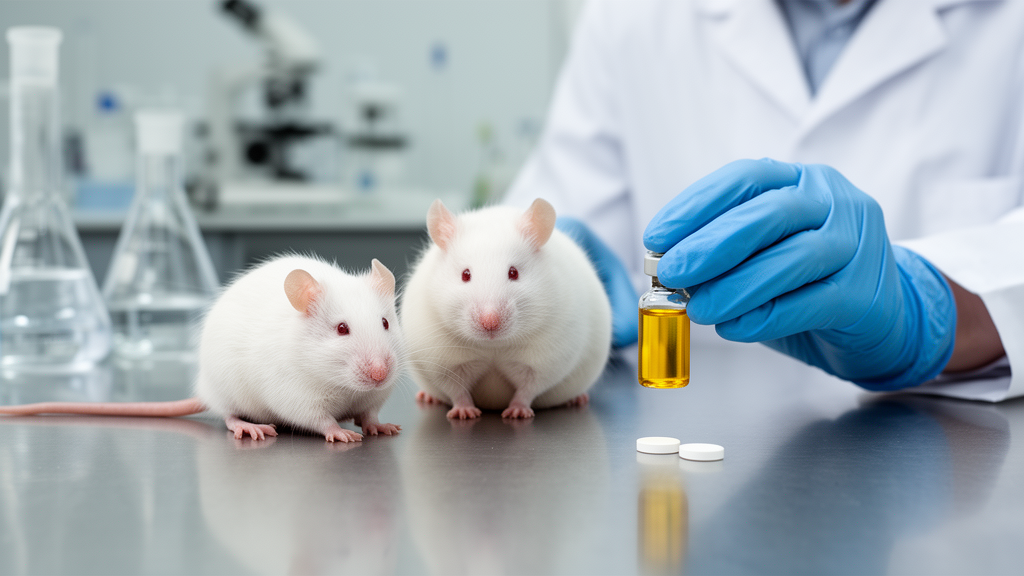
A kitchen spice and a decades-old alcoholism medication may together hold a surprising key against two of the world’s fastest-growing pandemics. In a new preclinical study published in Frontiers in Endocrinology, researchers at Banaras Hindu University in Varanasi report that curcumin, the golden pigment of turmeric, and disulfiram, an FDA-approved drug long used to treat chronic alcoholism, each blunted weight gain and metabolic damage in mice fed a high-fat diet. More strikingly, when the two compounds were given simultaneously, their effects were synergistic: the treated animals stayed at body weights comparable to mice on a normal diet, even while consuming the same obesity-inducing food.
The stakes of the research are considerable. According to data cited by the authors, roughly 890 million people worldwide live with obesity and 589 million adults aged 20 to 79 live with diabetes, while nearly 197 million more suffer from impaired glucose tolerance. Modern Western dietary patterns, dominated by calorie-dense, high-fat and processed foods, drive much of this crisis. Crucially, scientists now view obesity not merely as an over-accumulation of fat but as a state of chronic, low-grade tissue inflammation. That inflammation fuels insulin resistance, which in turn progresses toward type 2 diabetes, and it disrupts the regulation of metabolic hormones such as leptin and adiponectin that normally keep appetite and energy balance in check.
To model this pathology, the team turned to the workhorse of metabolic research: the high-fat diet mouse. Forty Swiss albino mice, each weighing about 23 grams and aged six to eight weeks, were randomly assigned to five groups of eight animals. One group received a normal diet, one received a high-fat diet deriving 60 percent of its calories from fat, and three treatment groups ate the high-fat diet while receiving curcumin at 90 milligrams per kilogram of body weight, disulfiram at 200 milligrams per kilogram, or both compounds together by oral gavage over 12 weeks. The researchers then tracked food intake, body weight, the Lee obesity index, fasting glucose, glycated hemoglobin, glucose tolerance, serum insulin and leptin, lipid profiles, liver enzymes, and liver histology.
The results on food intake and body weight were dramatic. From the fifth week onward, high-fat diet mice treated with either compound ate significantly less food; by week 12, curcumin-treated mice had consumed 16.76 grams and disulfiram-treated mice 17.68 grams, compared with 23.54 grams in the untreated high-fat group. The combination group ate even less, roughly 32 percent below the high-fat-only animals and lower than even the normal chow controls. Body weight followed the same pattern. The untreated high-fat mice ballooned to a mean of 36.70 grams, nearly 40 percent heavier than controls, while the curcumin group reached only 28.28 grams, a 22.94 percent reduction in weight gain, the largest numerical drop of any intervention. The combination stabilized around 29.32 grams and disulfiram alone at 29.40 grams.
Metabolic measurements reinforced the picture. The Lee obesity index, a standard morphometric gauge of adiposity, climbed above 310 in the untreated high-fat mice but stayed below that threshold in all three treated groups. Fasting blood glucose in the high-fat group reached 230 milligrams per deciliter, more than double the control value of 112.67, and glycated hemoglobin rose more than two-fold to 6.55 millimoles per mole, confirming long-term hyperglycemia and type 2 diabetes. Here the synergy became unmistakable: curcumin and disulfiram monotherapies each lowered HbA1c, but the combination brought it down to 4.68 millimoles per mole, the value closest to the control baseline of 3.10.
Glucose tolerance testing told a similar story. Untreated high-fat mice began the oral glucose tolerance test at nearly double the control baseline glucose and remained highly elevated even after 120 minutes, with an area under the curve almost 54 percent larger than controls. Both monotherapies restored 120-minute glucose to around 108 milligrams per deciliter, but the combination group cleared the glucose load fastest, peaking at just 165 milligrams per deciliter at 15 minutes and falling to 123 by the two-hour mark while maintaining the most stable overall profile. The hormonal data were equally striking. Untreated high-fat mice showed roughly five-fold elevated insulin and a six-fold increase in the HOMA-IR index of insulin resistance, along with leptin levels of 13.28 nanograms per milliliter versus 4.27 in controls, hallmarks of compensatory insulin hypersecretion and leptin resistance. The combination treatment restored insulin almost entirely to the control baseline of 0.76 nanograms per milliliter and cut leptin to 6.01, outperforming either drug alone.
The liver, a central casualty of diet-induced obesity, also benefited. Untreated high-fat mice developed severely deranged lipid profiles, with triglycerides of 120.54 milligrams per deciliter and cholesterol of 208.23 versus control values of 96.20 and 92.20 respectively, alongside sharply elevated LDL and depressed HDL. The combination treatment brought all four lipid parameters back to levels statistically indistinguishable from controls. Liver injury enzymes told the same tale: serum SGPT rose from 42.96 to 87.28 units per liter and SGOT from 70.18 to 152.40 in the high-fat group, but the combination drove SGPT down to 43.99, essentially the control value, and SGOT to 105.93, better than either monotherapy. Under the microscope, the untreated high-fat livers showed inflammatory cell infiltration, ballooning hepatocytes, and extensive intracellular fat droplets, while the combination-treated livers regained an architecture closely resembling healthy tissue, with only mild sinusoidal dilations persisting.
Mechanistically, the two compounds attack obesity from complementary angles. Disulfiram, historically known as Antabuse, inhibits aldehyde dehydrogenase, and because the ALDH1A1 enzyme participates in retinoic acid biosynthesis and energy homeostasis, blocking it promotes weight loss. The drug has also been shown to suppress the NLRP3 inflammasome, a key driver of chronic inflammation and insulin resistance, and to activate autophagy, improving glucose handling. Curcumin, meanwhile, deploys phenolic hydroxyl groups with potent antioxidant activity that protect the liver and pancreas, and it activates AMP-activated protein kinase, a cellular fuel gauge that promotes glucose uptake in muscle, stimulates fatty acid oxidation, and inhibits gluconeogenesis in the liver. Together, reduced appetite, dampened inflammation, and improved glucose and fat metabolism appear to reinforce one another.
The authors are careful to note that enthusiasm must be tempered by caveats. The 200 milligrams per kilogram disulfiram dose used in mice converts, by standard body surface area methods, to roughly 1,000 milligrams per day in humans, well above the FDA-approved maximum of 500 milligrams per day, and disulfiram has been associated with neurological and psychological adverse events. Curcumin, for its part, suffers from poor bioavailability, limiting how much active compound actually reaches tissues. The team calls for comprehensive toxicological assessment of disulfiram and for advanced delivery methods, such as the nanoparticle formulations already showing promise in vitro, to improve curcumin’s clinical utility. The study was approved by the Institutional Animal Ethical Committee at Banaras Hindu University.
Still, as a proof of concept, the findings are compelling. Mice eating an obesity-inducing diet stayed lean, kept their glucose tolerance, normalized their hormones and blood fats, and protected their livers, all with two inexpensive and widely available compounds, one of them sitting in the spice rack. If future work can resolve the safety and bioavailability questions, the curcumin-disulfiram pairing could offer a cost-effective preventive strategy against the intertwined epidemics of obesity and type 2 diabetes, a goal that conventional single-drug approaches have struggled to achieve.
Subject of Research: Synergistic anti-obesity effects of curcumin and disulfiram in high-fat diet-fed mice
Article Title: Anti-obesogenic potential of curcumin, disulfiram, and their synergistic effects in HFD-fed obese Swiss albino mice
Article References: Patel, J. K., More, R. S., Singh, A. N., & Gupta, A. (2026). Anti-obesogenic potential of curcumin, disulfiram, and their synergistic effects in HFD-fed obese Swiss albino mice. Frontiers in Endocrinology, 17, Article 1954754. https://doi.org/10.3389/fendo.2026.1954754
Image Credits: AI Generated
DOI: 10.3389/fendo.2026.1954754
Keywords: curcumin, disulfiram, obesity, type 2 diabetes, high-fat diet, insulin resistance, leptin, fatty liver, drug repurposing, mouse model, metabolic syndrome, HOMA-IR
Cite Scienmag News
Daisy Hatcher. (October 15, 2026). Turmeric Compound and Alcoholism Drug Team Up to Block Obesity in Mice. Scienmag. https://scienmag.com/turmeric-compound-and-alcoholism-drug-team-up-to-block-obesity-in-mice/
Daisy Hatcher. "Turmeric Compound and Alcoholism Drug Team Up to Block Obesity in Mice." Scienmag, 15 October 2026, https://scienmag.com/turmeric-compound-and-alcoholism-drug-team-up-to-block-obesity-in-mice/. Accessed 15 October 2026.
Daisy Hatcher. "Turmeric Compound and Alcoholism Drug Team Up to Block Obesity in Mice." Scienmag. October 15, 2026. https://scienmag.com/turmeric-compound-and-alcoholism-drug-team-up-to-block-obesity-in-mice/


