


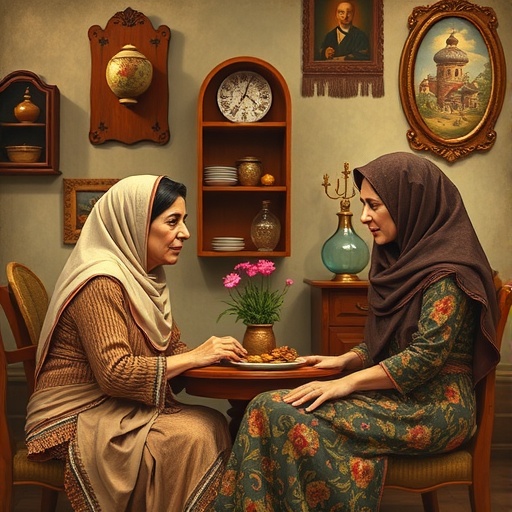
In a rapidly evolving world where parenting dynamics are continuously being redefined, the role of mothers, particularly in the context of Turkish society, has become an intriguing subject of study. A recent investigative endeavor by researchers Ertürk Kara, Özyeter, and Ünlüer delves deep into understanding the extent of Turkish mothers’ involvement in various home activities. This research not only seeks to outline what roles these mothers assume within their households but also aims to identify the sociocultural and psychological factors that significantly influence their involvement.
The traditional view of motherhood has often framed women as primarily responsible for domestic duties. However, in contemporary Turkish society, these roles are firmly being reexamined. The study highlights that while many mothers retain traditional roles, there is a growing inclination toward partnership in household responsibilities shared with fathers. This shift reflects broader societal changes and challenges the preconceived notion of fixed gender roles in domestic settings. The researchers argue that such changes could pave the way for a more equitable distribution of domestic responsibilities, ultimately benefitting family dynamics and child development.
Central to the researchers’ inquiry is the concept of parenting self-efficacy, which refers to a mother’s belief in her capability to manage parenting duties effectively. The study posits that a mother’s confidence can profoundly affect her engagement in home activities. A high level of self-efficacy encourages mothers to take on more significant roles in child-rearing and household management tasks, contributing positively to their children’s developmental outcomes. Through qualitative and quantitative analyses, the study reveals that mothers with greater self-efficacy are more likely to participate in activities that enrich their children’s learning experiences at home.
Another critical aspect examined in the research is the impact of sociodemographic characteristics on mothers’ involvement. The study identifies numerous factors, including age, educational background, employment status, and income levels, as instrumental in shaping mothers’ roles within the family unit. For example, mothers with higher education levels tend to engage more actively in both educational and recreational activities with their children. This finding underscores the importance of education in empowering mothers and enhancing their perceived efficacy in household roles.
Key among the findings was the varying degrees of involvement based on geographical location, where urban mothers often exhibited different engagement patterns compared to their rural counterparts. The urban environment provides access to resources, educational materials, and social networks that can enhance parenting involvement. Conversely, rural mothers face some unique challenges, such as limited access to information and support systems, which can hinder their engagement in essential home activities.
The researchers also emphasize the role of family structure in determining mothers’ involvement in home activities. For instance, single mothers or those from larger families tend to have distinct experiences and challenges, influencing their ability to participate in interactive home environments with their children. These dynamics bring to light the diverse spectrum of motherhood in Turkish society, indicating that a one-size-fits-all approach to parenting support might not be feasible.
Interestingly, the study also explored the influence of cultural expectations and societal norms on mothers’ roles and engagement in the home. In many cases, deeply ingrained cultural beliefs could either encourage or discourage mothers from participating fully in household activities. The balance between personal ambitions and societal expectations can create internal conflicts, influencing how mothers interpret their roles and responsibilities within the family context.
Importantly, the researchers call for initiatives that support mothers in cultivating greater self-efficacy and involvement in their children’s lives. These initiatives could include parenting workshops, community support programs, and accessible educational resources that enhance skills and empower mothers to take active roles in their families. By fostering an environment where mothers feel supported, confidence levels could rise, resulting in enhanced engagement in home activities that are critical for child development.
Moreover, the researchers encourage policymakers to take note of the findings, as crafting policies that recognize and address the needs of mothers could lead to healthier family environments. Strategies could aim to alleviate some of the burdens that mothers face and bolster their capacity for involvement in meaningful home activities. With targeted efforts, families could thrive and pave the way for a generation of children that benefit from enriched home lives.
In conclusion, the study conducted by Ertürk Kara, Özyeter, and Ünlüer provides valuable insights into the complexities of motherhood in Turkey today. By linking sociodemographic factors and self-efficacy to the level of involvement in home activities, the research prompts a reevaluation of how motherhood is perceived and practiced. It opens doors for further investigations into support systems that could empower mothers both in Turkey and globally.
The findings presented offer a profound look into the modern dynamics of Turkish motherhood, emphasizing the significance of self-efficacy and social structure on maternal involvement in the home. As these patterns emerge, they signal not just a shift in societal norms but also an opportunity to enhance the way families are structured for future generations, echoing a universal need for support and understanding in parenting roles.
In essence, the exploration of Turkish mothers’ engagement in home activities lays a foundation for more extensive dialogues surrounding gender roles, cultural expectations, and the advocacy for supportive measures for mothers. The evolving narrative of motherhood signifies a moment of transformation in understanding the integral role that mothers play within their families and society at large.
Cite Scienmag News
Courtney Benton. (November 24, 2025). Turkish Mothers’ Home Involvement: Influence of Background and Confidence. Scienmag. https://scienmag.com/turkish-mothers-home-involvement-influence-of-background-and-confidence/
Courtney Benton. "Turkish Mothers’ Home Involvement: Influence of Background and Confidence." Scienmag, 24 November 2025, https://scienmag.com/turkish-mothers-home-involvement-influence-of-background-and-confidence/. Accessed 3 September 2026.
Courtney Benton. "Turkish Mothers’ Home Involvement: Influence of Background and Confidence." Scienmag. November 24, 2025. https://scienmag.com/turkish-mothers-home-involvement-influence-of-background-and-confidence/


