


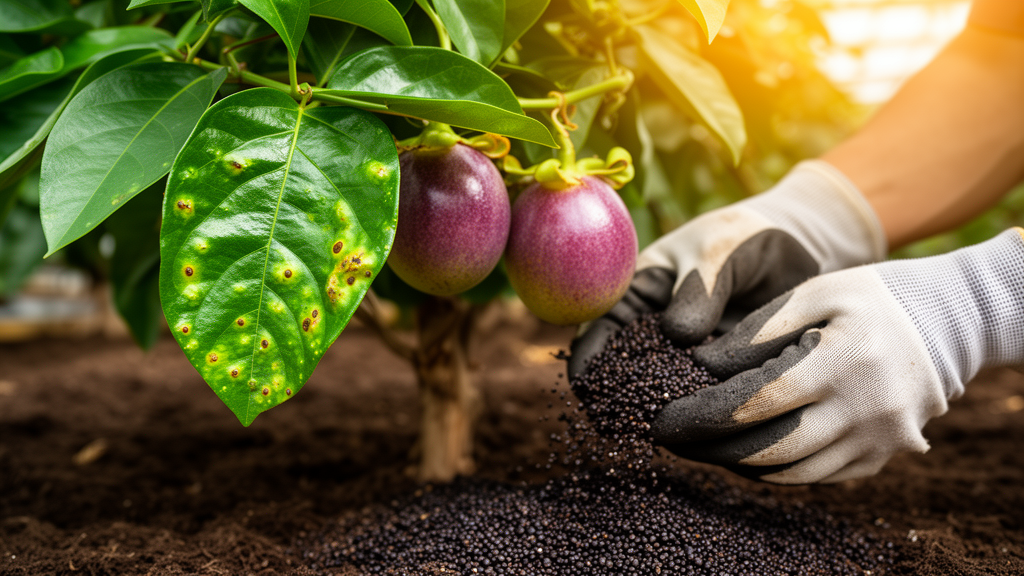
Passion fruit, Passiflora edulis, is a tropical and subtropical crop of substantial economic value, with Brazil alone accounting for roughly seventy percent of global production and the worldwide market generating approximately 3.9 billion US dollars in 2024. Yet the crop is persistently threatened by bacterial blight, a disease caused by Xanthomonas axonopodis pv. passiflorae, or Xap, that thrives under high humidity and temperature. The pathogen produces chlorotic and necrotic lesions on leaves, branches, and fruits, frequently triggers severe defoliation, and can cut productivity by twenty to thirty percent. In susceptible cultivars, the bacterium may even invade the vascular system, spread systemically, and cause wilt and death. Current management relies mainly on copper compounds and antibiotics such as streptomycin, strategies whose effectiveness is often temporary because of antibiotic resistance and environmental concerns.
Against this backdrop, a research team from Southwest Bahia State University in Brazil and the University of Salamanca in Spain investigated whether two Trichoderma strains, T. asperellum T25 and T. harzianum T146, could control Xap in passion fruit plants. Trichoderma species are widely recognized as multifunctional plant-beneficial microorganisms that directly antagonize fungal pathogens through mycoparasitism, competition, and antibiosis, while also colonizing the rhizosphere, promoting growth, and priming plant immune responses. However, few studies have examined Trichoderma activity against bacterial pathogens, and the Xap-P. edulis pathosystem had remained largely unexplored.
The researchers first tested the direct antibacterial activity of cell-free culture filtrates from both strains in vitro. Filtrates were added to bacterial cultures at concentrations of five, ten, twenty, and forty percent, and bacterial growth was measured by absorbance at 620 nanometers after twenty-four hours. Both filtrates inhibited Xap growth in a concentration-dependent manner, with T25 filtrates significantly reducing bacterial growth at concentrations of ten percent and above, and T146 filtrates doing so at twenty percent and above. Complete inhibition was observed at forty percent for both strains, a result confirmed by qualitative plating assays showing reduced bacterial viability with increasing filtrate concentrations. Strain T25 therefore appeared to exhibit higher direct biocontrol activity than T146, consistent with previous reports that Trichoderma metabolites such as peptaibols, terpenoids, and pyrones, including 6-pentyl-α-pyrone, can inhibit Gram-negative bacteria.
In greenhouse trials, Trichoderma conidia were applied to the plant growth substrate at a concentration of five million conidia per gram, and fifty-day-old passion fruit plants were then spray-inoculated with a virulent Xap strain at one million colony-forming units per milliliter. Fourteen days after inoculation, disease incidence in plants pretreated with T25 or T146 was 15.4 and 18.6 percent respectively, compared with 65.7 percent in plants inoculated with the pathogen alone. Disease severity was reduced even more dramatically, from 11.6 percent in Xap-only plants to 1.3 percent in T25-pretreated plants and 2.0 percent in T146-pretreated plants, values comparable to those of uninoculated control plants and indicating almost complete suppression of visible symptoms. Notably, because the fungus was applied to the substrate while the bacterium was sprayed onto the leaves, the protection appears to be mediated by systemic defense responses rather than direct contact between the two microorganisms.
In the absence of the pathogen, strain T25 also promoted plant growth, with T25-treated plants reaching a mean height of 10.90 centimeters, significantly taller than both T146-treated plants at 8.97 centimeters and untreated controls at 8.43 centimeters. This growth-promoting effect agrees with previous reports for olive plants and suggests that T25 offers a dual benefit to passion fruit growers, enhancing vigor while conferring protection against bacterial blight.
To probe the mechanisms underlying this indirect biocontrol, the team analyzed the expression of three defense marker genes at forty-eight hours post-inoculation and at fourteen days post-inoculation. LOX2, encoding lipoxygenase 2, represents the jasmonic acid biosynthesis pathway; PR1, encoding pathogenesis-related protein 1, represents the salicylic acid-dependent pathway; and PDF1.2, encoding plant defensin 1.2, represents the ethylene-dependent pathway. At forty-eight hours after Xap challenge, all inoculated plants showed significantly elevated LOX2 expression, with the highest levels in T25-pretreated plants. However, PR1 upregulation was detected only in T25-pretreated plants, indicating that T. asperellum T25 activates both jasmonic acid and salicylic acid signaling in response to the pathogen. No PDF1.2 expression was detected in any treatment at either time point.
At fourteen days post-inoculation, the expression pattern shifted. Plants inoculated with Xap alone exhibited upregulation of both LOX2 and PR1, whereas no significant differences in gene expression were observed in Trichoderma-pretreated plants relative to controls. The researchers interpret this as evidence that, by the time symptoms would normally become visible, the Trichoderma-primed plants had already mounted effective defenses and required no additional transcriptional activation. This interpretation is consistent with the observation that Trichoderma colonized roots were likely well established after two months, so only minor systemic transcriptional changes would be expected in treated plants.
Biochemical analyses of oxidative status revealed a striking pattern at fourteen days post-inoculation. Plants inoculated with Xap alone showed the lowest hydrogen peroxide content, 0.16 micromoles per gram fresh weight, accompanied by the highest activities of superoxide dismutase, peroxidase, and catalase, reaching 1,999, 12.40, and 22.99 units per minute per milligram protein respectively. By contrast, T146-pretreated plants challenged with the pathogen exhibited the highest hydrogen peroxide levels, 0.38 micromoles per gram fresh weight. The researchers suggest that the low hydrogen peroxide content in Xap-only plants reflects a survival strategy: under severe and prolonged bacterial pressure, excessive reactive oxygen species accumulation threatens host cell integrity, so the plant deploys a robust enzymatic system to decompose toxic hydrogen peroxide, preventing self-inflicted tissue necrosis at the expense of early ROS-mediated signaling.
The differential gene expression profiles observed between T25-pretreated and T146-pretreated plants at the early stage of the interaction suggest that different Trichoderma species activate distinct strain-specific signaling pathways that nonetheless converge on similar levels of disease control. This pattern is consistent with the undulating profile of Trichoderma-triggered plant defenses described in previous work, and with reports that Trichoderma modulates jasmonic acid and salicylic acid defenses according to the nature of the pathogen infection. The findings also align with earlier studies showing that T. asperelloides pretreatment induces systemic resistance against Pseudomonas syringae in Arabidopsis, and that native Trichoderma strains activate defense-related enzymes and genes in rice against Xanthomonas oryzae pv. oryzae.
Overall, the study demonstrates that T. asperellum T25 and T. harzianum T146 exhibit direct antibacterial activity against Xap in vitro and effectively suppress bacterial blight development in passion fruit plants through the induction of systemic defense responses. The researchers conclude that applying Trichoderma to plant growth substrate represents a promising and sustainable management tool for bacterial blight in tropical and subtropical fruit crops, aligning with societal demands for environmentally friendly agricultural practices. Although field trials remain necessary to validate these greenhouse findings, the work highlights the strong potential of Trichoderma as an eco-friendly biocontrol agent against a bacterial pathogen whose management has long depended on copper compounds and antibiotics of limited durability.
Subject of Research: Plant pathology
Article Title: Trichoderma controls bacterial blight caused by Xanthomonas axonopodis pv. passiflorae in Passiflora edulis
Article References: Brito, N. D., de Novaes, Q. S., Hermosa, R., & Rubio, M. B. (2026). Trichoderma controls bacterial blight caused by Xanthomonas axonopodis pv. passiflorae in Passiflora edulis. Frontiers in Fungal Biology, 7, Article 1920680. https://doi.org/10.3389/ffunb.2026.1920680
Image Credits: AI Generated
DOI: 10.3389/ffunb.2026.1920680
Keywords: Trichoderma, bacterial blight, Xanthomonas axonopodis pv. passiflorae, Passiflora edulis, biocontrol, systemic resistance, plant defense, controls, bacterial, blight, caused, Xanthomonas
Cite Scienmag News
Drew Townsend. (October 16, 2026). Trichoderma strains suppress bacterial blight in passion fruit by priming plant defenses. Scienmag. https://scienmag.com/trichoderma-strains-suppress-bacterial-blight-in-passion-fruit-by-priming-plant-defenses/
Drew Townsend. "Trichoderma strains suppress bacterial blight in passion fruit by priming plant defenses." Scienmag, 16 October 2026, https://scienmag.com/trichoderma-strains-suppress-bacterial-blight-in-passion-fruit-by-priming-plant-defenses/. Accessed 16 October 2026.
Drew Townsend. "Trichoderma strains suppress bacterial blight in passion fruit by priming plant defenses." Scienmag. October 16, 2026. https://scienmag.com/trichoderma-strains-suppress-bacterial-blight-in-passion-fruit-by-priming-plant-defenses/


