

Wednesday, November 4, 2026
Science
No Result
View All Result
  • Login
  • HOME
  • SCIENCE NEWS
  • CONTACT US
  • HOME
  • SCIENCE NEWS
  • CONTACT US
No Result
View All Result
Scienmag
No Result
View All Result
Home Science News

Trial to Test Slow-Oscillatory Brain Stimulation for Sleep and Cognitive Complaints in Older Adults

October 27, 2026
in Science News
Cassandra Pierce
By Cassandra Pierce Scienmag Editorial Profile - Systems Neuroscience
Reading Time: 2 mins read
0
Trial to Test Slow-Oscillatory Brain Stimulation for Sleep and Cognitive Complaints in Older Adults

Trial to Test Slow-Oscillatory Brain Stimulation for Sleep and Cognitive Complaints in Older Adults

65
SHARES
587
VIEWS
Share on FacebookShare on Twitter
ADVERTISEMENT

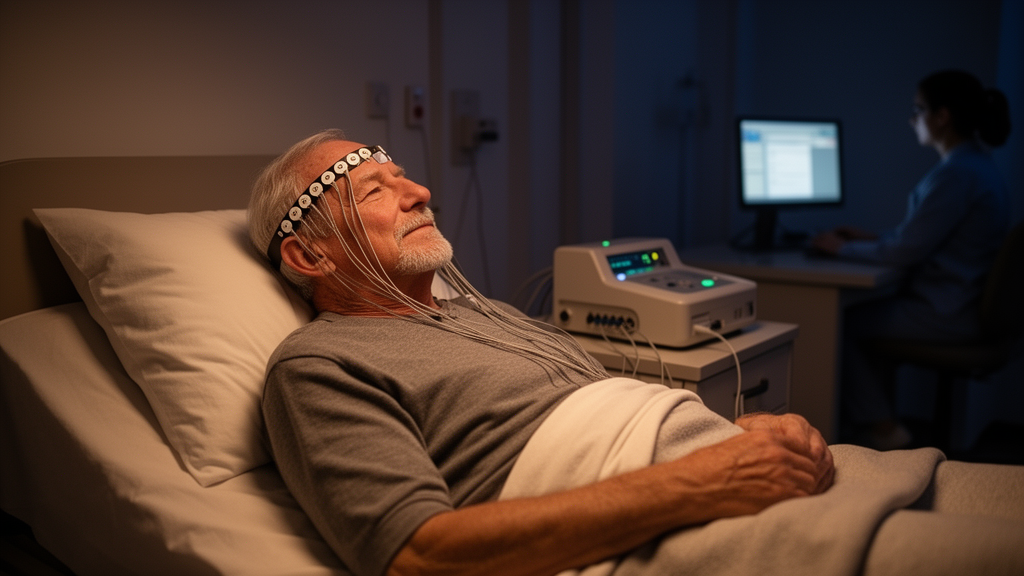
Researchers have outlined the design of a randomized, double-blind, sham-controlled clinical trial that will test high-definition slow-oscillatory transcranial direct current stimulation (so-tDCS) in right-handed Chinese older adults who experience both subjective cognitive decline and sleep disturbances. The protocol, registered with ClinicalTrials.gov under identifier NCT07433738, is a study plan rather than a report of results, so no conclusions about the technique’s effectiveness can yet be drawn.

Subjective cognitive decline is described in the protocol as an early and potentially modifiable stage in the trajectory of neurodegenerative diseases. The authors note that in older adults with this condition, untreated sleep disturbances may accelerate the neurodegenerative process, potentially through mechanisms involving amyloid-beta accumulation, and contribute to more rapid cognitive deterioration. They also observe that non-pharmacological treatment options that concurrently address subjective cognitive decline and sleep disturbances remain scarce. High-definition slow-oscillatory so-tDCS is characterized as an emerging, frequency-specific neuromodulation technique designed to enhance brain health and cognition.

Under the planned methods, 80 participants will be randomly assigned in equal groups of 40 to receive either active high-definition 0.75 Hz so-tDCS or sham stimulation over a four-week intervention period. Outcome measures will include galvanic skin response, subjective cognitive complaints, sleep quality, salivary amyloid-beta levels, and domain-specific cognitive performance. These outcomes will be assessed at four time points: baseline, week 4 immediately after the intervention ends, and follow-up visits at weeks 8 and 12.

A distinctive feature of the protocol is the personalized monitoring of neurophysiological signals during stimulation. Electrode-skin impedance will be tracked using what the authors describe as state-of-the-art measurement. They state that successfully implementing this signal would give researchers an add-on setting that allows them to evaluate real-time neurophysiological signals easily, quickly and quantitatively, which could facilitate the incorporation of transcranial brain stimulation into clinical practice.

Because this is a published study protocol, the reported content covers the trial’s rationale, design, participant criteria, intervention schedule and planned assessments. Whether active so-tDCS improves sleep, subjective cognitive complaints, amyloid-beta levels or cognitive performance in this population will only be known once the trial is completed and its results are analyzed and reported.

Subject of Research: A randomized controlled trial protocol testing slow-oscillatory transcranial direct current stimulation in older adults with sleep and subjective cognitive complaints.

Article Title: Personalized assessment of high-definition slow-oscillatory transcranial direct current stimulation (so-tDCS) in older adults with sleep and subjective cognitive complaints: A study protocol for a randomized clinical trial

Article References: Lu, H., Ni, X., Yang, N. S., Yuen, Y. S., Gong, Y., & Ma, S. L. (2026). Personalized assessment of high-definition slow-oscillatory transcranial direct current stimulation (so-tDCS) in older adults with sleep and subjective cognitive complaints: A study protocol for a randomized clinical trial. PLOS One, 21(10), e0360573. https://doi.org/10.1371/journal.pone.0360573

Image Credits: AI Generated

DOI: 10.1371/journal.pone.0360573

Keywords: so-tDCS, transcranial direct current stimulation, subjective cognitive decline, sleep disturbances, older adults, randomized clinical trial, neuromodulation, amyloid-beta, electrode-skin impedance, study protocol, Personalized, assessment

Cite Scienmag News

Cassandra Pierce. (October 27, 2026). Trial to Test Slow-Oscillatory Brain Stimulation for Sleep and Cognitive Complaints in Older Adults. Scienmag. https://scienmag.com/trial-to-test-slow-oscillatory-brain-stimulation-for-sleep-and-cognitive-complaints-in-older-adults/

Cassandra Pierce. "Trial to Test Slow-Oscillatory Brain Stimulation for Sleep and Cognitive Complaints in Older Adults." Scienmag, 27 October 2026, https://scienmag.com/trial-to-test-slow-oscillatory-brain-stimulation-for-sleep-and-cognitive-complaints-in-older-adults/. Accessed 4 November 2026.

Cassandra Pierce. "Trial to Test Slow-Oscillatory Brain Stimulation for Sleep and Cognitive Complaints in Older Adults." Scienmag. October 27, 2026. https://scienmag.com/trial-to-test-slow-oscillatory-brain-stimulation-for-sleep-and-cognitive-complaints-in-older-adults/

Tags: amyloid betaamyloid-beta and sleep connectionassessmentclinical trial for brain stimulation in agingcognitive decline and sleep interventioneffects of sleep on cognitive agingelectrode-skin impedanceemerging techniques for cognitive and sleep disordershigh-definition so-tDCS for neuroprotectionneuromodulationneuromodulation for sleep improvementnon-pharmacological cognitive enhancementolder adultspersonalizedrandomized clinical trialrandomized controlled trial in neurodegenerative researchsleep disturbancessleep disturbances and neurodegenerationslow-oscillatory transcranial direct current stimulationso-tDCSstudy protocolsubjective cognitive declinesubjective cognitive decline in older adultstranscranial direct current stimulation
Share26Tweet16
Previous Post

New Model Links Crisis Stabilisation to Social Adaptation in Psychological Support

Next Post

Rare case report links visual hallucinations to moyamoya disease in an 11-year-old girl

Related Posts

New R package turns Spain’s public statistics API into provincial life tables
Technology and Engineering

New R package turns Spain’s public statistics API into provincial life tables

November 4, 2026
Lung pressure predicts death risk in severe bronchiectasis patients awaiting transplants
Medicine

Lung pressure predicts death risk in severe bronchiectasis patients awaiting transplants

November 4, 2026
Blood microRNA miR-10b-5p linked to diabetic retinopathy severity
Medicine

Blood microRNA miR-10b-5p linked to diabetic retinopathy severity

November 4, 2026
New Python package opens the recount3 RNA-seq data trove to machine learning workflows
Biology

New Python package opens the recount3 RNA-seq data trove to machine learning workflows

November 4, 2026
Explainable AI traces how eVTOL drones dodge obstacles in simulated cities
Technology and Engineering

Explainable AI traces how eVTOL drones dodge obstacles in simulated cities

November 4, 2026
Biomechanical Tests for Pelvic Fixation Lack Consensus, Review Finds
Biotechnology

Biomechanical Tests for Pelvic Fixation Lack Consensus, Review Finds

November 4, 2026
Next Post
Rare case report links visual hallucinations to moyamoya disease in an 11-year-old girl

Rare case report links visual hallucinations to moyamoya disease in an 11-year-old girl

  • Mothers who receive childcare support from maternal grandparents show more optimized

    Mothers who receive childcare support from maternal grandparents show more parental warmth, finds NTU Singapore study

    27656 shares
    Share 11059 Tweet 6912
  • University of Seville Breaks 120-Year-Old Mystery, Revises a Key Einstein Concept

    1061 shares
    Share 424 Tweet 265
  • Bee body mass, pathogens and local climate influence heat tolerance

    682 shares
    Share 273 Tweet 171
  • Researchers record first-ever images and data of a shark experiencing a boat strike

    546 shares
    Share 218 Tweet 137
  • Groundbreaking Clinical Trial Reveals Lubiprostone Enhances Kidney Function

    531 shares
    Share 212 Tweet 133
Science

Embark on a thrilling journey of discovery with Scienmag.com—your ultimate source for cutting-edge breakthroughs. Immerse yourself in a world where curiosity knows no limits and tomorrow’s possibilities become today’s reality!

RECENT NEWS

  • New R package turns Spain’s public statistics API into provincial life tables
  • Lung pressure predicts death risk in severe bronchiectasis patients awaiting transplants
  • Blood microRNA miR-10b-5p linked to diabetic retinopathy severity
  • New Python package opens the recount3 RNA-seq data trove to machine learning workflows

Categories

  • Agriculture
  • Anthropology
  • Archaeology
  • Athmospheric
  • Biology
  • Biotechnology
  • Blog
  • Bussines
  • Cancer
  • Chemistry
  • Climate
  • Earth Science
  • Editorial Policy
  • Marine
  • Mathematics
  • Medicine
  • Pediatry
  • Policy
  • Psychology & Psychiatry
  • Science Education
  • Science News
  • Social Science
  • Space
  • Technology and Engineering

Subscribe to Blog via Email

Enter your email address to subscribe to this blog and receive notifications of new posts by email.

Join 5,149 other subscribers

© 2025 Scienmag - Science Magazine

Welcome Back!

Login to your account below

Forgotten Password?

Retrieve your password

Please enter your username or email address to reset your password.

Log In
No Result
View All Result
  • HOME
  • SCIENCE NEWS
  • CONTACT US

© 2025 Scienmag - Science Magazine

Discover more from Science

Subscribe now to keep reading and get access to the full archive.

Continue reading

