Friday, October 30, 2026
Science
No Result
View All Result
  • Login
  • HOME
  • SCIENCE NEWS
  • CONTACT US
  • HOME
  • SCIENCE NEWS
  • CONTACT US
No Result
View All Result
Scienmag
No Result
View All Result
Home Science News Medicine

tRF Fragment Drives AML Cell Growth by Suppressing AGGF1, Study Finds

October 29, 2026
in Medicine
Nathaniel Bowman
By Nathaniel Bowman Scienmag Editorial Profile - Precision Oncology
Reading Time: 3 mins read
0
tRF Fragment Drives AML Cell Growth by Suppressing AGGF1, Study Finds

tRF Fragment Drives AML Cell Growth by Suppressing AGGF1, Study Finds

65
SHARES
587
VIEWS
Share on FacebookShare on Twitter
ADVERTISEMENT

A small RNA fragment called tRF-Gln-CTG-7 is elevated in patients with acute myeloid leukemia (AML), and high levels of it are linked to shorter overall survival, according to a study published in Clinical and Experimental Medicine. The work, conducted by researchers including Liyun Yang and Guifang Ouyang, suggests that this molecule helps leukemia cells grow and survive by suppressing a gene known as AGGF1, and points to it as a possible prognostic marker and therapeutic target.

Acute myeloid leukemia is the most common acute leukemia in adults and is marked by substantial biological heterogeneity and an unfavorable prognosis. The study focused on tRNA-derived small RNAs, or tsRNAs, short fragments produced from transfer RNA molecules that have been implicated in tumor progression but remain poorly understood in AML. To identify candidates, the team used a tsRNA microarray to screen for differential expression between AML patients and healthy controls, and tRF-Gln-CTG-7 emerged for further investigation.

The researchers found that tRF-Gln-CTG-7 was consistently elevated in AML patients compared with healthy controls. Statistical analysis showed that high expression of the fragment was closely associated with shorter overall survival, supporting its potential value as a prognostic biomarker for the disease.

To test what the fragment does functionally, the team inhibited tRF-Gln-CTG-7 in two AML cell lines, OCI-AML2 and MOLM-13. Using a CCK-8 assay to measure cell growth and Western blotting to track protein changes, they observed that suppressing the fragment slowed AML cell growth and induced apoptosis, the programmed cell death process that cancer cells often evade.

The molecular mechanism was then explored with RNA sequencing, luciferase reporter assays and rescue experiments. These analyses indicated that tRF-Gln-CTG-7 inhibition increased both AGGF1 mRNA and protein levels, and that the fragment acts through an AGO2-associated mechanism targeting the 3′ untranslated region of the AGGF1 transcript, effectively suppressing the gene’s expression.

The rescue experiments provided the strongest functional link: when the researchers knocked down AGGF1, this reversed the growth arrest and apoptosis that tRF-Gln-CTG-7 inhibition had caused. In other words, AGGF1 appears to be the key mediator through which the RNA fragment promotes leukemia cell survival, since removing AGGF1’s protection restored the malignant cells’ growth even without the fragment.

The authors conclude that tRF-Gln-CTG-7 promotes AML cell growth by suppressing AGGF1, and that the fragment may represent a potential prognostic biomarker and therapeutic target for AML. Because the findings come from patient expression comparisons and cell-line experiments, they establish an association and a mechanistic model rather than demonstrating clinical benefit; validating the fragment’s utility in patients would require further studies.

The article was published open access on 17 October 2026 and is currently shared as an early, peer-reviewed accepted version carrying a permanent DOI, subject to further edits before the final version of record. Within the study’s scope, the results add tRNA-derived fragments to the growing list of small regulatory RNAs under investigation in leukemia biology and offer a concrete molecular axis, tRF-Gln-CTG-7 acting through AGO2 on AGGF1, that could guide future work on AML prognosis and treatment development.

Subject of Research: A tRNA-derived small RNA fragment, tRF-Gln-CTG-7, promotes acute myeloid leukemia cell growth and survival by suppressing AGGF1 and is associated with poor prognosis.

Article Title: tRF-Gln-CTG-7 promotes AML cell growth and survival through AGGF1 and is associated with poor prognosis

Article References: Yang, L., Shui, H., He, X., Yong, L., Wang, T., Chen, Y., Zou, D., Shi, C., Li, T., Mu, Q., & Ouyang, G. (2026). tRF-Gln-CTG-7 promotes AML cell growth and survival through AGGF1 and is associated with poor prognosis. Clinical and Experimental Medicine. https://doi.org/10.1007/s10238-026-02357-3

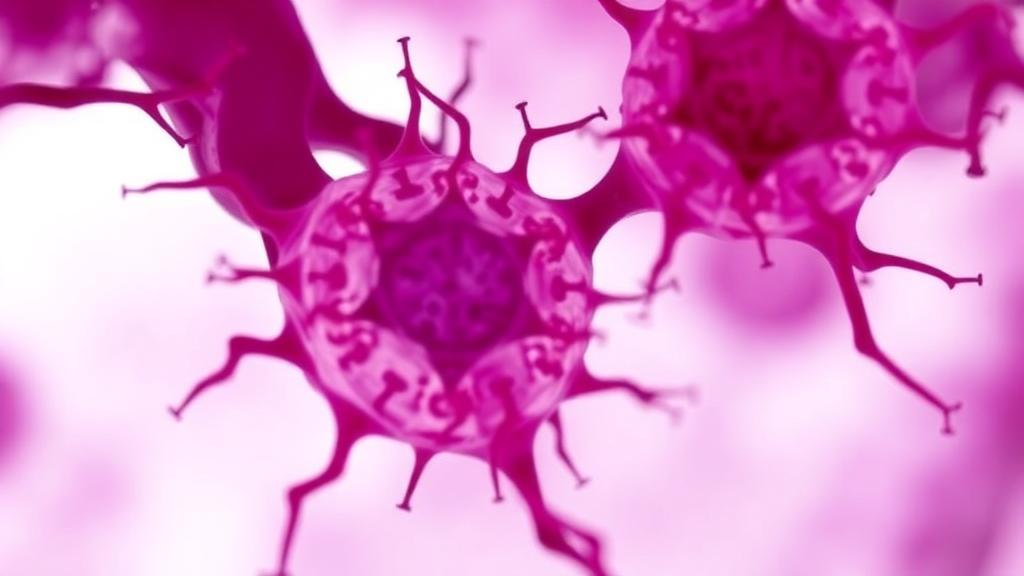
Image Credits: AI Generated

DOI: 10.1007/s10238-026-02357-3

Keywords: acute myeloid leukemia, tRF-Gln-CTG-7, tsRNAs, AGGF1, AGO2, apoptosis, prognosis, biomarker, RNA biology, cell growth, promotes, cell

Cite Scienmag News

Nathaniel Bowman. (October 29, 2026). tRF Fragment Drives AML Cell Growth by Suppressing AGGF1, Study Finds. Scienmag. https://scienmag.com/trf-fragment-drives-aml-cell-growth-by-suppressing-aggf1-study-finds/

Nathaniel Bowman. "tRF Fragment Drives AML Cell Growth by Suppressing AGGF1, Study Finds." Scienmag, 29 October 2026, https://scienmag.com/trf-fragment-drives-aml-cell-growth-by-suppressing-aggf1-study-finds/. Accessed 30 October 2026.

Nathaniel Bowman. "tRF Fragment Drives AML Cell Growth by Suppressing AGGF1, Study Finds." Scienmag. October 29, 2026. https://scienmag.com/trf-fragment-drives-aml-cell-growth-by-suppressing-aggf1-study-finds/


Tags: acute myeloid leukemiaacute myeloid leukemia biomarkerAGGF1AGGF1 gene suppression in AMLAGO2apoptosisbiological heterogeneity in AMLbiomarkercellcell growthhigh tRF-Gln-CTG-7 expression and patient survivalmicroarray analysis of tsRNAs in leukemiaprognosisprognostic markers for acute myeloid leukemiaPromotesRNA biologyrole of tRFs in tumor progressionsmall RNA fragmentssmall RNA fragments in leukemiatherapeutic targets in AMLtRF-Gln-CTG-7tRF-Gln-CTG-7 in AMLtRNA-derived small RNAs in cancertsRNAs
Share26Tweet16
Previous Post

Research report: Whippets have larger abdominal caudal vena cava to aorta ratios than other dogs on computed tomography

Next Post

When Clinicians Disagree on Shock Cause, Septic Shock Patients Face Higher ICU Death Risk

Related Posts

ZNF207 shields glutamine transporter ASCT2 from degradation to fuel liver cancer growth
Cancer

ZNF207 shields glutamine transporter ASCT2 from degradation to fuel liver cancer growth

October 30, 2026
Most Ethiopian HIV patients on dolutegravir therapy show good knowledge, survey finds
Medicine

Most Ethiopian HIV patients on dolutegravir therapy show good knowledge, survey finds

October 30, 2026
Serum and urine protein biomarkers may sharpen prostate cancer detection beyond PSA
Medicine

Serum and urine protein biomarkers may sharpen prostate cancer detection beyond PSA

October 30, 2026
One gene locus flags atrial fibrillation risk after major surgery, UK Biobank study finds
Medicine

One gene locus flags atrial fibrillation risk after major surgery, UK Biobank study finds

October 30, 2026
Deep-learning CT reconstruction sharpens calcium visibility in phantom tests, but dose evens the score
Medicine

Deep-learning CT reconstruction sharpens calcium visibility in phantom tests, but dose evens the score

October 30, 2026
Pennywort Leaf Extract Lowers Blood Sugar in Diabetic Rats, Study Finds
Medicine

Pennywort Leaf Extract Lowers Blood Sugar in Diabetic Rats, Study Finds

October 30, 2026
Next Post
When Clinicians Disagree on Shock Cause, Septic Shock Patients Face Higher ICU Death Risk

When Clinicians Disagree on Shock Cause, Septic Shock Patients Face Higher ICU Death Risk

  • Mothers who receive childcare support from maternal grandparents show more optimized

    Mothers who receive childcare support from maternal grandparents show more parental warmth, finds NTU Singapore study

    27656 shares
    Share 11059 Tweet 6912
  • University of Seville Breaks 120-Year-Old Mystery, Revises a Key Einstein Concept

    1061 shares
    Share 424 Tweet 265
  • Bee body mass, pathogens and local climate influence heat tolerance

    682 shares
    Share 273 Tweet 171
  • Researchers record first-ever images and data of a shark experiencing a boat strike

    546 shares
    Share 218 Tweet 137
  • Groundbreaking Clinical Trial Reveals Lubiprostone Enhances Kidney Function

    531 shares
    Share 212 Tweet 133
Science

Embark on a thrilling journey of discovery with Scienmag.com—your ultimate source for cutting-edge breakthroughs. Immerse yourself in a world where curiosity knows no limits and tomorrow’s possibilities become today’s reality!

RECENT NEWS

  • Microbial Sources and Stress Shape the Hidden Endophytes of an Invasive Plant
  • Firebreaks Leave Lasting Scars in Grasslands While Wildfire Heals Fast
  • Regularisation and voluntary return reproduce precarity for irregularised migrants in Spain and the UK
  • ZNF207 shields glutamine transporter ASCT2 from degradation to fuel liver cancer growth

Categories

  • Agriculture
  • Anthropology
  • Archaeology
  • Athmospheric
  • Biology
  • Biotechnology
  • Blog
  • Bussines
  • Cancer
  • Chemistry
  • Climate
  • Earth Science
  • Editorial Policy
  • Marine
  • Mathematics
  • Medicine
  • Pediatry
  • Policy
  • Psychology & Psychiatry
  • Science Education
  • Science News
  • Social Science
  • Space
  • Technology and Engineering

Subscribe to Blog via Email

Enter your email address to subscribe to this blog and receive notifications of new posts by email.

Join 5,151 other subscribers

© 2025 Scienmag - Science Magazine

Welcome Back!

Login to your account below

Forgotten Password?

Retrieve your password

Please enter your username or email address to reset your password.

Log In
No Result
View All Result
  • HOME
  • SCIENCE NEWS
  • CONTACT US

© 2025 Scienmag - Science Magazine

Discover more from Science

Subscribe now to keep reading and get access to the full archive.

Continue reading