


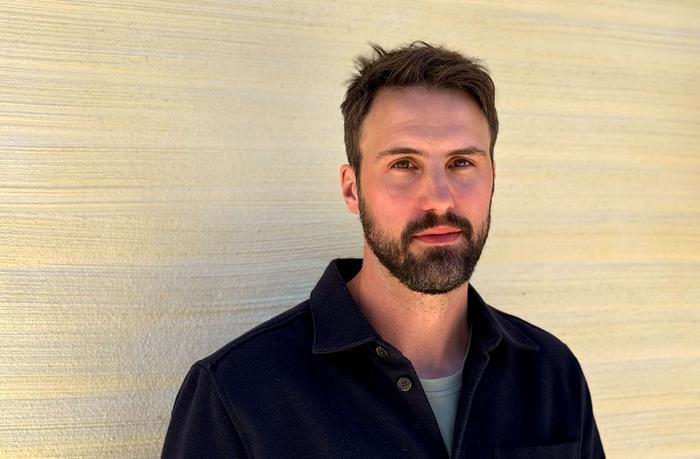
A new thesis at Uppsala University questions the traditional view of stress-induced exhaustion disorder. A new model is proposed in its place that puts more focus on meaningfulness rather than recovery.

Credit: Filip Jovicic
A new thesis at Uppsala University questions the traditional view of stress-induced exhaustion disorder. A new model is proposed in its place that puts more focus on meaningfulness rather than recovery.
“There are no established evidence-based models for the psychological treatment of stress-induced exhaustion disorder. The concepts of ‘recovery’ and ‘stress’ are so widely accepted in our current era that it is difficult to examine them critically. It’s easy to think that patients with stress-related exhaustion should prioritise rest and relaxation, but an overly one-sided focus on recovery can lead to a passive existence that it’s easy to get stuck in and can instead become harmful over time,” says Jakob Clason van de Leur, a recently graduated doctoral student at the Department of Psychology at Uppsala University.
He has been working with patients suffering from stress-related exhaustion for ten years. In his thesis, he describes how traditional treatment can be limiting and tends to overlook important psychological and social aspects of this condition. He has followed 915 patients with stress-related exhaustion who have participated in comprehensive rehabilitation programmes, including medical, psychological, and physiotherapeutic methods, based on CBT. While the results are positive, he concludes that this approach is relatively ineffective overall.
“We shoot with everything we have, hoping to hit something, but we don’t know what really helped. With so many people experiencing stress-related exhaustion, it becomes a problem that the standard treatment is so extensive. The treatments used to last up to one year when I started – now we are working on a 12-week digital programme,” Clason van de Leur continues.
The shorter programme is based on a new treatment model based on Acceptance and Commitment Therapy (ACT), in which stress-induced exhaustion disorder is seen as an existential crisis resulting from a lack of contact with meaningfulness. This may involve a patient’s need to feel love, community, or a clearer work role. A pilot study tested this new model by following 26 exhaustion patients through a 12-week online treatment programme. The main part consists of a digital CBT treatment followed by chats with a psychologist and video check-ups. It also included support with returning to work.
“Despite being a small study, the results show similar effects to our previous six-month treatment programme, using only a quarter of the clinical resources. This means that the treatment can be made available to more patients in the healthcare system,” he explains.
He also thinks that the concept of stress needs to be discussed, as he believes the focus is often on the negative aspects of stress, despite stress being central to human development.
“Given the widespread incidence of mental ill health, we need better models to understand why people feel stressed. Our results indicate that treatment for stress-induced exhaustion disorder may be more effective with a different focus. While further studies are necessary, this may be a first small step towards a more theoretically grounded approach to clinically treating stress-related exhaustion,” he concludes.
Method of Research
Randomized controlled/clinical trial
Subject of Research
People
Article Publication Date
13-Jun-2024
Cite Scienmag News
Ophelia Keating. (June 17, 2024). Treatment of stress-induced exhaustion disorder has wrong focus. Scienmag. https://scienmag.com/treatment-of-stress-induced-exhaustion-disorder-has-wrong-focus/
Ophelia Keating. "Treatment of stress-induced exhaustion disorder has wrong focus." Scienmag, 17 June 2024, https://scienmag.com/treatment-of-stress-induced-exhaustion-disorder-has-wrong-focus/. Accessed 6 September 2026.
Ophelia Keating. "Treatment of stress-induced exhaustion disorder has wrong focus." Scienmag. June 17, 2024. https://scienmag.com/treatment-of-stress-induced-exhaustion-disorder-has-wrong-focus/

