

Tuesday, October 27, 2026
Science
No Result
View All Result
  • Login
  • HOME
  • SCIENCE NEWS
  • CONTACT US
  • HOME
  • SCIENCE NEWS
  • CONTACT US
No Result
View All Result
Scienmag
No Result
View All Result
Home Science News Medicine

Transgenic hamster model recreates New World hemorrhagic fever infection

October 27, 2026
in Medicine
Kristina Jarvis
By Kristina Jarvis Scienmag Editorial Profile - Infectious Disease Medicine
Reading Time: 2 mins read
0
Transgenic hamster model recreates New World hemorrhagic fever infection

Transgenic hamster model recreates New World hemorrhagic fever infection

65
SHARES
587
VIEWS
Share on FacebookShare on Twitter
ADVERTISEMENT

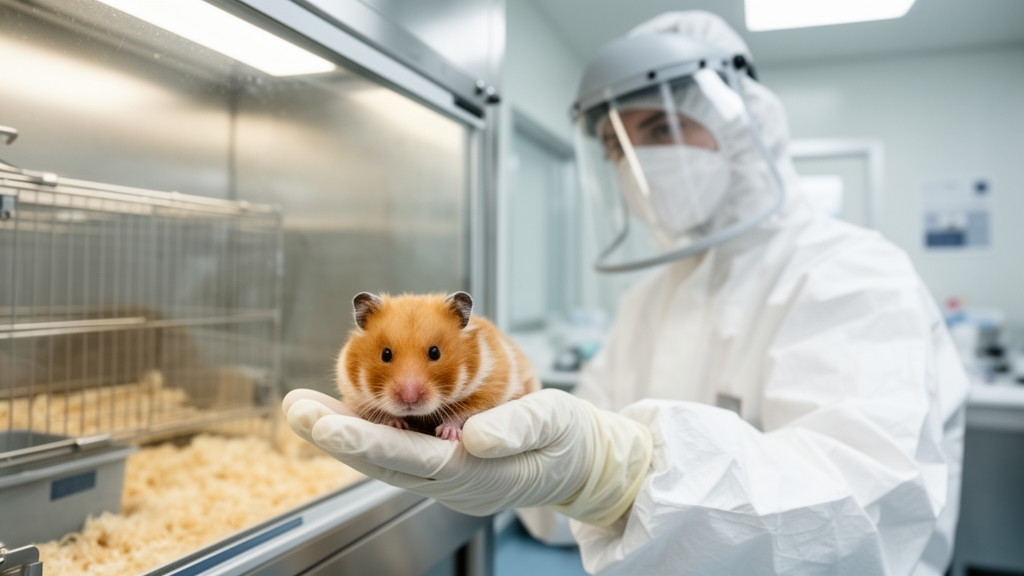
Researchers have developed a golden Syrian hamster line engineered to carry the human transferrin receptor 1 gene, creating a new small-animal model for studying New World hemorrhagic fever mammarenaviruses. The work, published in npj Viruses, addresses a long-standing obstacle in the field: the scarcity of small-animal models that faithfully reproduce the severe, life-threatening hemorrhagic fever syndrome these viruses cause in humans.

Mammarenaviruses are endemic in rodent populations worldwide, and their zoonotic transmission can lead to hemorrhagic fever. In the Americas, five New World mammarenaviruses are known to cause this syndrome. Because vaccines and antiviral therapy options remain limited, these pathogens represent a significant public health risk and, according to the authors, a threat to national security. Research into how these viruses cause disease, and into the development of effective countermeasures, has been restricted by the shortage of suitable animal models.

A key biological detail underpins the new model. The pathogenic New World mammarenaviruses use human transferrin receptor 1 as the receptor for cellular entry. The team created an hTfR1 knock-in golden Syrian hamster line and tested its susceptibility to Junín virus infection, one of the pathogenic New World mammarenaviruses. According to the study, the transgenic hamster infection model supports transferrin receptor 1-mediated entry as an essential step in Junín virus pathogenesis.

The authors report that the model provides a novel small-animal platform intended to advance the development of host receptor-directed therapies and direct-acting antivirals aimed at improving outcomes for patients with severe disease caused by pathogenic New World mammarenaviruses. The article was published under open access on 27 October 2026 and is being shared early to provide faster access to peer-reviewed, accepted research; this version remains subject to further edits before the final Version of Record replaces it.

Subject of Research: Development of a human transferrin receptor 1 knock-in Syrian hamster model for New World hemorrhagic fever mammarenavirus infection

Article Title: A transgenic Syrian hamster model for New World hemorrhagic fever mammarenavirus infection

Article References: Wasson, S. R., Liu, Y., Li, M., Bailey, K. W., Westover, J. B., Landinez-Aponte, J., Van Wettere, A., Siddharthan, V., Davies, C. J., Daniels-Wells, T. R., Li, R., Penichet, M. L., Wang, Z., & Gowen, B. B. (2026). A transgenic Syrian hamster model for New World hemorrhagic fever mammarenavirus infection. npj Viruses. https://doi.org/10.1038/s44298-026-00252-y

Image Credits: AI Generated

DOI: 10.1038/s44298-026-00252-y

Keywords: mammarenavirus, Junín virus, hemorrhagic fever, Syrian hamster, transferrin receptor 1, animal model, transgenic, zoonotic, antiviral development, pathogenesis, npj Viruses, Syrian

Cite Scienmag News

Kristina Jarvis. (October 27, 2026). Transgenic hamster model recreates New World hemorrhagic fever infection. Scienmag. https://scienmag.com/transgenic-hamster-model-recreates-new-world-hemorrhagic-fever-infection/

Kristina Jarvis. "Transgenic hamster model recreates New World hemorrhagic fever infection." Scienmag, 27 October 2026, https://scienmag.com/transgenic-hamster-model-recreates-new-world-hemorrhagic-fever-infection/. Accessed 27 October 2026.

Kristina Jarvis. "Transgenic hamster model recreates New World hemorrhagic fever infection." Scienmag. October 27, 2026. https://scienmag.com/transgenic-hamster-model-recreates-new-world-hemorrhagic-fever-infection/


Tags: animal modelantiviral developmenthemorrhagic feverJunín virusmammarenavirusnpj VirusespathogenesisSyrianSyrian hamstertransferrin receptor 1Transgeniczoonotic
Share26Tweet16
Previous Post

Copper-Driven Cell Death Offers a New Angle on Triple-Negative Breast Cancer

Next Post

Mirabegron beats tamsulosin at easing ureteral stent symptoms in randomized trial

Related Posts

Serum Myostatin Tracks Disease Severity in Spinal Muscular Atrophy, Small Study Finds
Medicine

Serum Myostatin Tracks Disease Severity in Spinal Muscular Atrophy, Small Study Finds

October 27, 2026
Fast Sodium Correction May Not Independently Raise Demyelination Risk in Severe Hyponatremia
Medicine

Fast Sodium Correction May Not Independently Raise Demyelination Risk in Severe Hyponatremia

October 27, 2026
Nurses Emerge as Key Players in Taming Targeted Cancer Therapy Side Effects
Medicine

Nurses Emerge as Key Players in Taming Targeted Cancer Therapy Side Effects

October 27, 2026
MicroRNA miR-22-3p drives radiation resistance in glioblastoma by suppressing TET1
Cancer

MicroRNA miR-22-3p drives radiation resistance in glioblastoma by suppressing TET1

October 27, 2026
Herbal Sela teas boost blood pressure and diabetes drugs in lab tests
Medicine

Herbal Sela teas boost blood pressure and diabetes drugs in lab tests

October 27, 2026
Tildrakizumab Clears Skin in Most Indian Psoriasis Patients in Phase III Trial
Medicine

Tildrakizumab Clears Skin in Most Indian Psoriasis Patients in Phase III Trial

October 27, 2026
Next Post
Mirabegron beats tamsulosin at easing ureteral stent symptoms in randomized trial

Mirabegron beats tamsulosin at easing ureteral stent symptoms in randomized trial

  • Mothers who receive childcare support from maternal grandparents show more optimized

    Mothers who receive childcare support from maternal grandparents show more parental warmth, finds NTU Singapore study

    27656 shares
    Share 11059 Tweet 6912
  • University of Seville Breaks 120-Year-Old Mystery, Revises a Key Einstein Concept

    1061 shares
    Share 424 Tweet 265
  • Bee body mass, pathogens and local climate influence heat tolerance

    682 shares
    Share 273 Tweet 171
  • Researchers record first-ever images and data of a shark experiencing a boat strike

    546 shares
    Share 218 Tweet 137
  • Groundbreaking Clinical Trial Reveals Lubiprostone Enhances Kidney Function

    531 shares
    Share 212 Tweet 133
Science

Embark on a thrilling journey of discovery with Scienmag.com—your ultimate source for cutting-edge breakthroughs. Immerse yourself in a world where curiosity knows no limits and tomorrow’s possibilities become today’s reality!

RECENT NEWS

  • Rebuilding Aghdam: how a destroyed city is testing sustainable urban recovery
  • Scientists can predict low birthweights in West Africa up to a year ahead using climate data
  • Explainable AI models track EV battery health over 6G networks
  • Nurses Emerge as Key Players in Taming Targeted Cancer Therapy Side Effects

Categories

  • Agriculture
  • Anthropology
  • Archaeology
  • Athmospheric
  • Biology
  • Biotechnology
  • Blog
  • Bussines
  • Cancer
  • Chemistry
  • Climate
  • Earth Science
  • Editorial Policy
  • Marine
  • Mathematics
  • Medicine
  • Pediatry
  • Policy
  • Psychology & Psychiatry
  • Science Education
  • Science News
  • Social Science
  • Space
  • Technology and Engineering

Subscribe to Blog via Email

Enter your email address to subscribe to this blog and receive notifications of new posts by email.

Join 5,151 other subscribers

© 2025 Scienmag - Science Magazine

Welcome Back!

Login to your account below

Forgotten Password?

Retrieve your password

Please enter your username or email address to reset your password.

Log In
No Result
View All Result
  • HOME
  • SCIENCE NEWS
  • CONTACT US

© 2025 Scienmag - Science Magazine

Discover more from Science

Subscribe now to keep reading and get access to the full archive.

Continue reading