


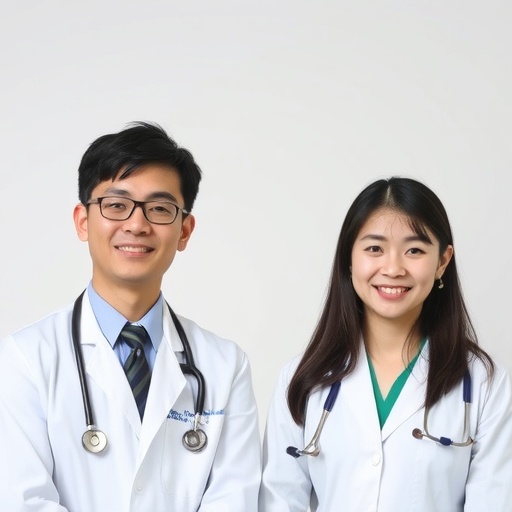
In a groundbreaking study set to be published in 2026, researchers Park and Hong delve into the intricate relationship between learning interactions and the transformation of professional identity among students of traditional Korean medicine. As the world grapples with the challenges of bridging traditional practices with modern educational frameworks, their findings illuminate a pathway that not only enhances learning but also redefines how aspiring practitioners perceive their roles within the medical community.
The study meticulously examines how students of traditional Korean medicine navigate their educational journeys amidst a backdrop of rapidly changing healthcare paradigms. Through qualitative research methods, the authors collected firsthand narratives from numerous students, providing a rich tapestry of insights that highlight the emotional and intellectual processes involved in their professional development. This approach underscores the necessity of understanding not just what is taught, but how students internalize their experiences and evolve in their understanding of their future careers.
At the heart of this research is the concept of “learning interactions,” which encompasses both the formal and informal exchanges that occur between students, educators, and the broader health community. Park and Hong argue that these interactions play a pivotal role in shaping professional identity, influencing how students feel about their chosen field and their readiness to engage with it. The authors contend that a supportive and responsive educational environment can significantly boost students’ confidence, helping them to align their personal values with their professional aspirations.
Key to the study’s findings is the realization that the transformative power of learning interactions is not limited to academic knowledge alone. The researchers found that students who actively participated in collaborative activities and discussions reported a deeper understanding of traditional Korean medicine’s principles and practices. This participatory approach fosters a sense of belonging and collective identity among students, which is essential in a discipline often seen as niche or esoteric in the broader medical landscape.
Moreover, the study highlights the significance of mentorship in the educational process. Mentors serve as bridges between theoretical knowledge and practical application, guiding students through the intricate web of traditional practices, modern scientific inquiry, and the expectations of contemporary healthcare systems. Park and Hong emphasize that effective mentorship can demystify the complexities of professional identity formation, enabling students to reconcile their cultural heritage with rigorous academic standards.
In the context of traditional Korean medicine, the findings suggest that students are more likely to engage deeply with their studies when they perceive a personal connection to the material. This relationship can emerge from their backgrounds, family traditions, or even personal health experiences. As such, educational institutions are encouraged to create curricula that reflect these diverse narratives and foster a richer understanding of the subject matter.
Furthermore, the implications of this research extend beyond individual student experiences. By transforming how traditional medical practices are taught, educational institutions can play a critical role in preserving such practices amidst the overwhelming dominance of Western medicine in global health discussions. The study advocates for curricular changes that bridge historical teachings with contemporary healthcare challenges, ensuring that students are not just passive recipients of knowledge but active participants in a legacy that has much to offer in today’s world.
In examining the interplay between professional identity and educational practices, Park and Hong propose a model that could be adopted by similar programs across the globe. By prioritizing student well-being, fostering awareness of cultural context, and promoting resilience in professional life, institutions can cultivate a new generation of practitioners who embody the richness of their heritage while navigating the modern healthcare landscape with confidence.
In light of the current global health crises, the relevance of traditional medicine becomes ever more pressing. As societies seek holistic approaches to health and wellness, the need for practitioners trained in traditional modalities is clear. This research could serve as a catalyst for a broader dialogue on how educational institutions can better prepare students for the complex realities they will face, ultimately leading to more integrated and effective healthcare solutions.
As this study reaches a wider audience through publication, it has the potential to influence not only curriculum development but also policy decisions regarding the inclusion of traditional medicine in healthcare systems. The conversation surrounding the legitimacy and efficacy of different medical practices is evolving, and these findings contribute valuable perspectives that can help shape future directions in medical education.
In conclusion, Park and Hong’s study offers compelling evidence that reframing learning interactions within the context of traditional Korean medicine can significantly transform professional identity among students. By emphasizing collaborative learning, mentorship, and cultural relevance, they provide a roadmap for educational transformation that resonates not only with those in the field of traditional medicine but also with educators and practitioners worldwide. As we stand at the intersection of tradition and modernity, this research underscores the importance of honoring diverse medical heritages while preparing future healthcare leaders to engage confidently with the complexities of contemporary health challenges.
Park, G.M., Hong, A.J. Reframing learning interactions: transforming professional identity among students of traditional Korean medicine. BMC Med Educ (2026). https://doi.org/10.1186/s12909-025-08543-3
Cite Scienmag News
Courtney Benton. (January 5, 2026). Transforming Professional Identity in Korean Medicine Students. Scienmag. https://scienmag.com/transforming-professional-identity-in-korean-medicine-students/
Courtney Benton. "Transforming Professional Identity in Korean Medicine Students." Scienmag, 5 January 2026, https://scienmag.com/transforming-professional-identity-in-korean-medicine-students/. Accessed 5 September 2026.
Courtney Benton. "Transforming Professional Identity in Korean Medicine Students." Scienmag. January 5, 2026. https://scienmag.com/transforming-professional-identity-in-korean-medicine-students/


