


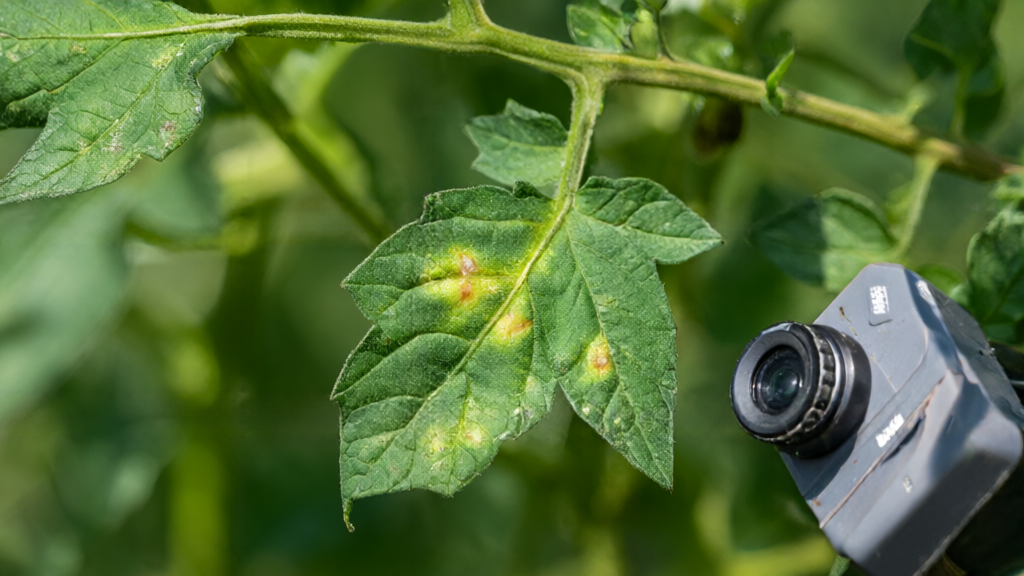
Tomato diseases pose a significant threat to global agricultural productivity, often leading to substantial economic losses and reduced crop yields. The timely and accurate identification of these diseases is therefore critical for implementing effective management strategies. Recent advancements in artificial intelligence have introduced deep learning models as powerful tools for automating this detection process. A new study published in the journal Neural Computing and Applications provides a comparative analysis of five state-of-the-art deep learning architectures for classifying tomato leaf diseases. The research aims to evaluate which model structures are most effective in distinguishing between healthy and diseased leaves, potentially offering a more reliable method for agricultural decision-making.
The study, conducted by Tarza Hasan Abdullah from the Department of Computer Science at Salahaddin University-Erbil in Kurdistan, Iraq, focuses on five specific deep learning models: InceptionV3, DenseNet121, NasNetLarge, Xception, and ViT-16. These architectures represent a mix of traditional convolutional neural networks (CNNs) and newer transformer-based approaches. The author trained and tested these models using a dataset of tomato leaf images that were converted to grayscale. The choice of grayscale images suggests an attempt to reduce computational complexity and focus on structural features rather than color variations, which can sometimes be inconsistent in field conditions.
To assess the performance of each model, the study utilized four standard metrics: accuracy, precision, recall, and F1-score. These indicators provide a comprehensive view of how well each model can correctly identify disease classes without misclassifying healthy leaves or missing actual cases of disease. The experimental results revealed distinct differences in performance among the five architectures. The ViT-16 model, a vision transformer, demonstrated superior performance compared to the other four models. It achieved an accuracy of 95.34% and an F1-score of 94.33%, indicating a strong balance between precision and recall in its classification tasks.
Following the ViT-16, the DenseNet121 and Xception models also performed well, with both achieving accuracy rates exceeding 94%. These results suggest that certain convolutional architectures remain highly effective for image classification tasks in agriculture. However, the study noted that InceptionV3 and NasNetLarge achieved relatively weaker results. Specifically, these two models showed shortcomings in capturing disease-specific features, which was reflected in their lower precision and recall scores. This disparity highlights that not all deep learning models are equally suited for detecting subtle visual patterns associated with plant pathology.
The findings indicate that transformer-based models, particularly the ViT-16, hold great promise for agricultural image classification. Unlike traditional CNNs, which rely on local feature extraction through convolutional filters, transformers use self-attention mechanisms to capture global dependencies within an image. This capability may allow them to better recognize complex disease patterns that span larger areas of the leaf. The study suggests that such models could become valuable tools for farmers and agricultural professionals, providing a non-invasive and rapid method for diagnosing crop health.
The dataset used in this research is publicly available in the Kaggle repository, specifically the plant disease dataset. This accessibility allows other researchers to reproduce the study’s findings and potentially extend the work to other crops or disease types. The author also noted that all code associated with the study can be made available upon reasonable request, promoting transparency and reproducibility in the scientific community. By using a public dataset, the study ensures that the results are comparable to other research in the field, facilitating a broader understanding of model performance in agricultural applications.
While the study demonstrates the high accuracy of the ViT-16 model, it is important to consider the context of these results. The models were tested on grayscale images, which may not fully represent the variability found in real-world field conditions, such as different lighting, backgrounds, and leaf orientations. Furthermore, the study focuses on tomato diseases, and the generalizability of these findings to other crops remains to be established. Future research could explore the application of these models in multi-crop scenarios or in real-time monitoring systems using mobile devices.
The implications of this study extend beyond academic interest. As the global population grows, the demand for food production increases, making efficient crop management essential. Deep learning models that can accurately detect diseases early can help farmers apply targeted treatments, reducing the need for broad-spectrum pesticides and minimizing environmental impact. The superior performance of the ViT-16 model suggests that investing in transformer-based architectures could yield significant benefits for precision agriculture. However, practical deployment will require further optimization to ensure that these models can run efficiently on devices with limited computational resources.
In conclusion, the comparative study highlights the potential of vision transformers in agricultural image classification. The ViT-16 model’s ability to outperform established CNN architectures in detecting tomato diseases underscores the rapid evolution of deep learning techniques. As researchers continue to refine these models and test them in diverse agricultural settings, the integration of AI into farming practices may become more widespread. This study contributes to the growing body of evidence supporting the use of advanced machine learning tools to enhance food security and sustainability in agriculture.
Subject of Research: Agricultural Science
Article Title: A comparative study of deep learning models for tomato disease detection
Article References: Abdullah, T. H. (2026). A comparative study of deep learning models for tomato disease detection. Neural Computing and Applications, 38(17), Article 724. https://doi.org/10.1007/s00521-026-12399-z
Image Credits: AI Generated
DOI: 10.1007/s00521-026-12399-z
Keywords: Deep Learning, Tomato Disease, Computer Vision, Agriculture, Machine Learning, comparative, deep, learning, models, tomato, disease, detection
Cite Scienmag News
Blake Davidson. (October 2, 2026). Transformer-based model outperforms CNNs in tomato disease detection study. Scienmag. https://scienmag.com/transformer-based-model-outperforms-cnns-in-tomato-disease-detection-study/
Blake Davidson. "Transformer-based model outperforms CNNs in tomato disease detection study." Scienmag, 2 October 2026, https://scienmag.com/transformer-based-model-outperforms-cnns-in-tomato-disease-detection-study/. Accessed 4 October 2026.
Blake Davidson. "Transformer-based model outperforms CNNs in tomato disease detection study." Scienmag. October 2, 2026. https://scienmag.com/transformer-based-model-outperforms-cnns-in-tomato-disease-detection-study/


