


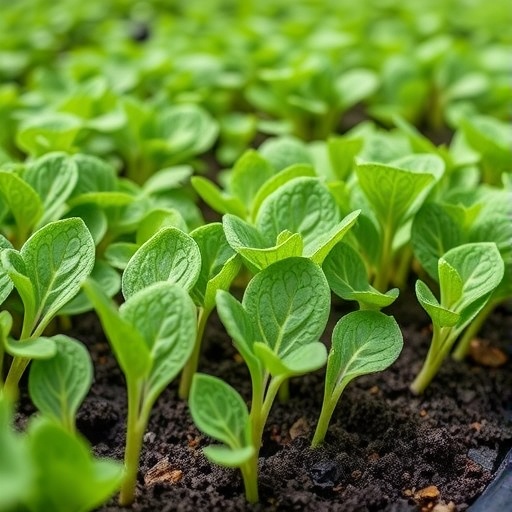
In a remarkable advancement in agricultural science, researchers have identified a unique microbial agent known as Trametes NF1, which has exhibited promising potential in enhancing the growth and salinity tolerance of alfalfa, a staple forage crop. As global agriculture faces the escalating threat of saline-alkali soils due to climate change and unsustainable farming practices, the findings of this research offer hope for sustainable crop production in marginal environments.
Historically, saline-alkali soils have posed significant barriers to agricultural productivity, particularly in arid and semi-arid regions. The accumulation of salts in soil inhibits plant growth, leading to reduced crop yields and compromised soil health. Traditional methods of addressing salinity stress, such as soil amendments and irrigation management, often prove inadequate or economically unfeasible, especially for smallholder farmers. The exploration of biological solutions represents an innovative approach to tackling these challenges.
The research team, led by prominent scientists Zou, Shi, and Liu, aimed to investigate the adaptive mechanisms that enable Trametes NF1 to thrive in such hostile environments. This fungus is known for its lignocellulose-degrading capabilities, which are vital for nutrient cycling in soil ecosystems. Their study posits that Trametes NF1 not only improves nutrient availability but also fosters enhanced root development in alfalfa, thus bolstering the plant’s overall resilience to saline stresses.
Through a combination of greenhouse experiments and field trials, the team meticulously documented the growth responses of alfalfa when inoculated with Trametes NF1. Results revealed a striking increase in plant height, biomass, and root length, coupled with a significant enhancement in physiological parameters such as chlorophyll content and photosynthetic rate. These findings underscore the pivotal role that beneficial microorganisms can play in improving plant fitness amidst environmental stressors.
The study also delves into the biochemical pathways activated by Trametes NF1, shedding light on how this fungus imparts salinity tolerance. It triggers a complex network of stress response genes that facilitate ion homeostasis, osmotic adjustment, and antioxidant production within the plant. This multifaceted interaction suggests that Trametes NF1 not only aids in nutrient acquisition but also primes alfalfa to effectively manage ionic imbalances created by high saline conditions.
In addition, the research highlights the implications of these findings for agricultural sustainability. As the demand for food continues to intensify, innovative strategies to improve crop resilience are imperative. By harnessing the properties of Trametes NF1, farmers could significantly enhance the productivity of alfalfa crops grown in saline-prone areas, thereby increasing livestock feed availability in regions where it is most needed.
Moreover, the application of fungal inoculants like Trametes NF1 represents a shift towards eco-friendly agricultural practices. Unlike synthetic fertilizers and chemical amendments, which often exacerbate soil degradation, biological solutions promote a more holistic approach to soil fertility management. This could lead to long-term improvements in soil health, increased carbon sequestration, and enhanced biodiversity within managed ecosystems.
The researchers plan to further investigate the potential of Trametes NF1 in other economically important crops, with the hope of developing a suite of biological tools to combat salinity stress across diverse agricultural systems. Their findings provoke critical discussions about the future of agriculture in saline-prone regions and underline the importance of integrating innovative microbial solutions into mainstream practices.
As the agricultural community grapples with the dual challenges of climate change and food security, studies like these illuminate pathways toward resilient and sustainable farming systems. The collaboration between microbiologists, agronomists, and plant physiologists in this research underlines the interdisciplinary approach necessary to tackle some of the most pressing issues in agriculture today.
In conclusion, the introduction of Trametes NF1 as a biological ally in promoting alfalfa growth amid saline conditions represents a groundbreaking step in enhancing agricultural resilience. This research signifies the beginning of a promising journey toward sustainable solutions that not only bolster food production but also safeguard the environment against degradation.
The implications of such advancements extend far beyond the laboratory. With proper dissemination and adoption strategies, these findings could transform agricultural practices in affected regions and create a framework for addressing similar challenges globally. The future of agriculture may very well depend on our ability to integrate natural solutions into the fabric of crop production, ensuring the sustainability and security of food systems for generations to come.
Zou, H., Shi, Z., Liu, J. et al. Saline-alkali resilience: the role of Trametes NF1 in promoting alfalfa growth and salinity tolerance. Int Microbiol (2025). https://doi.org/10.1007/s10123-025-00680-5
Cite Scienmag News
Alan Morgan. (August 5, 2025). Trametes NF1 Boosts Alfalfa Growth Under Saline Stress. Scienmag. https://scienmag.com/trametes-nf1-boosts-alfalfa-growth-under-saline-stress/
Alan Morgan. "Trametes NF1 Boosts Alfalfa Growth Under Saline Stress." Scienmag, 5 August 2025, https://scienmag.com/trametes-nf1-boosts-alfalfa-growth-under-saline-stress/. Accessed 4 September 2026.
Alan Morgan. "Trametes NF1 Boosts Alfalfa Growth Under Saline Stress." Scienmag. August 5, 2025. https://scienmag.com/trametes-nf1-boosts-alfalfa-growth-under-saline-stress/


