


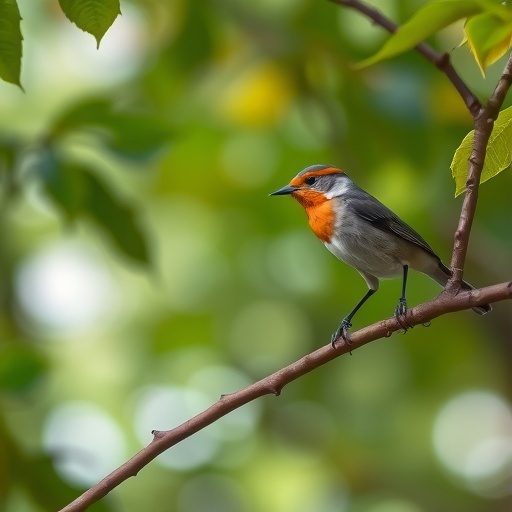
Birdsong may be one of nature’s most accessible forms of stress relief, but a new study suggests that the benefits can be weakened—even erased—by the sound of passing traffic. Researchers at the University of Surrey found that natural soundscapes containing birds improved people’s reported feelings of relaxation and psychological restoration, regardless of how acoustically complex or loud the birdsong itself was. Yet when traffic noise was added, participants experienced fewer wellbeing benefits and showed physiological signs associated with greater stress. The findings highlight a growing challenge for cities investing in parks and green corridors: access to nature may not be enough if urban noise prevents people from hearing it clearly.
The research examined how specific acoustic properties of natural soundscapes influence human wellbeing, and whether anthropogenic noise—the technical term for sound generated by human activity—interferes with those effects. Natural environments are often associated with lower stress, improved mood and mental restoration, while road traffic is linked to annoyance, sleep disruption and elevated psychological strain. Sound is an important part of this contrast. A park beside a quiet woodland may offer a very different sensory experience from a park bordered by a busy highway, even when both contain trees, grass and birds. The Surrey team therefore focused not only on the presence of birdsong, but also on the structure, intensity and diversity of the sounds people heard.
More than 1,500 participants took part in the first of two complementary studies. They listened to nine simulated soundscapes designed to vary in acoustic complexity and amplitude, or perceived loudness. The recordings contained natural sounds, including birdsong, with different combinations of traffic noise. After each listening session, participants answered questions measuring how relaxed, calm and mentally restored they felt. This approach allowed the researchers to separate the psychological effects of the natural sounds from the effects of their acoustic arrangement. Rather than treating a soundscape as a simple recording, the study examined it as a combination of measurable properties, including overall sound energy, variation and complexity.
The second study provided a physiological counterpart to the participants’ subjective reports. Sixty-three volunteers listened to the same nine soundscapes in a laboratory while wearing heart-rate monitors. The researchers focused on heart-rate variability, or HRV, a measure of the changing time intervals between heartbeats. HRV is influenced by the autonomic nervous system, which regulates involuntary processes such as heart rate and breathing. Greater variability is often associated with flexible regulation and recovery, while reduced variability can indicate that the body is responding to a stressor. Although HRV is not a standalone diagnostic test, changes in the measure can reveal how the body reacts to different environmental conditions.
Across the experiments, soundscapes containing birdsong consistently produced psychological benefits. Participants generally reported greater relaxation and restoration after hearing natural sounds, and these benefits did not depend strongly on whether the soundscape was acoustically simple, complex, quiet or relatively energetic. This suggests that the restorative effect of birdsong may be broader than previously assumed. People may not need to encounter a particular bird species, a specific melody or an ideal acoustic profile to gain some psychological benefit. The mere perception of a living, natural sound environment appears to play an important role.
Traffic noise changed that response. Even when the traffic sounds remained below World Health Organization daytime guideline levels for vehicle noise, they reduced the reported psychological benefits of the natural soundscapes. In the laboratory experiment, participants also displayed significantly lower heart-rate variability when traffic noise was present. The combination of self-reported discomfort and physiological change suggests that road noise did more than make the recordings less pleasant. It may have shifted the body toward a state of increased vigilance or stress, limiting the mental restoration normally associated with natural sounds. A person may still hear birds, but the nervous system may remain focused on the competing and potentially threatening signals of nearby vehicles.
The researchers observed that the damaging influence of traffic was especially pronounced when the natural soundscape itself had high acoustic characteristics, such as greater overall sound energy or complexity. One possible explanation is sensory overstimulation. A soundscape with many overlapping elements can be engaging and rich when it is perceived as natural, but the addition of loud or persistent traffic may push the total acoustic load beyond what feels restorative. Instead of creating a gentle sense of immersion, the combined sound field may demand continuous attention. This could be particularly important in urban parks, where birds, people, machinery and vehicles often occupy the same acoustic space.
The study also revealed that perception may matter as much as objective measurement. Although the recordings included only three bird species and five individual bird sounds, participants who believed they were hearing a greater variety of species reported stronger wellbeing benefits. This perceived species richness—the impression that many kinds of birds are present—was associated with increased restoration. The finding suggests that listeners do not respond only to the exact biological diversity encoded in a recording. They also interpret acoustic patterns and form a subjective impression of ecological richness. A soundscape that seems varied and alive may promote a stronger feeling of connection with nature, even when its actual species composition is limited.
Age and familiarity with birds influenced the responses as well. Younger participants reported greater wellbeing after listening to the soundscapes than older participants, a difference the researchers suggest may partly reflect hearing ability and the quality of the acoustic experience. Age-related hearing changes can reduce sensitivity to higher-frequency sounds, including some components of birdsong, potentially making the recordings less detailed or immersive. Participants who said they knew more about birds also reported stronger wellbeing and perceived greater bird diversity. This may reflect greater ability to identify or interpret bird sounds, but it may also indicate that prior knowledge increases attention to natural acoustic cues. Familiarity can make an environment feel more meaningful, predictable and engaging.
The implications extend beyond headphones and laboratories. As cities expand their networks of parks, gardens and green infrastructure, planners may need to consider acoustic conditions alongside visual access to nature. The researchers suggest reducing speed limits on roads near parks and increasing dense, ground-level vegetation along park boundaries as possible ways to reduce traffic noise. Vegetation cannot block all low-frequency road sound, but carefully designed barriers, earth berms, setbacks and changes in road surfaces may reduce the amount of noise reaching recreational areas. Protecting quiet zones could make urban green spaces more restorative, particularly for people seeking relief from chronic stress. The University of Surrey study, published in People and Nature, indicates that nature’s benefits are not simply switched on by the presence of trees or birds. They depend partly on whether the wider sound environment allows those natural signals to be heard, interpreted and enjoyed.
Web References: https://doi.org/10.1002/pan3.70405
References: People and Nature, DOI: 10.1002/pan3.70405
Cite Scienmag News
Courtney Benton. (August 26, 2026). Traffic Noise Diminishes the Benefits of Birdsong. Scienmag. https://scienmag.com/traffic-noise-diminishes-the-benefits-of-birdsong/
Courtney Benton. "Traffic Noise Diminishes the Benefits of Birdsong." Scienmag, 26 August 2026, https://scienmag.com/traffic-noise-diminishes-the-benefits-of-birdsong/. Accessed 3 September 2026.
Courtney Benton. "Traffic Noise Diminishes the Benefits of Birdsong." Scienmag. August 26, 2026. https://scienmag.com/traffic-noise-diminishes-the-benefits-of-birdsong/


