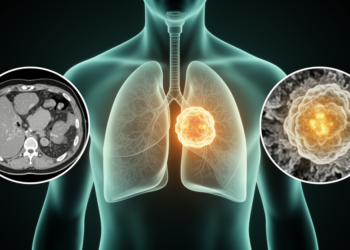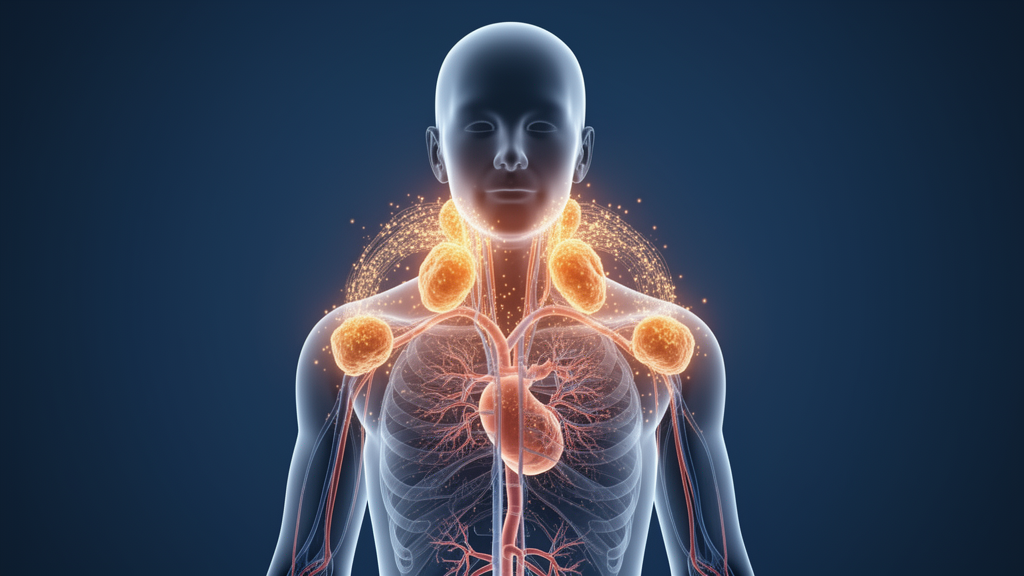
Brown adipose tissue, the mitochondria-rich fat that burns energy to generate heat, may be detectable with a new imaging approach that does not require the uncomfortable cold exposure normally needed to switch it on. In a study published in the Journal of Translational Medicine, researchers report that the PET tracer 18F-fluorocholine is taken up substantially more by human supraclavicular brown fat than by white adipose tissue, and that uptake in the neck region is inversely associated with body mass index.
Conventional quantification of brown fat mass relies on 18F-fluorodeoxyglucose PET, which requires antecedent cold exposure to activate the tissue. The team hypothesized that 18F-fluorocholine could instead detect human brown fat because brown adipocytes, with their high mitochondrial density and multiple lipid droplets, require considerable phosphatidylcholine synthesis, a process that depends on choline.
The study combined four lines of investigation. First, six healthy men with detectable 18F-fluorodeoxyglucose uptake by brown fat took part in a randomised crossover study examining 18F-fluorocholine uptake by brown fat during warm and cold exposure. Second, the researchers quantified 18F-fluorocholine uptake by supraclavicular adipose tissue in 76 patients who had previously undergone 18F-fluorocholine PET/CT scanning. Third, they measured choline transporter expression in human brown and white adipose tissue and in isolated brown and white adipocytes. Fourth, they performed lipidomics on human brown adipocytes incubated with 15N-choline to track phospholipid synthesis.
The results showed that 18F-fluorocholine uptake by brown fat was substantially greater than by white adipose tissue during both warm and cold exposure. In the retrospective patient cohort, uptake by supraclavicular adipose tissue was higher in the colder seasons, positively associated with tissue radiodensity, and inversely associated with body mass index. Notably, the same inverse association with body mass index was not seen for superficial neck white adipose tissue, suggesting the supraclavicular signal reflects a distinct tissue type.
Molecular work supported the imaging findings. Expression of the choline transporter SLC44A3 was higher in human supraclavicular brown fat than in white adipose tissue, while SLC44A2 was expressed more highly in human brown than in white adipocytes. The 15N-choline tracing in human brown adipocytes identified incorporation of the labelled choline into more than 30 phosphatidylcholine species, consistent with active choline utilisation for phosphatidylcholine synthesis in brown fat.
The authors conclude that human supraclavicular brown adipose tissue demonstrates greater 18F-fluorocholine uptake than white adipose tissue, consistent with increased choline utilisation for phosphatidylcholine synthesis, and that 18F-fluorocholine uptake in supraclavicular adipose tissue at room temperature may serve as a marker of human brown fat. If confirmed, such an approach could allow brown fat assessment without deliberate cold exposure, although the findings so far come from a small crossover study and retrospective scans in patients already undergoing the tracer’s established clinical use, so further validation would be needed before routine application.
Subject of Research: Using 18F-fluorocholine PET to detect and quantify human brown adipose tissue
Article Title: 18F-Fluorocholine uptake is greater by human supraclavicular brown than white adipose tissue and inversely associated with body mass index
Article References: Suchacki, K. J., Ramage, L. E., Boyle, L. D., Kwok, T. C., Blanco, G. R., Kelman, A., Gray, C. D., von Kriegsheim, A., Gregoriades, M.-L., Oniscu, G. C., Fletcher, A. M., Homer, N. Z. M., Terrace, J. D., Allwood, J. W., Wakelin, S. J., van Beek, E. J. R., Patel, D., Finch, A. J., & Stimson, R. H. (2026). 18F-Fluorocholine uptake is greater by human supraclavicular brown than white adipose tissue and inversely associated with body mass index. Journal of Translational Medicine. https://doi.org/10.1186/s12967-026-09126-6
Image Credits: AI Generated
DOI: 10.1186/s12967-026-09126-6
Keywords: brown adipose tissue, 18F-fluorocholine, PET imaging, white adipose tissue, body mass index, supraclavicular fat, choline transporter, phosphatidylcholine, SLC44A3, SLC44A2, metabolism, Journal of Translational Medicine
Cite Scienmag News
Daisy Hatcher. (October 29, 2026). Tracer reveals human brown fat without cold exposure, study finds. Scienmag. https://scienmag.com/tracer-reveals-human-brown-fat-without-cold-exposure-study-finds/
Daisy Hatcher. "Tracer reveals human brown fat without cold exposure, study finds." Scienmag, 29 October 2026, https://scienmag.com/tracer-reveals-human-brown-fat-without-cold-exposure-study-finds/. Accessed 29 October 2026.
Daisy Hatcher. "Tracer reveals human brown fat without cold exposure, study finds." Scienmag. October 29, 2026. https://scienmag.com/tracer-reveals-human-brown-fat-without-cold-exposure-study-finds/