


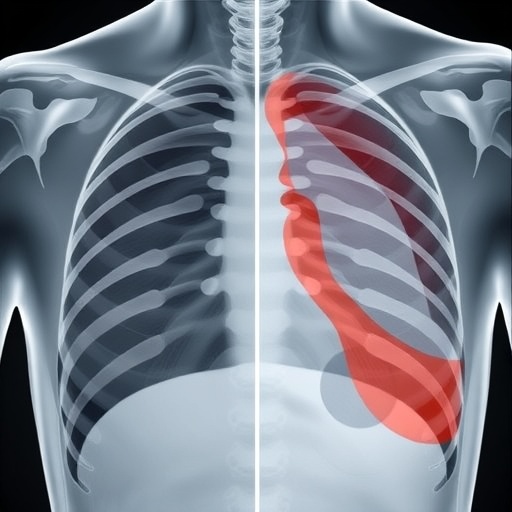
In a groundbreaking advancement within trauma surgery, surgeons and researchers have unveiled a comparative clinical evaluation focusing on two minimally invasive approaches for the treatment of multiple rib fractures. The investigation delves into total thoracoscopic surgery and thoracoscopy-assisted small-incision surgery, assessing their therapeutic efficacy, safety profiles, and recovery outcomes. This meticulous comparative analysis may fundamentally reshape how clinicians approach the management of complex rib fractures, offering a significant potential to improve patient prognoses and postoperative quality of life.
Multiple rib fractures represent a significant clinical challenge in thoracic trauma, often resulting from high-impact injuries such as vehicle collisions or falls from height. The structural damage and resultant pain can lead to complications including pneumothorax, hemothorax, impaired ventilation, and prolonged respiratory distress. Traditionally, open thoracotomy has been the standard approach for stabilizing such fractures, but the advent of minimally invasive techniques heralds a paradigm shift toward less traumatic interventions, diminished postoperative pain, and expedited recuperation.
Thoracoscopic surgery, known for its reliance on video assistance to access the thoracic cavity through small ports, has become a cornerstone of minimally invasive thoracic procedures. Total thoracoscopic surgery implies completing the entire operation using thoracoscopic visualization and instrumentation without converting to larger incisions. This contrasts with thoracoscopy-assisted small-incision surgery, wherein thoracoscopic tools guide the procedure, yet a small incision facilitates direct access and manipulation. The relative merits of these approaches required robust clinical comparison, which this study rigorously undertakes.
The research encompassed a diverse patient cohort presenting with multiple rib fractures, ensuring a representative sample that reflects real-world variability in fracture patterns and patient physiology. Through sophisticated imaging modalities, such as high-resolution computed tomography (CT), the extent and nuance of rib fractures were meticulously characterized preoperatively. These imaging insights allowed precise planning of surgical strategies tailored to the minimally invasive method applied, whether total thoracoscopic or thoracoscopy-assisted.
Intraoperatively, total thoracoscopic surgery harnesses high-definition endoscopic cameras and specialized long instruments inserted through trocar ports. This technique demands exceptional surgical dexterity given the constrained working space, yet offers the advantage of reduced tissue trauma and superior visualization of the pleural cavity. Conversely, thoracoscopy-assisted small-incision surgery benefits from direct manual manipulation through a limited incision, potentially affording quicker access at the expense of slightly larger incisions and increased muscular disruption.
The comparative evaluation meticulously recorded perioperative parameters, including operative time, blood loss, and procedural complications. It emerged that total thoracoscopic surgery, while technically demanding and requiring slightly longer operative duration, resulted in significantly lower intraoperative hemorrhage. This reduction is attributable to minimal tissue disruption and enhanced visualization that permits meticulous hemostasis. Furthermore, the entirely endoscopic approach minimized inadvertent injury to extrapleural structures, a critical determinant in surgical safety.
Postoperative outcomes were evaluated using comprehensive metrics encompassing pain scores, respiratory function tests, length of hospital stay, and incidence of pulmonary complications such as pneumonia or prolonged air leak. Patients undergoing total thoracoscopic surgery reported markedly diminished pain intensity, facilitating early mobilization and improved pulmonary mechanics. Enhanced pain control contributes to better ventilatory effort, sharply reducing morbidity associated with atelectasis or respiratory infections.
The length of hospitalization favored the total thoracoscopic group, with patients benefiting from swifter functional recovery and fewer postoperative complications. Thoracoscopy-assisted small-incision surgery, while more invasive than the total thoracoscopic method, still demonstrated significant improvements over traditional thoracotomy in terms of patient comfort and convalescence. This underscores the progressive shift toward minimally invasive techniques as a superior standard in rib fracture management.
One particularly compelling facet of the research highlighted the psychological impact of minimally invasive surgery on patients. Reduced postoperative pain and smaller incisions correlated with less anxiety and better overall mental health during the recovery phase. This often overlooked component plays a pivotal role in holistic patient care, synergistically enhancing physiological healing through psychological well-being.
Technological advancements have critically facilitated the refinements described in this study. High-definition imaging systems, coupled with ergonomic thoracoscopic instruments, have transformed what was once an experimental technique into a reproducible and efficacious surgical modality. Moreover, ongoing innovations in 3D imaging and computer-assisted navigation promise to further elevate precision and outcomes in the near future.
The study also addressed the learning curve associated with total thoracoscopic surgery, emphasizing that surgeon experience profoundly influences operative efficiency and complication rates. Structured training programs and simulation models are advocated to accelerate the acquisition of thoracoscopic skills, ensuring broad dissemination without compromising safety. As expertise grows, it is anticipated that the duration of total thoracoscopic procedures will decrease, making the benefits even more accessible.
From a health economics perspective, the investigation posited that despite an initially higher cost due to specialized equipment and training, total thoracoscopic surgery yields cost-effectiveness over time. Reduced complication rates, shorter hospital stays, and faster return to normal activities translate into substantial savings for healthcare systems and patients alike, reinforcing the value proposition of minimal invasiveness.
Overall, this study represents a pivotal milestone in thoracic trauma care by providing high-quality evidence that endorses total thoracoscopic surgery as a prime surgical option for multiple rib fractures. It advocates a patient-centered, technology-driven surgical pathway that aligns with modern principles of minimally invasive intervention and enhanced recovery protocols.
The ramifications extend beyond rib fracture treatment alone; these findings embody a broader surgical trend favoring endoscopic methods to replace traditional open surgeries. The implications for trauma surgery, thoracic oncology, and even cardiac procedures are profound, as the pursuit of minimizing patient burden while maximizing therapeutic impact continues to accelerate.
Further research is encouraged to explore long-term functional outcomes, quality of life indices, and potential applications of robotic-assisted thoracoscopic surgery in this domain. Integration of artificial intelligence for intraoperative decision support also represents an exciting frontier anticipated to augment surgical precision and personalization.
In conclusion, the comparative clinical study scrutinizing total thoracoscopic surgery against thoracoscopy-assisted small-incision surgery for multiple rib fractures offers compelling evidence supporting broader adoption of total thoracoscopy. Its corroboration of superior perioperative safety, enhanced recovery, and cost-effectiveness positions it as a transformative advancement with the potential to redefine standards of care in thoracic trauma surgery worldwide.
Huang, X., Wang, D., Jiang, X. et al. Comparative clinical study of total thoracoscopic surgery and thoracoscopy-assisted small-incision surgery for multiple rib fractures.
Sci Rep (2026). https://doi.org/10.1038/s41598-026-37976-z
Cite Scienmag News
Ophelia Keating. (March 22, 2026). Total Thoracoscopic vs. Small-Incision Surgery: Rib Fracture Study. Scienmag. https://scienmag.com/total-thoracoscopic-vs-small-incision-surgery-rib-fracture-study/
Ophelia Keating. "Total Thoracoscopic vs. Small-Incision Surgery: Rib Fracture Study." Scienmag, 22 March 2026, https://scienmag.com/total-thoracoscopic-vs-small-incision-surgery-rib-fracture-study/. Accessed 5 September 2026.
Ophelia Keating. "Total Thoracoscopic vs. Small-Incision Surgery: Rib Fracture Study." Scienmag. March 22, 2026. https://scienmag.com/total-thoracoscopic-vs-small-incision-surgery-rib-fracture-study/


