


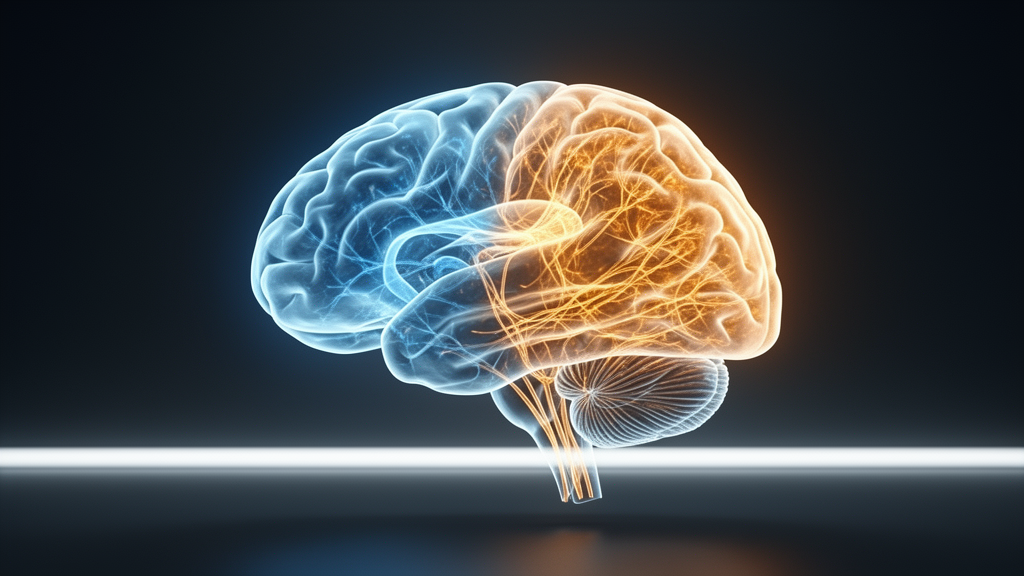
The human brain’s remarkable capacity to abandon a strategy that no longer works is one of its most underappreciated feats. Every time a commuter detours around a road closure, or a householder sorts through a ring of keys to find the right one for a unfamiliar lock, the prefrontal cortex is quietly reorganising learned behaviour to match new circumstances. When that process breaks down, as it often does in neuropsychiatric conditions such as schizophrenia, the consequences can be profound and disabling. A new study from the University of Nottingham, published in The Journal of Neuroscience, has now revealed something striking about how this breakdown happens: two fundamentally different forms of prefrontal dysfunction, one defined by too little neural activity and the other by too much, disrupt behavioural flexibility in distinctly different ways, and the difference depends on precisely which stage of learning the brain is grappling with.
The research, led by Jacco Renstroem, now a postdoctoral fellow at McMaster University in Canada, alongside Tobias Bast of Nottingham’s School of Psychology, was carried out in collaboration with drug discovery neuroscientists from Boehringer Ingelheim Pharma GmbH in Germany. Rather than treating prefrontal dysfunction as a single entity, the team set out to disentangle two phenomena that have long been associated with schizophrenia. The first is hypofrontality, a state of abnormally reduced activity in the prefrontal cortex, the frontal brain region critical for attention and cognitive control, the faculty that allows us to organise behaviour in pursuit of our goals. The second is prefrontal disinhibition, in which the brain’s normal braking system on neural activity is weakened, allowing prefrontal neurons to become excessively active. On the surface, these might appear to be opposite problems, yet both have been implicated in the same clinical syndrome.
The biological underpinnings of disinhibition lie in the chemistry of neural communication. Neurons talk to one another through neurotransmitters, chemical messengers that either excite their targets or suppress them. The brain’s principal inhibitory neurotransmitter is gamma-aminobutyric acid, or GABA, which acts as a brake to keep neural circuits from over-responding to stimuli. In schizophrenia, this GABAergic inhibition in the prefrontal cortex is known to be reduced. The result is a cortex that is simultaneously underactive in one sense, because of hypofrontality, and poorly regulated in another, because the dampening influence that keeps activity within appropriate bounds has been eroded. Whether, and how, these two distinct departures from healthy prefrontal function contribute to the flexibility impairments seen in patients has remained an open question until now.
To probe the question experimentally, the researchers turned to a behavioural paradigm known as reversal learning, a task that has previously revealed flexibility deficits in people with schizophrenia. In a reversal learning test, participants first learn to choose one of two stimuli, only to discover that the reward contingencies have secretly flipped: the previously correct choice becomes incorrect, and the previously ignored option becomes the winning strategy. Success requires recognising that an established habit must be abandoned and a new one formed. This is not merely a laboratory curiosity; strategy reversal of this kind is a fundamental component of everyday life, woven into everything from navigating changing traffic conditions to adapting a routine when circumstances demand it. Behavioural flexibility, in this sense, is essential for successfully negotiating the shifting demands of daily existence.
In the Nottingham study, rats were trained to choose between two levers, only one of which delivered a food reward. Once the animals had reliably learned which lever paid out, the experimenters reversed the rule, forcing the rats to abandon their preferred choice and switch to the other lever. Crucially, this reversal process was repeated several times. That repetition gave the researchers something a single test cannot provide: the ability to examine performance separately during the early stages of adaptation, when rats were first confronting the idea that rules can change at all, and during later stages, when they had become proficient at detecting and responding to each new reversal.
The findings were strikingly stage-dependent. When the researchers stimulated GABA-mediated inhibition within the prefrontal cortex, thereby inducing hypofrontality, the resulting suppression of prefrontal activity impaired the rats’ ability to adapt during the early phases of reversal learning, precisely when the animals were first working out that the rules had changed. In other words, an underactive prefrontal cortex undermined the initial discovery that a previously learned strategy was no longer viable. In contrast, too much prefrontal activity produced the mirror-image deficit. When the team created disinhibition, either by pharmacologically blocking the effects of GABA or by reducing the activity of the neurons that release it, performance collapsed at a different point: the later stages of reversal learning, when the rats had already mastered the general business of switching and needed only to execute each new adaptation efficiently.
These results carry an important conceptual message for neuroscience and psychiatry alike. As Renstroem explained, the findings highlight that distinct types of prefrontal dysfunction can give rise to distinct cognitive difficulties, depending on the demands of the task and the stage of learning. This means that the blanket label of impaired behavioural flexibility may conceal several mechanistically different problems. A patient whose prefrontal cortex is chronically hypoactive may struggle at a fundamentally different point in the adaptive process than one whose cortex is disinhibited, even if both perform poorly on the same clinical test. Such a distinction could matter enormously for efforts to understand the neural basis of cognitive symptoms in schizophrenia, and potentially for designing interventions that target the right mechanism in the right patient.
Methodologically, the study also represents a technical advance in its own right. To investigate the role of inhibitory neurotransmission more directly, the team adapted an existing technology known as chemogenetics, developing a new approach for selectively manipulating GABA-releasing inhibitory neurons within specific brain regions in rats. Chemogenetic techniques allow researchers to switch designated neuronal populations on or off using engineered receptors activated by otherwise inert compounds, offering a precision that conventional pharmacology cannot match. Bast noted that this new model provides a powerful tool for investigating how inhibitory signalling contributes to brain function and behaviour, and expressed the hope that it will enable future advances in understanding this fundamental aspect of neural functioning.
The collaboration with drug discovery neuroscientists at Boehringer Ingelheim underscores another dimension of the work’s significance. If too little and too much prefrontal activity produce dissociable cognitive deficits at different learning stages, then the pathway from basic circuit science to therapeutic development becomes clearer. Compounds that modulate GABAergic inhibition, or that address hypofrontality, could in principle be evaluated not just for whether they improve performance on flexibility tasks, but for which specific component of adaptation they rescue. Given that cognitive symptoms of schizophrenia remain stubbornly resistant to existing antipsychotic medications, which primarily address positive symptoms such as hallucinations and delusions, mechanism-anchored approaches of this kind are keenly needed.
Beyond its clinical implications, the study offers a vivid reminder of how finely balanced the healthy brain must be. The prefrontal cortex is not simply a region that should be maximally active; it requires activity that is both sufficient and properly calibrated by inhibitory circuits. Too little activity dulls the capacity to register that the world has changed; too much, unleashed by failing inhibitory brakes, erodes the polished proficiency with which learned adaptations are executed. Published on 11 September 2026 and led from Nottingham’s School of Psychology, the research reframes behavioural flexibility not as a single faculty but as a staged process, with separable neural requirements at each step. In doing so, it transforms a broad clinical observation, that patients with schizophrenia struggle when rules change, into a mechanistically specific account of where in that struggle different forms of prefrontal dysfunction intervene, and it hands researchers both the conceptual framework and the chemogenetic toolkit to pursue the question further.
Subject of Research: How hypofrontality and prefrontal disinhibition differentially impair reversal learning and behavioural flexibility
Article Title: Study shows how changes in prefontal brain activity can impair the ability to change behaviour
Article References: Study shows how changes in prefontal brain activity can impair the ability to change behaviour. (n.d.). Original publication
Image Credits: AI Generated
DOI: Not provided
Keywords: prefrontal cortex, GABA, reversal learning, schizophrenia, behavioural flexibility, hypofrontality, disinhibition, chemogenetics, cognitive control, neuroscience, inhibitory neurotransmission, rats
Cite Scienmag News
Cassandra Pierce. (October 17, 2026). Too Little or Too Much: Prefrontal Brain Imbalances Disrupt Behavioural Flexibility at Different Learning Stages. Scienmag. https://scienmag.com/too-little-or-too-much-prefrontal-brain-imbalances-disrupt-behavioural-flexibility-at-different-learning-stages/
Cassandra Pierce. "Too Little or Too Much: Prefrontal Brain Imbalances Disrupt Behavioural Flexibility at Different Learning Stages." Scienmag, 17 October 2026, https://scienmag.com/too-little-or-too-much-prefrontal-brain-imbalances-disrupt-behavioural-flexibility-at-different-learning-stages/. Accessed 17 October 2026.
Cassandra Pierce. "Too Little or Too Much: Prefrontal Brain Imbalances Disrupt Behavioural Flexibility at Different Learning Stages." Scienmag. October 17, 2026. https://scienmag.com/too-little-or-too-much-prefrontal-brain-imbalances-disrupt-behavioural-flexibility-at-different-learning-stages/


