


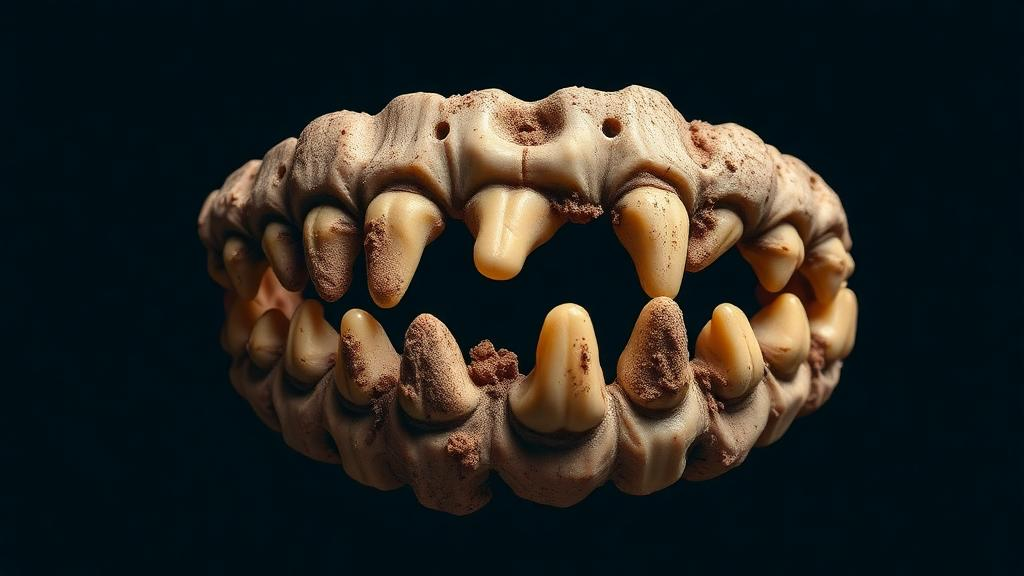
Deep in the desert of Sonora, in north-western Mexico, a newly documented fossil locality called Rancho Jorge is rewriting what scientists know about life during the Blancan, a North American land mammal age spanning the late Pliocene and earliest Pleistocene. Researchers analysed eleven fossil teeth from gomphotheres, the extinct relatives of elephants, and from horses of the genus Nannippus, using an arsenal of geochemical techniques. The results, published in the journal Fossil Record, deliver the first quantitative reconstruction of Blancan terrestrial climate in north-western Mexico, and the picture that emerges is one of a hot, parched landscape dominated by C4 grasses, where two very different groups of large herbivores carved out surprisingly distinct feeding niches.
The teeth came from a stratigraphic section near the town of Esqueda, within the southern subprovince of the Basin and Range Province, a region shaped by extensional tectonics that produced parallel mountain ranges and intervening valleys across Sonora. The fossil-bearing bed, designated horizon N2, sits within a layer of fine white sands about 36 centimetres thick, which yielded both micro- and megafaunal remains. The associated fauna, including the horse Equus simplicidens, the lagomorph index fossil Pratilepus kansasensis and other taxa, collectively pinpoints a Blancan age according to North American Land Mammal Ages biochronology. What makes the site scientifically valuable is not just its age but the extraordinary condition of its fossils, a prerequisite for any credible geochemical reconstruction.
Before any palaeoecological signal can be trusted, researchers must first rule out diagenesis, the post-mortem alteration that progressively overwrites biogenic chemistry in buried tissues. The team approached this problem with multiple independent tests. Scanning electron microscopy revealed densely packed hydroxyapatite crystallites in transverse, oblique and longitudinal orientations, a microstructural arrangement so well preserved that etching with dilute hydrochloric acid was required just to make the crystals visible. Energy-dispersive X-ray spectroscopy then quantified the major elements of the enamel mineral. Nearly all samples showed calcium-to-phosphorus ratios hovering around the theoretical stoichiometric value of 1.67 for pure hydroxyapatite, and fluorine-to-phosphorus ratios below 0.1, indicating minimal substitution of hydroxyl groups by fluorine during burial. Only one equid sample, CE5, deviated, with a Ca/P ratio of 1.76 and an F/P ratio near 0.2.
The most powerful diagenesis indicator came from rare earth elements and yttrium, collectively known as REE+Y. These elements are not taken up by living organisms, whose biology favours calcium, so their presence in fossil apatite reflects post-mortem incorporation from porewater. At Rancho Jorge, total REE concentrations never exceeded 130 parts per million in any sample, and combined REE+Y values stayed below 155 parts per million, values dramatically lower than the roughly 1000 parts per million that Pleistocene equid enamel can reach. After normalising concentrations against the Post-Archean Australian Shale standard, the resulting profiles were essentially flat for both horses and gomphotheres, a pattern consistent with materials largely untouched by diagenetic overprint. Subtle cerium and lanthanum anomalies were detected, likely reflecting oxidising depositional conditions in the burial fluids, but the overall geochemical verdict was clear: the biogenic signals survived intact.
With preservation confirmed, the stable carbon isotope data could be interpreted with confidence. Carbon isotope values in tooth enamel reflect the proportion of C3 plants, which include trees, shrubs and cool-climate grasses, versus C4 grasses, which use a different photosynthetic pathway adapted to hot, arid, low-CO2 conditions. The results revealed that all analysed specimens had mixed C3-C4 diets, with two individuals, one gomphothere and one horse, showing a strong preference for C4 vegetation. Crucially, statistical tests showed that the gomphotheres consumed a significantly higher percentage of C4 plants than the horses. This finding challenges the traditional view of proboscideans as pure browsers and aligns with the ecological flexibility documented in later Pliocene and Pleistocene gomphothere taxa such as Stegomastodon and Notiomastodon, which successfully adapted to the expansion of C4 grasslands.
Here the study uncovers its most intriguing puzzle, a genuine conflict between two independent geochemical proxies. The horses showed higher barium-to-calcium and strontium-to-calcium ratios than the gomphotheres, a pattern typically associated with grazing, because grasses accumulate more of these alkaline earth metals than shrubs or trees, owing to their shallow root systems and rapid growth. Yet the carbon isotopes told the opposite story, showing that the horses ingested proportionally less C4 vegetation than the gomphotheres. The researchers propose a resolution: the horses may have grazed primarily on C3 grasses, which persisted in the region, while the gomphotheres, with their greater shoulder height, could have fed on the upper leaves of tall C4 grasses that retain their foliage for extended periods and accumulate fewer barium and strontium ions. Alternatively, the proboscideans may have consumed C4 shrubs such as certain Amaranthaceae, fossils of which have been reported in Mexico since the Miocene.
Converting the carbon isotope values into estimates of mean annual precipitation required careful modelling, because high C4 intake can bias the calculations. The team applied C3-equivalent corrections, which proved essential for producing physically plausible results. The preferred calibration framework yielded mean annual precipitation estimates of roughly 143 millimetres per year for the Pliocene interval and 108 millimetres per year for the Pleistocene interval, averaging about 125 millimetres per year across the Blancan. These values are strikingly low, far below the modern 300 to 400 millimetres per year recorded for the Municipality of Fronteras today. Comparable hyper-arid conditions exist in parts of the Atacama Desert in northern Chile, where C4-dominated ecosystems and camelid faunas thrive under extreme water stress.
Oxygen isotope analysis provided an independent window on temperature and hydrology. The enamel oxygen isotope values, ranging from -7.362 to -0.938 per mil on the VPDB scale, showed no statistically significant difference between horses and gomphotheres, suggesting both groups accessed comparable water sources. Derived mean annual temperature estimates ranged from 6.5 to 25 degrees Celsius across individuals, with an overall mean of about 14.9 degrees Celsius, a value consistent with late Pliocene conditions warmer than present and closely matching independent reconstructions from the nearby Los Hornitos locality and from leaf-based palaeoclimate methods in central Mexico. Individual outliers, such as one horse with an estimated temperature of 25 degrees and one gomphothere at 6.5 degrees, may reflect movement between isotopically distinct water sources, differences in enamel biomineralisation timing, or physiological variation in water intake behaviour.
Taken together, the multi-proxy evidence from Rancho Jorge paints a vivid portrait of a Blancan ecosystem in north-western Mexico: a heterogeneous mosaic of open grasslands interspersed with wooded patches, sustaining diverse mammalian communities under seasonally warm, arid conditions unlike anything documented at comparable latitude. The findings position the Esqueda region amongst the driest Blancan environments yet documented in North America and globally, bridging the cooler Great Plains and the more humid intermontane basins of central Mexico. Beyond its regional significance, the study establishes a crucial baseline for late Neogene and Quaternary climate models, illuminating how mammalian ecological adaptations and environmental dynamics unfolded during the Pliocene-Pleistocene transition, a pivotal interval when expanding C4 grasslands and rising aridity reshaped terrestrial ecosystems across the Americas.
Subject of Research: Blancan climate and feeding strategies of proboscideans and equids revealed by a multi-proxy geochemical analysis from a new locality in north-western Mexico
Article Title: Blancan climate and feeding strategies of proboscideans and equids revealed by a multi-proxy geochemical analysis from a new locality in north-western Mexico
Article References: Hernández-Sandoval, D., Montellano-Ballesteros, M., Vasconcelos-Ginzo, R., Sánchez-Beristain, F., Bernal, J. P., Hernández-Cristóbal, O., & Pack, A. (2026). Blancan climate and feeding strategies of proboscideans and equids revealed by a multi-proxy geochemical analysis from a new locality in north-western Mexico. Fossil Record, 29(1), 11-36. https://doi.org/10.3897/fr.29.174847
Image Credits: AI Generated
DOI: 10.3897/fr.29.174847
Keywords: Blancan, climate, feeding, strategies, proboscideans, equids, revealed, multi-proxy, geochemical, analysis, locality, north-western
Cite Scienmag News
William Thompson. (October 17, 2026). Ancient Teeth From Mexico Reveal a Surprisingly Arid Pliocene World. Scienmag. https://scienmag.com/ancient-teeth-from-mexico-reveal-a-surprisingly-arid-pliocene-world/
William Thompson. "Ancient Teeth From Mexico Reveal a Surprisingly Arid Pliocene World." Scienmag, 17 October 2026, https://scienmag.com/ancient-teeth-from-mexico-reveal-a-surprisingly-arid-pliocene-world/. Accessed 17 October 2026.
William Thompson. "Ancient Teeth From Mexico Reveal a Surprisingly Arid Pliocene World." Scienmag. October 17, 2026. https://scienmag.com/ancient-teeth-from-mexico-reveal-a-surprisingly-arid-pliocene-world/


