


In a triumph for precision agriculture, researchers have pinpointed a tomato exocarp-specific promoter, unlocking the potential for tailored genetic enhancements. This innovation promises to bolster the fruit’s visual appeal, fortify it against environmental stressors, and significantly prolong its shelf life.
Cultivation of the tomato, a dietary staple, is often marred by the ravages of decay and the relentless ticking of the freshness clock. Conventional genetic interventions have hit a wall, with nonspecific promoters leading to suboptimal outcomes. The quest for crop improvement necessitates a more nuanced approach. Thus, the spotlight falls on tissue-specific promoters as the key to enhancing fruit resilience and longevity.
A team of cutting-edge researchers at Sun Yat-sen University, spearheaded by the esteemed Jian-Feng Li, has unveiled a study (DOI: 10.1093/hr/uhae035) in the Horticulture Research. journal on January 31, 2024. Their work meticulously details the innovative application of the SlPR10 promoter, which masterfully conducts gene expression within the tomato’s exocarp. This breakthrough approach heralds a new era in the enhancement of fruit quality, setting a precedent for future advancements in agricultural biotechnology.
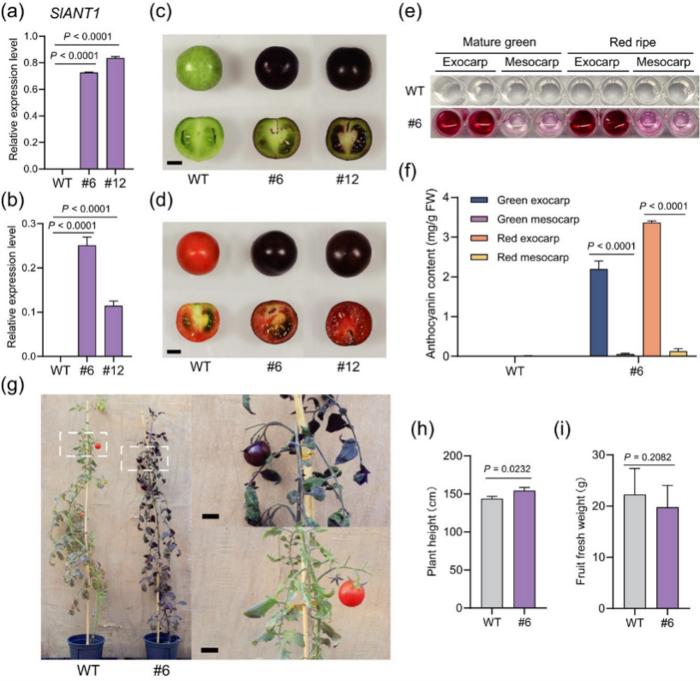
Employing cutting-edge RNA sequencing and RT-qPCR, the team zeroed in on the SlPR10 promoter, which is exceptionally active in the tomato’s outer layer. By harnessing this promoter to regulate SlANT1 and SlMYB31—master genes for anthocyanin and wax production—the researchers have engineered tomatoes with a naturally fortified defense system. The fruits now boast a striking purple hue, courtesy of anthocyanin, and an armor of thickened wax, dramatically slowing water loss and decay.
Dr. Jian-Feng Li, the study’s chief architect, remarks, “This is more than a scientific milestone; it’s a beacon for the future of sustainable agriculture. Our targeted genetic approach exemplifies precision and efficiency, ensuring that we meet the growing demand for high-quality, durable produce without compromising on safety or ethics.”
The ripple effects of this study are poised to reshape the agricultural landscape. With the SlPR10 promoter, the tomato’s exocarp becomes a versatile platform for cultivating not only enhanced fruit traits but also high-value compounds for industrial applications. The potential for reducing post-harvest waste and elevating crop profitability is immense, signaling a bountiful harvest for farmers and a healthier diet for consumers alike. This pioneering work holds the promise of a greener, more productive tomorrow for agriculture.

Credit: Horticulture Research
In a triumph for precision agriculture, researchers have pinpointed a tomato exocarp-specific promoter, unlocking the potential for tailored genetic enhancements. This innovation promises to bolster the fruit’s visual appeal, fortify it against environmental stressors, and significantly prolong its shelf life.
Cultivation of the tomato, a dietary staple, is often marred by the ravages of decay and the relentless ticking of the freshness clock. Conventional genetic interventions have hit a wall, with nonspecific promoters leading to suboptimal outcomes. The quest for crop improvement necessitates a more nuanced approach. Thus, the spotlight falls on tissue-specific promoters as the key to enhancing fruit resilience and longevity.
A team of cutting-edge researchers at Sun Yat-sen University, spearheaded by the esteemed Jian-Feng Li, has unveiled a study (DOI: 10.1093/hr/uhae035) in the Horticulture Research. journal on January 31, 2024. Their work meticulously details the innovative application of the SlPR10 promoter, which masterfully conducts gene expression within the tomato’s exocarp. This breakthrough approach heralds a new era in the enhancement of fruit quality, setting a precedent for future advancements in agricultural biotechnology.
Employing cutting-edge RNA sequencing and RT-qPCR, the team zeroed in on the SlPR10 promoter, which is exceptionally active in the tomato’s outer layer. By harnessing this promoter to regulate SlANT1 and SlMYB31—master genes for anthocyanin and wax production—the researchers have engineered tomatoes with a naturally fortified defense system. The fruits now boast a striking purple hue, courtesy of anthocyanin, and an armor of thickened wax, dramatically slowing water loss and decay.
Dr. Jian-Feng Li, the study’s chief architect, remarks, “This is more than a scientific milestone; it’s a beacon for the future of sustainable agriculture. Our targeted genetic approach exemplifies precision and efficiency, ensuring that we meet the growing demand for high-quality, durable produce without compromising on safety or ethics.”
The ripple effects of this study are poised to reshape the agricultural landscape. With the SlPR10 promoter, the tomato’s exocarp becomes a versatile platform for cultivating not only enhanced fruit traits but also high-value compounds for industrial applications. The potential for reducing post-harvest waste and elevating crop profitability is immense, signaling a bountiful harvest for farmers and a healthier diet for consumers alike. This pioneering work holds the promise of a greener, more productive tomorrow for agriculture.
###
References
Original Source URL
Funding information
This work was supported by grants from the National Key Research and Development Program of China (2019YFA0906202) and National Natural Science Foundation of China (32125004) to J.-F.L.
About Horticulture Research
Horticulture Research is an open access journal of Nanjing Agricultural University and ranked number one in the Horticulture category of the Journal Citation Reports ™ from Clarivate, 2022. The journal is committed to publishing original research articles, reviews, perspectives, comments, correspondence articles and letters to the editor related to all major horticultural plants and disciplines, including biotechnology, breeding, cellular and molecular biology, evolution, genetics, inter-species interactions, physiology, and the origination and domestication of crops.
Journal
Horticulture Research
Subject of Research
Not applicable
Article Title
Identification and application of an exocarp-preferential promoter for genetic engineering of tomato fruit
Article Publication Date
31-Jan-2024
COI Statement
The authors declare that they have no competing interests.
Cite Scienmag News
Alan Morgan. (June 5, 2024). Tomato skin secrets unlocked: a genetic leap for enhanced crop performance. Scienmag. https://scienmag.com/tomato-skin-secrets-unlocked-a-genetic-leap-for-enhanced-crop-performance/
Alan Morgan. "Tomato skin secrets unlocked: a genetic leap for enhanced crop performance." Scienmag, 5 June 2024, https://scienmag.com/tomato-skin-secrets-unlocked-a-genetic-leap-for-enhanced-crop-performance/. Accessed 5 September 2026.
Alan Morgan. "Tomato skin secrets unlocked: a genetic leap for enhanced crop performance." Scienmag. June 5, 2024. https://scienmag.com/tomato-skin-secrets-unlocked-a-genetic-leap-for-enhanced-crop-performance/

