


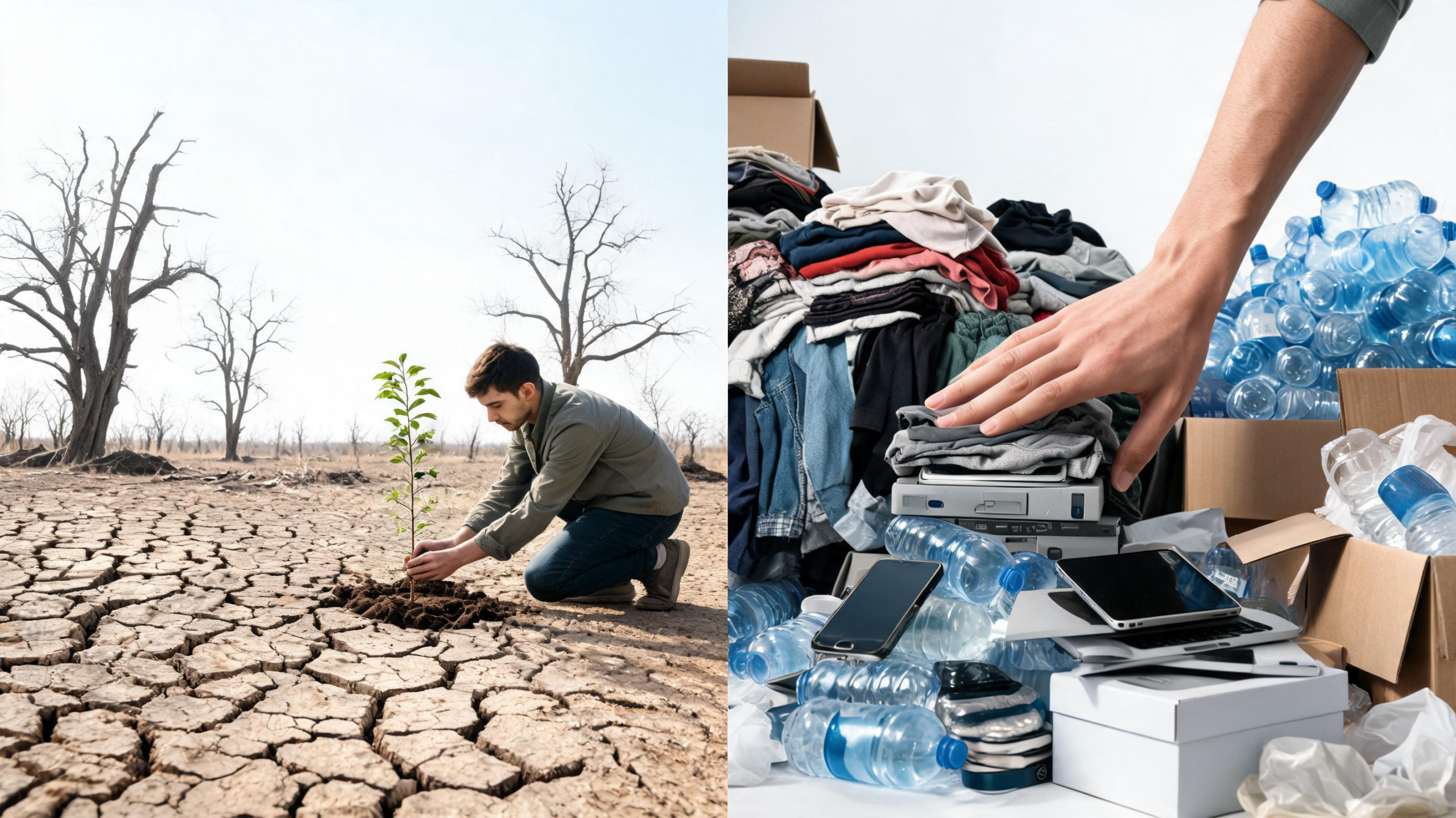
Global conservation is winning battles but losing the war, according to a provocative new review published in BMC Environmental Science. Despite decades of protected areas, restoration projects and community-based programmes, most indicators of biodiversity continue their downward trajectory at the planetary scale. The review, authored by Chris D. Thomas of the Leverhulme Centre for Anthropocene Biodiversity at the University of York, argues that the reason is structural rather than a matter of effort or funding: conservation as currently practised resists the consequences of environmental change while leaving its causes untouched. Drawing an explicit analogy with climate change policy, Thomas proposes that biodiversity strategy be reorganised into two distinct work streams, one of mitigation aimed at the drivers of change and one of adaptation aimed at adjusting to its unavoidable effects. Without that reframing, he contends, the ambition of the UN Convention on Biological Diversity to halt and reverse biodiversity loss by 2030 and beyond cannot be met.
The evidence for failure at scale is sobering. Individual projects frequently succeed: a meta-analysis cited in the review found that conservation interventions have produced measurable positive outcomes for species and ecosystems, and local communities in many regions have benefited from collaborative approaches to managing wildlife. Yet the aggregate picture documented by the Intergovernmental Science-Policy Platform on Biodiversity and Ecosystem Services, or IPBES, shows continued decline across most taxa and biomes. The review summarises the arithmetic bluntly: the sum of biodiversity gains within conservation projects has been smaller than losses across the rest of the world’s surface. The Kunming-Montreal Global Biodiversity Framework responds by calling for restoring 30 percent of degraded ecosystems, conserving 30 percent of land and sea by 2030, halting extinctions, halving food waste and removing harmful incentives, all at an estimated cost of roughly US$200 billion per year. Thomas does not dispute the value of these targets but questions whether scaling up place-based protection can ever deliver a planetary turnaround.
The central technical problem the review identifies is leakage, the displacement of environmental pressure from protected locations to unprotected ones. When farmland is de-intensified, rewilded or abandoned for conservation, food production in that location falls, but demand for food does not. Production typically shifts elsewhere, often to regions with higher biodiversity or weaker environmental governance, and the review notes that leakage can in principle exceed 100 percent, producing a net global loss. The same dynamic applies to fisheries, where restrictions under one jurisdiction push fishing effort into other waters, other species or aquaculture; one cited study found that spatial restrictions inadvertently doubled the carbon footprint of Norway’s mackerel fleet. Because trade networks are diffuse and biodiversity is distributed unevenly, the magnitude of biodiversity leakage is difficult to quantify, but the mechanism itself undermines the assumption that protecting land locally equates to protecting nature globally.
Geography compounds the leakage problem. Under the Convention on Biological Diversity, commitments are devolved to nation states, so each signatory aims to conserve roughly 30 percent of its own territory. The globally efficient solution, Thomas argues, would look very different: considerably more than 30 percent of species-rich, endemic-rich countries such as Indonesia and Madagascar, and far less of most north-temperate nations. Studies of conservation prioritisation show that when nations plan independently they protect nationally rare species and sites that may not be threatened globally, so the total biodiversity secured is substantially lower than under globally coordinated prioritisation. Conservation prioritisation software and hotspot approaches championed by organisations such as Conservation International can identify where the maximum biodiversity can be conserved in the minimum area, and they have worked well in countries like Madagascar, but politics, not science, limits their global application.
Beneath these distributional problems lies the deeper causal hierarchy. IPBES identifies land and sea use change and direct exploitation of organisms as the top two direct drivers of biodiversity loss, but the review insists these are themselves consequences of indirect drivers, principally what and how much humanity eats. Global population is projected to rise by roughly a further quarter this century, while per capita intakes of calories, protein, fat and especially meat and dairy continue to climb. Around 30 percent of the Earth’s ice-free land surface is already devoted to meat and dairy production, including feed crops, against 9 percent for plants eaten directly by people. Human appropriation of the planet’s annual photosynthesis is forecast to reach between 27 and 44 percent by 2050 depending on agricultural trajectories. Since people must eat and that food must be produced somewhere, Thomas characterises food as the most intractable of the indirect drivers and therefore the proper first target of biodiversity mitigation.
The good news, the review stresses, is that a portfolio of social and technological transformations capable of relieving that pressure already exists. Demand-side measures include dietary shifts toward plant-rich and alternative-protein diets, halving food waste, reforming economic norms that reward growth in consumption over wellbeing, improving equity so that consumption is distributed more fairly, and removing perverse subsidies and incentives. Supply-side measures include plant-based and precision-fermented meat and dairy alternatives, cultivated meat, microbial protein grown on food waste and agro-industrial by-products, and even emerging approaches that synthesise carbohydrates directly from carbon dioxide and energy. None of these alone is sufficient, and it is unclear which combinations will prevail, but the review argues that together they could progressively reduce pressure on land and seas during the second half of the twenty-first century and, if supported and scaled, virtually eliminate food-related drivers of biodiversity decline within a century, allowing long-term ecosystem recovery.
Critically, this technological and social transformation must precede any wholesale shift to extensive farming. Organic systems produce roughly 20 to 25 percent less food per hectare than intensive agriculture, and the review warns that expanding cropland and pasture by that margin to compensate would be catastrophically damaging to global biodiversity. Wildlife-friendly and regenerative approaches become globally viable only once total production pressure has fallen, at which point remaining farmland could be de-intensified, agrochemicals largely removed and pollutants and welfare concerns addressed. The review also cautions that land released from food production must not simply be converted to biomass monocultures, plantation forestry or urban expansion, which would cancel the gains; overarching policies are needed to ensure that wins in one sector are not offset by losses in another. Importantly, this mitigation framing does not apply to the existing mitigation hierarchy of avoid, minimise, restore and offset, which Thomas classifies as adaptation because it manages the consequences of consumption rather than consumption itself.
On the adaptation side, the review argues that conventional conservation’s fixation on restoring historical baselines sets itself up to fail. Atmospheric carbon dioxide is already higher than at any time in roughly three million years, altering plant growth, carbon-nitrogen stoichiometry and climate in ways that will persist for tens of thousands of years. Species compositions have already shifted in most communities and will continue to shift regardless of conservation action, even inside protected areas. Instead of equating adaptation with resistance, Thomas endorses flexible decision frameworks such as Resist-Accept-Direct, developed for US national parks, and its generalised Facilitate-Accept-Resist variant. Managers would explicitly choose, case by case, whether to facilitate adaptive change, for example by enabling range shifts and novel community combinations; to accept change without intervention; or to resist change, reserved for situations where whole species are endangered or an irreplaceable ecosystem service is at stake. Facilitation and acceptance should normally come first, with resistance deployed surgically rather than as default strategy.
The review’s institutional conclusion is that the Convention on Biological Diversity should reorganise itself into parallel mitigation and adaptation work streams, mirroring the relationship between the IPCC and UNFCCC in climate policy, and drawing expertise from the FAO, trade bodies and others who govern the indirect drivers. It points out that biodiversity credits, no net loss rules and biodiversity net gain schemes, however well intentioned, risk enabling continued consumption growth and generating further leakage unless the underlying drivers are constrained. Traditional protected-area conservation will remain necessary, but it cannot substitute for mitigation. Recent biodiversity trends, the review concludes, cannot be halted or reversed at planetary scale unless the production and consumption causes of environmental change are recognised, reduced and replaced, and that will not happen by chance: it requires deliberate institutional redesign and political will on a scale conservation has never yet mobilised.
Subject of Research: Mitigation and adaptation strategies for halting and reversing global biodiversity decline by addressing the human consumption drivers of environmental change
Article Title: Mitigation and adaptation strategies to reverse biodiversity decline
Article References: Thomas, C. D. (2026). Mitigation and adaptation strategies to reverse biodiversity decline. BMC Environmental Science, 3(1), Article 19. https://doi.org/10.1186/s44329-026-00059-5
Image Credits: AI Generated
DOI: 10.1186/s44329-026-00059-5
Keywords: biodiversity, conservation, mitigation, adaptation, food systems, leakage, Convention on Biological Diversity, IPBES, cellular agriculture, dietary change, protected areas, Kunming-Montreal
Cite Scienmag News
Margaret Porter. (September 11, 2026). To Save Nature, Conservation Must Attack Consumption, Not Just Its Symptoms. Scienmag. https://scienmag.com/to-save-nature-conservation-must-attack-consumption-not-just-its-symptoms/
Margaret Porter. "To Save Nature, Conservation Must Attack Consumption, Not Just Its Symptoms." Scienmag, 11 September 2026, https://scienmag.com/to-save-nature-conservation-must-attack-consumption-not-just-its-symptoms/. Accessed 4 October 2026.
Margaret Porter. "To Save Nature, Conservation Must Attack Consumption, Not Just Its Symptoms." Scienmag. September 11, 2026. https://scienmag.com/to-save-nature-conservation-must-attack-consumption-not-just-its-symptoms/


