

Sunday, July 26, 2026
Science
No Result
View All Result
  • Login
  • HOME
  • SCIENCE NEWS
  • CONTACT US
  • HOME
  • SCIENCE NEWS
  • CONTACT US
No Result
View All Result
Scienmag
No Result
View All Result
Home Science News Medicine

Titanium Dioxide Disrupts Intestinal Metabolism, Revealed by Metabolomics and Transcriptomics

July 26, 2026
in Medicine
Reading Time: 2 mins read
0
Titanium Dioxide Disrupts Intestinal Metabolism, Revealed by Metabolomics and Transcriptomics

Titanium Dioxide Disrupts Intestinal Metabolism, Revealed by Metabolomics and Transcriptomics

65
SHARES
587
VIEWS
Share on FacebookShare on Twitter
ADVERTISEMENT

A new study in BMC Pharmacology and Toxicology sheds light on how titanium dioxide (TiO₂)—widely used in industrial materials and emerging consumer products—can disrupt metabolism in intestinal epithelial cells. Using a combined “omics” strategy, researchers mapped molecular changes at both the metabolite and gene-expression levels to reveal how exposure reshapes cellular chemistry and signaling.

To capture this complexity, the team applied metabolomics to profile small-molecule shifts triggered by TiO₂, while transcriptomics tracked accompanying changes in gene activity. By integrating these layers, the analysis linked altered metabolic pathways to specific transcriptional programs, strengthening causal interpretation rather than treating each dataset in isolation.

The results point to a broad metabolic dysfunction pattern, including disturbances in pathways tied to energy balance and key biochemical intermediates. Such disruptions can reflect cellular stress responses, impaired nutrient handling, and shifts in how cells route carbon and energy through central metabolic circuits.

Importantly, the study highlights how TiO₂ exposure may perturb redox-related processes. Metabolite trends and gene-expression alterations together suggest a scenario in which intestinal epithelial cells experience a disturbance in oxidative equilibrium, potentially influencing survival, barrier integrity, and inflammation-linked physiology.

Because intestinal epithelial cells form the first line of contact between ingested substances and host tissues, these molecular findings carry practical relevance. The work supports the idea that nanoparticle or particle-associated exposure can produce measurable intracellular effects even without overt tissue-level outcomes.

The integrative approach also helps identify candidate molecular nodes—pathways where metabolite changes and transcript shifts converge. These convergent signatures can guide future mechanistic studies and support the design of targeted follow-up experiments, such as pathway inhibition or gene perturbation.

While the study focuses on cellular models, the findings offer a framework for assessing risk and refining how TiO₂ exposure impacts gut biology. As regulatory and consumer scrutiny increases, such multi-layer molecular evidence becomes increasingly valuable.

In the broader context of environmental and occupational health, the work demonstrates how metabolomics-transcriptomics integration can turn abstract “toxicity” observations into pathway-level, testable explanations. That mechanistic clarity is essential for translating laboratory signals into real-world health understanding.

Subject of Research: Titanium dioxide (TiO₂)–induced metabolic dysfunction in intestinal epithelial cells

Article Title: Elucidating metabolic dysfunction induced by titanium dioxide in intestinal epithelial cells using an integrative approach of metabolomics and transcriptomics.

Article References: Wang, X., Jiang, S. & Gu, Z. Elucidating metabolic dysfunction induced by titanium dioxide in intestinal epithelial cells using an integrative approach of metabolomics and transcriptomics. BMC Pharmacol Toxicol (2026). https://doi.org/10.1186/s40360-026-01185-1

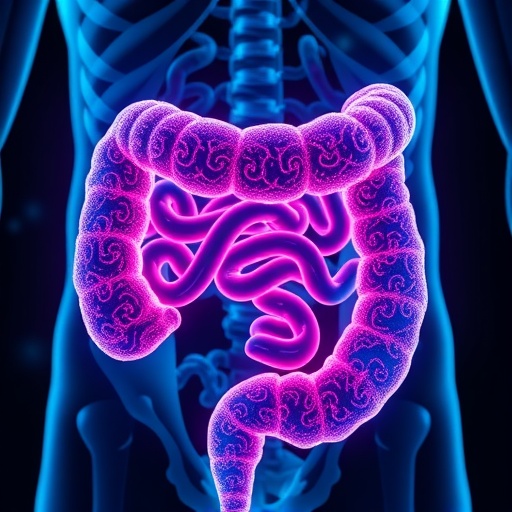
Image Credits: AI Generated

DOI: 10.1186/s40360-026-01185-1

Keywords:

Tags: cellular stress responses to TiO₂ in gut cellscombined metabolomics and transcriptomics analysiseffects of TiO₂ on cellular energy pathwaysimpact of TiO₂ on nutrient handling and biochemical intermediatesimplications of TiO₂ exposure on gut barrierintegration of omics data for toxicology studiesmetabolic pathway alterations due to titanium dioxide exposuremolecular mechanisms of TiO₂ in intestinal epithelial cellsoxidative stress and redox imbalance caused by TiO₂Titanium dioxide intestinal metabolism disruption
Share26Tweet16
Previous Post

Real-Time Decoding of Human Emotion States Using Integrated Gray and White Matter Signals

Next Post

Recurrent Pleural Effusion Case Highlights Diagnostic Challenge Between TB and Other Causes

Related Posts

Cannabidiol–Albumin Nanoparticles Boost Brain Delivery and Protect Neurons in Alzheimer’s
Medicine

Cannabidiol–Albumin Nanoparticles Boost Brain Delivery and Protect Neurons in Alzheimer’s

July 26, 2026
Recurrent Pleural Effusion Case Highlights Diagnostic Challenge Between TB and Other Causes
Medicine

Recurrent Pleural Effusion Case Highlights Diagnostic Challenge Between TB and Other Causes

July 26, 2026
4D Cardiac Nucleome Maps Nuclear and Chromatin Dynamics in Health and Aging
Medicine

4D Cardiac Nucleome Maps Nuclear and Chromatin Dynamics in Health and Aging

July 26, 2026
Tutorial Explains How to Use Large Language Models in Medical Research
Medicine

Tutorial Explains How to Use Large Language Models in Medical Research

July 26, 2026
Recycling US food waste cuts climate and nutrient pollution, but risks soil plastic buildup
Medicine

Recycling US food waste cuts climate and nutrient pollution, but risks soil plastic buildup

July 26, 2026
Pathology-CoT Trains Visual Chain-of-Thought Agents Using Expert Whole-Slide Diagnoses
Medicine

Pathology-CoT Trains Visual Chain-of-Thought Agents Using Expert Whole-Slide Diagnoses

July 26, 2026
Next Post
Recurrent Pleural Effusion Case Highlights Diagnostic Challenge Between TB and Other Causes

Recurrent Pleural Effusion Case Highlights Diagnostic Challenge Between TB and Other Causes

  • Mothers who receive childcare support from maternal grandparents show more

    Mothers who receive childcare support from maternal grandparents show more parental warmth, finds NTU Singapore study

    27656 shares
    Share 11059 Tweet 6912
  • University of Seville Breaks 120-Year-Old Mystery, Revises a Key Einstein Concept

    1061 shares
    Share 424 Tweet 265
  • Bee body mass, pathogens and local climate influence heat tolerance

    682 shares
    Share 273 Tweet 171
  • Researchers record first-ever images and data of a shark experiencing a boat strike

    546 shares
    Share 218 Tweet 137
  • Groundbreaking Clinical Trial Reveals Lubiprostone Enhances Kidney Function

    531 shares
    Share 212 Tweet 133
Science

Embark on a thrilling journey of discovery with Scienmag.com—your ultimate source for cutting-edge breakthroughs. Immerse yourself in a world where curiosity knows no limits and tomorrow’s possibilities become today’s reality!

RECENT NEWS

  • Data-Driven Design of Disordered Structures Enables Direction-Independent Stretchable Electrodes
  • Enhanced Upwelling Caused Photic Zone Euxinia Linked to Late Cambrian Extinction
  • Cannabidiol–Albumin Nanoparticles Boost Brain Delivery and Protect Neurons in Alzheimer’s
  • Recurrent Pleural Effusion Case Highlights Diagnostic Challenge Between TB and Other Causes

Categories

  • Agriculture
  • Anthropology
  • Archaeology
  • Athmospheric
  • Biology
  • Biotechnology
  • Blog
  • Bussines
  • Cancer
  • Chemistry
  • Climate
  • Earth Science
  • Editorial Policy
  • Marine
  • Mathematics
  • Medicine
  • Pediatry
  • Policy
  • Psychology & Psychiatry
  • Science Education
  • Social Science
  • Space
  • Technology and Engineering

Subscribe to Blog via Email

Enter your email address to subscribe to this blog and receive notifications of new posts by email.

Join 5,146 other subscribers

© 2025 Scienmag - Science Magazine

Welcome Back!

Login to your account below

Forgotten Password?

Retrieve your password

Please enter your username or email address to reset your password.

Log In
No Result
View All Result
  • HOME
  • SCIENCE NEWS
  • CONTACT US

© 2025 Scienmag - Science Magazine

Discover more from Science

Subscribe now to keep reading and get access to the full archive.

Continue reading
