

Tuesday, July 28, 2026
Science
No Result
View All Result
  • Login
  • HOME
  • SCIENCE NEWS
  • CONTACT US
  • HOME
  • SCIENCE NEWS
  • CONTACT US
No Result
View All Result
Scienmag
No Result
View All Result
Home Science News Biology

Tissue-Resident Immune Cells Protect Human Lungs from Viral, Bacterial, Fungal Infections

July 28, 2026
in Biology
Reading Time: 2 mins read
0
Tissue-Resident Immune Cells Protect Human Lungs from Viral, Bacterial, Fungal Infections

Tissue-Resident Immune Cells Protect Human Lungs from Viral, Bacterial, Fungal Infections

65
SHARES
587
VIEWS
Share on FacebookShare on Twitter
ADVERTISEMENT

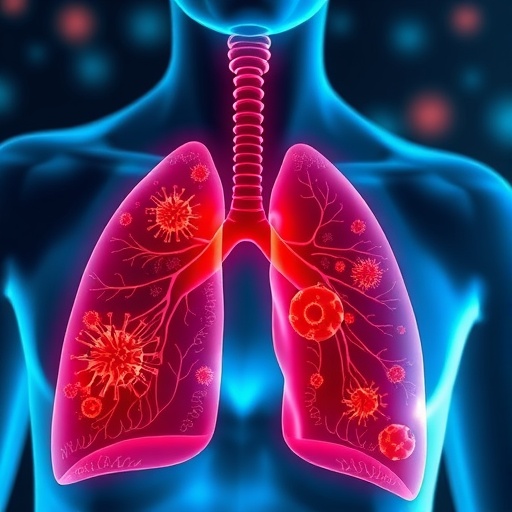
A new Nature Immunology study reveals that the human lungs harbor a long-lived “reservoir” of tissue-resident memory T cells (T_RM), poised to react immediately to infection. Led by Pandurangan Vijayanand and collaborators at La Jolla Institute for Immunology, the work offers a first comprehensive map of how these elusive immune cells defend the airways and surrounding tissue.

Unlike circulating T cells, T_RM cells do not readily appear in blood. Their compartmentalization helps explain why their protective potential remained largely hidden despite decades of immunology research. The study also underscores a key limitation of many animal models: in mice, comparable lung T_RM populations show rapid attrition, while human T_RM cells can persist for months to years.

To characterize this lung-based immune archive, researchers analyzed more than 87,000 T_RM cells from 40 participants in a Target Lung study. Participants were aged 61 to 83, enabling the team to examine how lifetime exposure and prior immunization shape the composition and readiness of lung-resident immunity.

The results show that many individuals carried T_RM cells specific for multiple common respiratory viruses. These included influenza A, SARS-CoV-2, parainfluenza viruses, respiratory syncytial virus (RSV), and metapneumovirus. Importantly, the lung reservoir was not limited to viruses; several participants also displayed T_RM specificities for herpesviruses such as cytomegalovirus (CMV) and Epstein–Barr virus (EBV).

Bacterial and fungal threats were also represented. The researchers detected lung T_RM cells reactive to Bordetella pertussis, the cause of whooping cough, and to Aspergillus fumigatus, a fungus that can become life-threatening in immunocompromised patients.

Together, these findings support a model in which the lungs maintain a broad, tissue-tuned adaptive defense. Rather than requiring every pathogen-specific response to be freshly generated, the tissue appears to preserve immunological memory in place—ready for rapid recall upon exposure.

The study carries clear implications for vaccine design. If vaccine-elicited protection depends on building T_RM cells within respiratory tissue, then evaluating only blood immune signatures may miss the most relevant forms of immunity.

The team’s next goal is to determine how vaccination reshapes the lung T_RM landscape in humans, particularly using samples from donors who received recent immunizations. Such insights could guide next-generation respiratory vaccines aimed at stronger, longer-lasting protection against severe disease.

It also highlights an urgency for translational studies to prioritize human lung tissue directly, given the biological differences between species. As respiratory pathogens continue to evolve, understanding the resident immune architecture of the lung may become central to designing durable defenses.

Subject of Research: Cells (tissue-resident memory T cells in human lung tissue)
Article Title: Human lungs maintain tissue-resident memory T cells against a broad spectrum of pathogens
News Publication Date: 28-Jul-2026
Web References: https://doi.org/10.1038/s41590-026-02592-6
References: 10.1038/s41590-026-02592-6
Image Credits: La Jolla Institute for Immunology
Keywords: tissue-resident memory T cells; lung immunity; respiratory pathogens; vaccine design; SARS-CoV-2; TRM cells; adaptive immunity; immune memory; translational immunology; host-pathogen interactions

Tags: airways immune protectioncomparison of human and animal lung immunityhuman lung immune defenseimmune cell compartmentalizationimpact of prior immunizationlong-term immune memory in lungslung immune response mappinglung tissue-resident memory T cellsrespiratory infection resistancerespiratory virus immunityT_RM cell longevityviral-specific T_RM cells
Share26Tweet16
Previous Post

Sky Rivers Shape Marine Heatwaves, New Study Finds

Next Post

Missing Preschool Linked to Slower School Readiness, Curtin Study Finds

Related Posts

Nanotube Links Enable Communication Between Social Amoebae
Biology

Nanotube Links Enable Communication Between Social Amoebae

July 28, 2026
AI Camera System Tracks Bumblebees, Offering Affordable Insect Monitoring
Biology

AI Camera System Tracks Bumblebees, Offering Affordable Insect Monitoring

July 28, 2026
TIE1 suppresses fertilization-independent endosperm development by recruiting PRC2
Biology

TIE1 suppresses fertilization-independent endosperm development by recruiting PRC2

July 28, 2026
Forces of Push and Pull Shape How Blood Flows Through Vessels
Biology

Forces of Push and Pull Shape How Blood Flows Through Vessels

July 28, 2026
How the body’s natural recycling system may reduce inflammation
Biology

How the body’s natural recycling system may reduce inflammation

July 28, 2026
Bubble streams help sperm whales sleep deeply underwater
Biology

Bubble streams help sperm whales sleep deeply underwater

July 28, 2026
Next Post
Missing Preschool Linked to Slower School Readiness, Curtin Study Finds

Missing Preschool Linked to Slower School Readiness, Curtin Study Finds

  • Mothers who receive childcare support from maternal grandparents show more

    Mothers who receive childcare support from maternal grandparents show more parental warmth, finds NTU Singapore study

    27656 shares
    Share 11059 Tweet 6912
  • University of Seville Breaks 120-Year-Old Mystery, Revises a Key Einstein Concept

    1061 shares
    Share 424 Tweet 265
  • Bee body mass, pathogens and local climate influence heat tolerance

    682 shares
    Share 273 Tweet 171
  • Researchers record first-ever images and data of a shark experiencing a boat strike

    546 shares
    Share 218 Tweet 137
  • Groundbreaking Clinical Trial Reveals Lubiprostone Enhances Kidney Function

    531 shares
    Share 212 Tweet 133
Science

Embark on a thrilling journey of discovery with Scienmag.com—your ultimate source for cutting-edge breakthroughs. Immerse yourself in a world where curiosity knows no limits and tomorrow’s possibilities become today’s reality!

RECENT NEWS

  • New Technique Captures Nine Corneal Points Simultaneously
  • Soft Stretchy Biosensors Improve Connections with Better Adhesion
  • Remdesivir improves outcomes in adult kidney transplant recipients with COVID-19
  • Stress-Response Gene Boosts Salvia miltiorrhiza Salt Tolerance and Medicinal Yield

Categories

  • Agriculture
  • Anthropology
  • Archaeology
  • Athmospheric
  • Biology
  • Biotechnology
  • Blog
  • Bussines
  • Cancer
  • Chemistry
  • Climate
  • Earth Science
  • Editorial Policy
  • Marine
  • Mathematics
  • Medicine
  • Pediatry
  • Policy
  • Psychology & Psychiatry
  • Science Education
  • Social Science
  • Space
  • Technology and Engineering

Subscribe to Blog via Email

Enter your email address to subscribe to this blog and receive notifications of new posts by email.

Join 5,146 other subscribers

© 2025 Scienmag - Science Magazine

Welcome Back!

Login to your account below

Forgotten Password?

Retrieve your password

Please enter your username or email address to reset your password.

Log In
No Result
View All Result
  • HOME
  • SCIENCE NEWS
  • CONTACT US

© 2025 Scienmag - Science Magazine

Discover more from Science

Subscribe now to keep reading and get access to the full archive.

Continue reading
