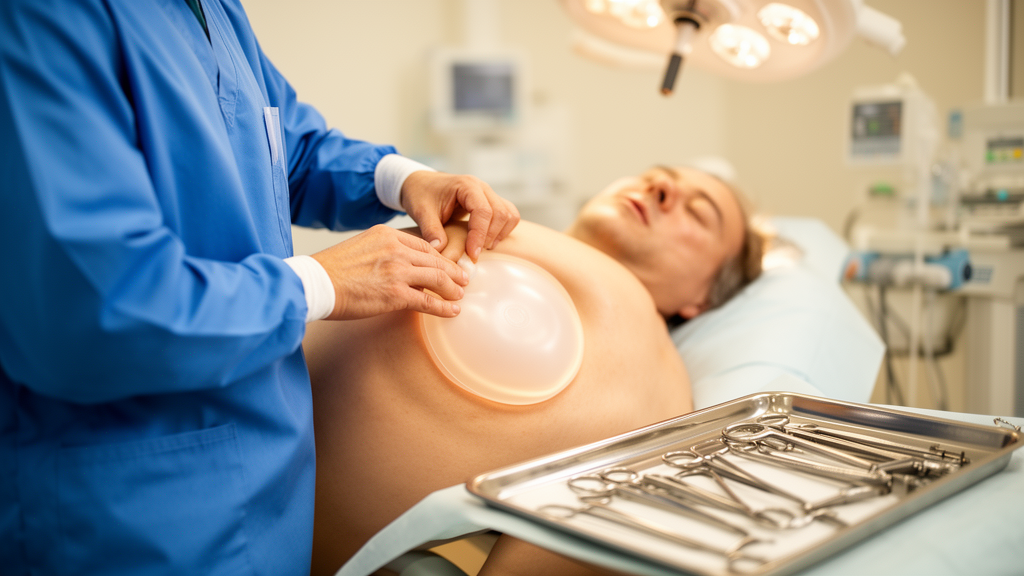
Tissue expansion, the technique of stretching skin with an implanted expander to generate extra tissue, has been a mainstay of reconstructive surgery for more than five decades. Yet according to a narrative conceptual review published in BMC Plastic and Reconstructive Surgery, the field has focused almost entirely on the mechanics of the procedure while overlooking its deeper conceptual role. The review, authored by Trần Thiết Sơn and Phan Tuấn Nghĩa, argues that tissue expansion should be understood not merely as a method for producing additional skin, but as a reconstructive philosophy in which biological tissue generation, anatomical fidelity, and preservation of regional identity guide surgical decision-making.
The authors frame their argument around a simple contrast. Most reconstructive procedures restore defects by moving tissue that already exists elsewhere: local flaps redistribute adjacent tissue, regional flaps recruit tissue from neighboring anatomical regions, and free flaps transplant tissue from distant donor sites. Tissue expansion differs in the fundamental mechanism by which new reconstructive material becomes available. Controlled mechanical loading stimulates biological adaptation within the tissue’s native anatomical environment, allowing the body to generate additional autologous tissue in place rather than relocating it from somewhere else. The review calls this the shift from tissue relocation to tissue generation as a reconstructive strategy.
Since its clinical introduction, tissue expansion has been widely used to reconstruct defects of the scalp, face, neck, breast, trunk, and extremities, producing autologous tissue that closely matches the surrounding anatomy in color, texture, thickness, and function. The authors note that most published literature has concentrated on technical refinements, including expander design, surgical approaches, expansion protocols, complication management, and region-specific applications. Their review deliberately steps back from this procedural perspective, which they argue does not fully explain the technique’s unique position within reconstructive surgery.
The conceptual framework rests on four complementary principles. The first, reconstruction through tissue generation rather than tissue transfer, addresses how reconstructive tissue becomes available. The second concerns the generation of the ideal autologous reconstructive tissue: because expansion generates tissue from the recipient region itself, the reconstructed tissue remains autologous, anatomically matched, and biologically continuous with the surrounding tissues. The third principle holds that expansion offers perhaps the closest surgical realization of the classic doctrine of replacing like with like, attributed to Gillies, because color, texture, thickness, contour, hair-bearing characteristics, and regional identity are maintained when reconstruction uses tissue generated from the same anatomical region.
The fourth principle addresses biological cost. Every reconstructive procedure involves compromise, and restoring one defect may create morbidity at a donor site. By generating additional tissue within or close to the recipient region, expansion can reduce the need to harvest distant normal tissue and may preserve donor-site anatomy and function. The authors are careful to qualify this advantage: its extent depends on patient selection, defect characteristics, expansion requirements, and the treatment burden the patient must bear. They also distinguish the principles from one another, noting that the second describes the quality and suitability of the generated tissue while the third describes the doctrine used to judge anatomical fidelity.
The biological foundation of the framework lies in mechanotransduction. During tissue expansion, controlled and progressive mechanical loading activates signaling pathways that convert physical stimuli into intracellular biochemical signals. These pathways regulate cell proliferation, extracellular matrix remodeling, angiogenesis, and tissue remodeling, allowing tissues to adapt continuously without compromising viability. At the skin and subcutaneous levels, studies have described proliferative activity, extracellular matrix remodeling, changes in dermal and subcutaneous thickness, and vascular adaptation. Deeper tissues, including fascia and adipose compartments, may also undergo remodeling and reorganization, though the authors stress this should be understood as adaptation rather than assumed to represent uniform tissue growth.
Importantly, the review cautions against equating the increased surface area seen during expansion entirely with new tissue growth. Mechanical creep, tissue recruitment, remodeling, reorganization, and changes in tissue thickness all contribute to the final expanded envelope, while cellular proliferation and matrix production contribute to biological adaptation. These processes occur over time, and their relative contributions vary with tissue type, expansion rate, anatomical site, and clinical conditions. Unlike acute stretching, which predominantly produces transient elastic deformation, tissue expansion is intended to produce progressive biological adaptation, although that adaptation is not necessarily uniform across all tissue layers.
The authors also temper claims of perfect tissue matching. Expansion can alter tissue thickness, pigmentation, texture, hair characteristics, and mechanical properties, and the magnitude of these changes may differ by anatomical site and degree of expansion. Preservation of regional characteristics is therefore not an absolute absence of biological change. Nevertheless, when appropriately planned, hair-bearing scalp may retain hair-bearing characteristics and facial skin may retain important regional color, texture, and contour qualities. In their formulation, tissue expansion may amplify and redistribute existing regional tissue characteristics while simultaneously inducing measurable remodeling, providing a biological basis for, but not a guarantee of, the replace-like-with-like principle.
If expansion is understood as biological tissue generation rather than skin stretching, the authors argue, it changes how reconstruction is planned. Instead of beginning with the selection of a surgical technique, the surgeon first performs a comprehensive analysis of the defect, including the anatomical subunits involved, tissue composition, functional requirements, aesthetic considerations, and the quality of surrounding tissues. Only after these requirements are defined should tissue generation be planned. The surgeon defines the characteristics of the tissue ultimately required, including dimensions, thickness, texture, mobility, hair-bearing properties, and functional role, and expansion is then designed to generate those tissues. This shifts planning from a procedure-oriented model toward a defect-oriented strategy in which techniques are selected according to the biological requirements of the reconstruction rather than personal preference or technical familiarity.
The review also positions expansion within modern reconstructive surgery, which has been transformed over the past three decades by advances in microsurgery, perforator flaps, vascular imaging, regenerative medicine, and digital surgical planning. Rather than viewing expansion as an outdated alternative, the authors describe it as a complementary biological platform that improves the quality and quantity of autologous tissue before definitive reconstruction. Expanded tissue may be combined with local flaps, perforator flaps, microsurgical tissue transfer, fat grafting, or staged reconstruction depending on defect complexity. Pre-expanded perforator flaps and flap prefabrication represent what the authors call the pinnacle of this integration, combining the vascular reliability of targeted vessels with expanded tissue volume. Future development is likely to involve closer integration with computational modeling, three-dimensional planning, high-resolution vascular imaging, artificial intelligence, and regenerative medicine, while bioprinting remains investigational in routine clinical practice.
The authors are explicit that expansion is not universally applicable. Successful application requires careful patient selection, meticulous planning, and acceptance of staged reconstruction over a prolonged treatment period. Complications such as expander exposure, infection, wound dehiscence, scar widening, alopecia, tissue thinning, and occasional failure of expansion remain well-recognized limitations. Repeated outpatient expansions, multiple operative procedures, and the psychological burden of prolonged treatment may reduce patient acceptance in some situations. The choice between expansion and alternative strategies should therefore be individualized according to defect characteristics, patient priorities, and the anticipated balance between reconstructive benefit and treatment burden.
Because this is a narrative conceptual review, its conclusions rest on a targeted review of established publications rather than a systematic search, formal screening, or quantitative synthesis, and the framework it proposes is an interpretive argument rather than an empirically tested model. Even so, its central claim is clear: tissue expansion’s greatest reconstructive value lies in generating anatomically matched autologous tissue while preserving regional identity and minimizing donor-site sacrifice. As reconstructive surgery continues to evolve toward biologically driven, patient-specific reconstruction, the authors contend that expansion should not be assigned a fixed position on the reconstructive ladder but integrated at different stages of individualized reconstruction according to anatomical and functional requirements.
Subject of Research: A narrative conceptual review proposing tissue expansion as a reconstructive philosophy based on biological tissue generation and anatomical fidelity.
Article Title: Rethinking tissue expansion: beyond skin expansion toward a reconstructive philosophy – a narrative review
Article References: Sơn, T. T., & Nghĩa, P. T. (2026). Rethinking tissue expansion: beyond skin expansion toward a reconstructive philosophy – a narrative review. BMC Plastic and Reconstructive Surgery, 2(1), Article 30. https://doi.org/10.1186/s44452-026-00043-7
Image Credits: AI Generated
DOI: 10.1186/s44452-026-00043-7
Keywords: tissue expansion, reconstructive surgery, plastic surgery, mechanotransduction, skin expansion, flap reconstruction, perforator flaps, autologous tissue, replace like with like, donor-site morbidity, regenerative medicine, narrative review
Cite Scienmag News
Ophelia Keating. (October 29, 2026). Tissue Expansion Reframed as a Reconstructive Philosophy, Review Argues. Scienmag. https://scienmag.com/tissue-expansion-reframed-as-a-reconstructive-philosophy-review-argues/
Ophelia Keating. "Tissue Expansion Reframed as a Reconstructive Philosophy, Review Argues." Scienmag, 29 October 2026, https://scienmag.com/tissue-expansion-reframed-as-a-reconstructive-philosophy-review-argues/. Accessed 29 October 2026.
Ophelia Keating. "Tissue Expansion Reframed as a Reconstructive Philosophy, Review Argues." Scienmag. October 29, 2026. https://scienmag.com/tissue-expansion-reframed-as-a-reconstructive-philosophy-review-argues/