


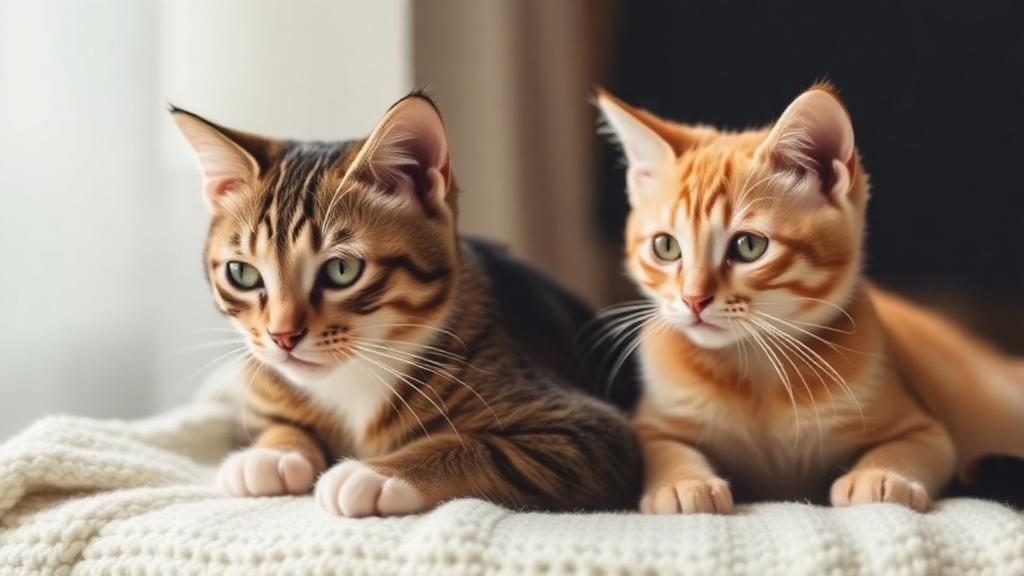
For millions of people around the world, the purr of a cat settling onto their lap is one of the small, reliable pleasures of daily life. Many owners will enthusiastically insist that their feline companion has improved their quality of life, and a growing body of research has attempted to test that claim scientifically. Some studies have indeed found that caring for a cat is associated with better human health and wellbeing, yet the overall evidence remains stubbornly inconsistent, and other investigations have even reported possible negative effects of living with cats. That contradiction has long puzzled researchers: if cats are genuinely good for us, why do the findings refuse to line up?
The Kyoto University study offers a possible resolution to this puzzle by shifting attention away from cat ownership as a simple yes-or-no variable and toward the texture of the relationship itself. Rather than asking whether people who live with cats fare better than people who do not, the researchers asked how the day-to-day dynamics of a particular human-cat pair might shape the emotional experience of the human partner. This reframing matters because surveys that lump all cat owners together may be averaging over enormously different living arrangements: a person whose cat sleeps against their side every night and a person whose cat hides under the bed whenever they enter the room are both, statistically, cat owners, yet their lived experiences could hardly be more different.
To capture those differences objectively, the team combined several measurement approaches that are rarely used together in a single study. Small Bluetooth Low Energy beacons attached to the cats’ collars recorded physical proximity throughout the day, providing a continuous, passive record of how often cat and owner were actually near each other rather than relying on owners’ retrospective estimates of contact time. Urine samples from both species allowed the researchers to measure hormone concentrations noninvasively, an important consideration in feline research, where blood draws can themselves elevate stress and contaminate the very variables being studied. Questionnaires captured the owners’ mood states, and behavioral observations tested how the cats responded both to their familiar people and to unfamiliar humans, adding a social dimension beyond the home environment.
The hormonal findings are particularly intriguing. Oxytocin, often popularly described as a bonding hormone, plays a well-documented role in social attachment across mammals, including the formation of parent-infant bonds. Cortisol, by contrast, is a key hormone of the stress response, rising when the body perceives challenge or threat. The researchers found that oxytocin concentrations measured in the urine of cats were positively correlated with those of their owners, suggesting that the two members of each household were, in a physiological sense, operating on similar affiliative wavelengths. More striking still, the cats’ oxytocin levels predicted the owners’ negative mood states more strongly than the owners’ own oxytocin levels did. Cats with higher oxytocin concentrations lived with owners who reported fewer negative feelings and who also showed lower cortisol, hinting that the cat’s internal state might serve as a kind of mirror or even a contributor to the emotional climate of the household.
Correlations of this kind are genuinely difficult to interpret, and the researchers themselves are careful on this point. It is entirely possible that relaxed, happy owners behave in ways that put their cats at ease, raising feline oxytocin, rather than the other way around. It is equally possible that some third factor, such as household routine, living space, or the temperament of both parties, shapes the hormone levels of cat and owner simultaneously. The direction of influence between the two species is precisely what the team hopes to untangle in future work, and the correlational nature of the present findings means that no claim of causation can yet be made in either direction.
What the study does establish more firmly is the association between physical closeness and positive mood. Owners who spent more total time in proximity to their cats reported more positive emotional states, and notably, this link held regardless of how long the person had owned the animal. Years of cohabitation, in other words, did not matter as much as the sheer amount of everyday closeness. This distinction is subtle but potentially important for how we think about the human-cat bond. It suggests that the benefit, if benefit there is, is not accumulated like seniority over years of ownership but is instead renewed, or not, through daily contact. An owner and cat who share space frequently may build a different relationship than one who merely shares an address.
The use of BLE beacons deserves particular attention as a methodological contribution. Self-reported measures of pet contact are vulnerable to recall bias and to the human tendency to overestimate emotionally meaningful interactions. Passive tracking sidesteps some of these problems, and its application here demonstrates that fine-grained proximity data can be collected from free-roaming domestic cats without obvious disruption to their behavior. The image accompanying the release, showing a cat fitted with its beacon, underscores how lightweight the equipment needed to be for the study to work in ordinary homes over an entire month.
The sample itself, 29 cats and 19 owners recruited through flyers and social media, is modest, and the authors would be the first to acknowledge that such a group cannot represent the full diversity of cat-owning households. Volunteers for pet studies tend to be people who are already engaged with their animals, which may tilt the sample toward close, affectionate relationships. Households with multiple cats, cats with outdoor access, or owners with demanding schedules may show different patterns. Replication with larger and more varied samples will be needed before the hormonal correlations can be considered robust.
Even so, the study’s framing has implications that reach beyond feline science. The inconsistent literature on pet ownership and human health has often been criticized for treating pet ownership as a binary exposure, as if the mere presence of an animal in the home were the active ingredient. This work joins a growing movement in the field that treats the relationship, rather than the ownership, as the unit of analysis. Under that view, the question is no longer whether cats are good for people but under what conditions, in which relationships, and through which everyday behaviors any benefits arise. The same logic could apply to reported harms: a strained or stressful relationship with an animal might plausibly carry costs that a harmonious one does not.
The finding that cats’ oxytocin outperformed owners’ own oxytocin as a correlate of negative mood also invites reflection on what feline oxytocin might represent. In dogs, oxytocin research has often focused on the gaze-mediated feedback loop between dog and human during interaction. Cats, being less conventionally expressive and more variable in their sociability, have been studied less intensively from this angle. A cat’s oxytocin level could reflect its comfort with its particular person, its satisfaction with the household environment, or its individual temperament. Disentangling these possibilities would require designs that manipulate, or at least systematically vary, the conditions of contact between cat and owner.
There is also an evolutionary dimension worth considering. Cats domesticated themselves to a considerable degree, adapting to human settlements rather than being deliberately bred for work or companionship in the way dogs were. Yet the present findings suggest that the affiliative machinery linking cat and owner operates on a shared hormonal channel, one that echoes the parent-child bonding system oxytocin is known to mediate. Takagi’s description of the familiar scene, a cat climbing onto a lap, being petted, and purring contentedly, captures the everyday behavior through which this channel is presumably exercised. If the feeling of comfort in that moment is partly hormonal and partly mutual, then the human-cat bond may be more biologically reciprocal than casual observation suggests.
For owners, the practical takeaway is a gentle one. The study does not prescribe any particular way of interacting with a cat, and its correlational design forbids confident advice. But it does hint that time spent simply being near a cat, not merely caring for one at arm’s length, is the variable most tightly bound to positive mood. Whether closeness produces the good feeling, good feelings produce the closeness, or both emerge from a well-matched pairing remains an open question, and one the Kyoto team intends to pursue as they continue exploring how cats and humans shape each other through the small interactions of ordinary life.
Subject of Research: How daily physical proximity between cats and their owners relates to hormonal synchrony and owner mood
Article Title: Owners who spend more time close to their cats tend to have more positive moods
Article References: Owners who spend more time close to their cats tend to have more positive moods. (n.d.). Original publication
Image Credits: AI Generated
DOI: Not provided
Keywords: cats, human-animal bond, oxytocin, cortisol, owner mood, Kyoto University, iScience, BLE beacons, pet ownership, wellbeing, hormonal correlation, observational study
Cite Scienmag News
Courtney Benton. (October 16, 2026). Time Spent Close to Cats, Not Ownership Itself, Boosts Owner Mood. Scienmag. https://scienmag.com/time-spent-close-to-cats-not-ownership-itself-boosts-owner-mood/
Courtney Benton. "Time Spent Close to Cats, Not Ownership Itself, Boosts Owner Mood." Scienmag, 16 October 2026, https://scienmag.com/time-spent-close-to-cats-not-ownership-itself-boosts-owner-mood/. Accessed 16 October 2026.
Courtney Benton. "Time Spent Close to Cats, Not Ownership Itself, Boosts Owner Mood." Scienmag. October 16, 2026. https://scienmag.com/time-spent-close-to-cats-not-ownership-itself-boosts-owner-mood/


