


The Tibetan plateau—the world’s highest and largest plateau—poses a challenge to the people who live there because of its extreme climate. In a new study, researchers have discovered stone artifacts that suggest that there were more cultural exchanges between those who lived on the plateau and those living on its perimeter.

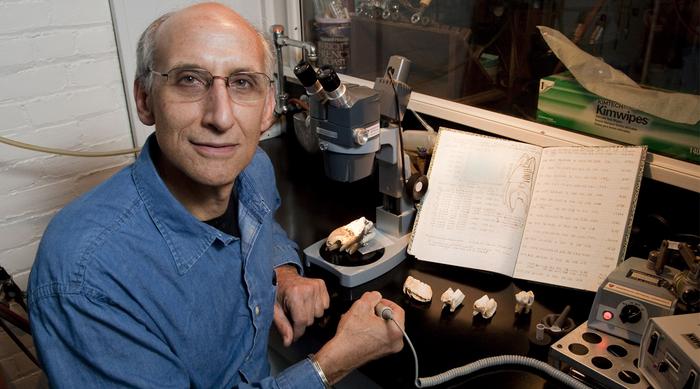
Credit: L. Brian Stauffer, U. of I. News Bureau
The Tibetan plateau—the world’s highest and largest plateau—poses a challenge to the people who live there because of its extreme climate. In a new study, researchers have discovered stone artifacts that suggest that there were more cultural exchanges between those who lived on the plateau and those living on its perimeter.
“The Tibetan plateau has an average elevation of more than 4500 meters, which makes Colorado seem like it is at sea level. It’s amazing that people have been able to occupy this area on and off for at least the last 40,000 years,” said Stanley Ambrose (MME), a professor of anthropology. “Unfortunately, very little research has been done in this big area.”
The plateau covers roughly four times the size of Texas and the researchers were focused on the Holocene period, which began about 11,700 years ago. “Although the world was warmer and wetter, this high-altitude location was arid and largely grassy, making it a challenging place to live in.”
The researchers focused on a region of the plateau that supported a small human population due to its cold, dry climate and reduced oxygen levels. However, this area was prime grazing territory for yaks and gazelles. Previously it was believed that the residents developed unique strategies to survive, including making specialized stone tools and having unique genetic adaptations that helped them adapt to low oxygen conditions.
“These tools were ideal because they could be reconfigured easily for different purposes. They were flexible and versatile, allowing the owners to carry a bag of bladelets that could be then shaped within seconds,” Ambrose said. “Before that, everybody was running around with big knives and spears, which were durable and strong, but weren’t diverse.”
In the present study, the researchers excavated over 700 artifacts by digging through the surface and collecting them from different sedimentary layers. They then dated these tools using Accelerator Mass Spectrometry 14C to confirm their age and composition.
The researchers confirmed that the blades were from the middle-to-late Holocene. Intriguingly, they also discovered that the blades themselves were similar to the ones that had been developed in northern China, suggesting that there was a long-distance cultural exchange between the Tibetan plateau and northern China through the communities that lived on the plateau’s perimeter.
“These artifacts were created from geological materials that were located hundreds of kilometers away, suggesting that there were large social networks that were much bigger than the largest human hunter-gatherer ranges,” Ambrose said. “It also implies that these networks had long-distance interaction and communication.”
The researchers are now interested in expanding the size of the excavations to prove their hypothesis. “Although this is a very small excavation, there is enough to show that there were long-distance interactions. Now we need to look at larger areas and get more samples to see if we can go further back in time,” Ambrose said.
The study “The earliest microblade site 6800 years ago reveals broader social dimension than previous thought at the central high altitude Tibetan plateau” was published in Quaternary Science Reviews and can be found at https://doi.org/10.1016/j.quascirev.2024.108551. It was funded by the National Natural Science Foundation of China, the Fund of Shandong Province, and the Second Tibetan Plateau Scientific Expedition and Research program.
Journal
Quaternary Science Reviews
Method of Research
Experimental study
Article Title
The earliest microblade site 6800 years ago reveals broader social dimension than previous thought at the central high altitude Tibetan plateau
Article Publication Date
15-Mar-2024
Cite Scienmag News
Courtney Benton. (April 29, 2024). Tibetan plateau had broader social dimensions than previously thought. Scienmag. https://scienmag.com/tibetan-plateau-had-broader-social-dimensions-than-previously-thought/
Courtney Benton. "Tibetan plateau had broader social dimensions than previously thought." Scienmag, 29 April 2024, https://scienmag.com/tibetan-plateau-had-broader-social-dimensions-than-previously-thought/. Accessed 4 September 2026.
Courtney Benton. "Tibetan plateau had broader social dimensions than previously thought." Scienmag. April 29, 2024. https://scienmag.com/tibetan-plateau-had-broader-social-dimensions-than-previously-thought/

