

Tuesday, October 27, 2026
Science
No Result
View All Result
  • Login
  • HOME
  • SCIENCE NEWS
  • CONTACT US
  • HOME
  • SCIENCE NEWS
  • CONTACT US
No Result
View All Result
Scienmag
No Result
View All Result
Home Science News Medicine

Three Synaptic Receptors Define Aggressiveness in Glioblastoma

October 27, 2026
in Medicine
Nathaniel Bowman
By Nathaniel Bowman Scienmag Editorial Profile - Precision Oncology
Reading Time: 2 mins read
0
Three Synaptic Receptors Define Aggressiveness in Glioblastoma

Three Synaptic Receptors Define Aggressiveness in Glioblastoma

65
SHARES
587
VIEWS
Share on FacebookShare on Twitter
ADVERTISEMENT

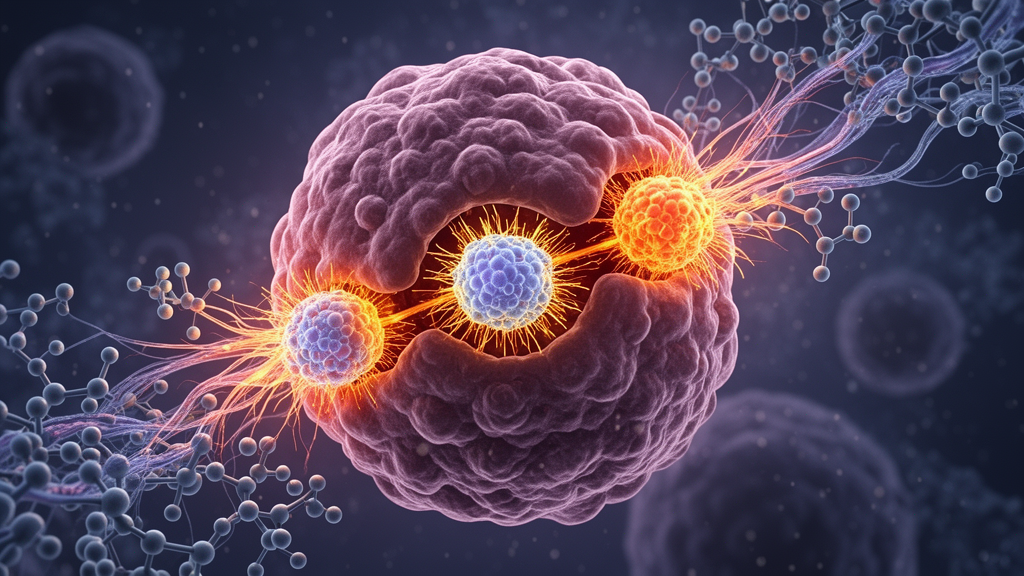
Researchers have identified a novel three-gene expression signature involving specific synaptic receptors that defines glioblastoma (GBM) aggressiveness and correlates with significantly shorter overall survival in patients.

This study leverages the paradigm of cancer neuroscience, investigating how GBM cells exploit neural signaling pathways to drive malignancy. Given that GBM prognosis remains notoriously poor, characterized by near-universal recurrence and therapeutic resistance, this research sought to pinpoint the specific neurotransmitter receptors mediating the survival benefits observed when chlorpromazine (CPZ) is added to standard-of-care treatments. By utilizing large-scale transcriptomic screening of the TCGA and CGGA datasets, the team analyzed twelve genes encoding key pharmacological targets of CPZ, including nine neuro-active G protein-coupled receptors (GPCRs), two ionotropic glutamate receptors, and one metabolic enzyme.

The analysis led to the development of a robust three-gene prognostic signature comprising the receptors HRH1, ADRA2B, and CHRM3. These receptors were found to be significantly upregulated within GBM tissues and were strongly correlated with aggressive molecular features, specifically IDH1-wildtype status and unmethylated MGMT promoter status. To confirm these findings at the protein level, immunohistochemistry (IHC) was performed on tissue microarrays and independent institutional cohorts. The IHC results demonstrated intense cytoplasmic immunoreactivity in over 50% of tumor cells in aggressive cases, providing biological validation for the signature’s presence in clinical samples.

The clinical utility of this receptor-based signature was further established by observing that patients exhibiting elevated mRNA and protein expression of these three receptors consistently demonstrated significantly shorter overall survival rates. Beyond mere prognosis, the research provided functional context for this signature. Functional enrichment analyses, including GSEA and KEGG pathways, revealed that the elevated expression of HRH1, ADRA2B, and CHRM3 actively modulates several key malignant processes. Specifically, this signature was shown to influence epithelial-mesenchymal transition (EMT), promote angiogenesis, and facilitate immune evasion within the tumor microenvironment.

In conclusion, the identification of this novel, biologically grounded three-receptor prognostic signature at the neuron-tumor interface offers more than just a diagnostic tool. It provides a clear and actionable framework for targeted drug repurposing strategies. By disrupting the oncogenic communication between the nervous system and the GBM cells through these specific receptor vulnerabilities, this study presents a potential therapeutic avenue designed to improve patient outcomes in this highly resistant brain cancer.

Subject of Research: Identification of a synaptic receptor-based prognostic signature defining glioblastoma aggressiveness.

Article Title: A synaptic receptor-based expression signature defines glioblastoma aggressiveness: implications for neural-tumor communication and targetable vulnerabilities

Article References: Gesualdi, L., Sacconi, A., Di Maio, A., Fanelli, G., Di Pietro, E., Carosi, M., Novello, M., Americi, G., Villani, V., Pace, A., Paggi, M. G., & Abbruzzese, C. (2026). A synaptic receptor-based expression signature defines glioblastoma aggressiveness: implications for neural-tumor communication and targetable vulnerabilities. Journal of Translational Medicine. https://doi.org/10.1186/s12967-026-09143-5

Image Credits: AI Generated

DOI: 10.1186/s12967-026-09143-5

Keywords: Glioblastoma, Cancer Neuroscience, Synaptic Receptors, Prognostic Signature, Targeted Therapy, Neurotransmitter Receptors, Glioma, Oncology, synaptic, receptor-based, expression, signature

Cite Scienmag News

Nathaniel Bowman. (October 27, 2026). Three Synaptic Receptors Define Aggressiveness in Glioblastoma. Scienmag. https://scienmag.com/three-synaptic-receptors-define-aggressiveness-in-glioblastoma/

Nathaniel Bowman. "Three Synaptic Receptors Define Aggressiveness in Glioblastoma." Scienmag, 27 October 2026, https://scienmag.com/three-synaptic-receptors-define-aggressiveness-in-glioblastoma/. Accessed 27 October 2026.

Nathaniel Bowman. "Three Synaptic Receptors Define Aggressiveness in Glioblastoma." Scienmag. October 27, 2026. https://scienmag.com/three-synaptic-receptors-define-aggressiveness-in-glioblastoma/


Tags: cancer neurosciencechlorpromazine targeting in gliomaExpressionG protein-coupled receptors in gliomaGlioblastomaglioblastoma prognosisglioblastoma survival biomarkersgliomaIDH1-wildtype glioblastomaimmunohistochemistry in brain tumorsMGMT promoter methylation statusmolecular features of GBM aggressivenessneural signaling in cancerneurotransmitter receptorsneurotransmitter receptors and tumor aggressivenessoncologyprognostic signaturereceptor-basedsignaturesynapticsynaptic receptor gene signatureSynaptic ReceptorsTargeted therapytranscriptomic analysis of GBM
Share26Tweet16
Previous Post

Pioneering Cardiac Xenotransplantation: Bridging Mortality in Pediatric Heart Disease

Next Post

How School Attachment Boost Family Cohesion’s Impact on Teen Self-Esteem

Related Posts

How School Attachment Boost Family Cohesion’s Impact on Teen Self-Esteem
Medicine

How School Attachment Boost Family Cohesion’s Impact on Teen Self-Esteem

October 27, 2026
TRPA1 Modulator MNP-021 Protect Neurons and Glia from Diabetes Stress
Medicine

TRPA1 Modulator MNP-021 Protect Neurons and Glia from Diabetes Stress

October 27, 2026
Machine Learning Maps R-Loop Scores to NCL-Driven Malignant Progression in Colorectal Cancer
Medicine

Machine Learning Maps R-Loop Scores to NCL-Driven Malignant Progression in Colorectal Cancer

October 27, 2026
Massive Gluten-Free Flour Inhalation Leads to Severe Bronchial Obstruction and Lung Atelectasis
Medicine

Massive Gluten-Free Flour Inhalation Leads to Severe Bronchial Obstruction and Lung Atelectasis

October 27, 2026
Eating disorder science confronts its Eurocentric blind spots across cultures
Medicine

Eating disorder science confronts its Eurocentric blind spots across cultures

October 27, 2026
Gut Microbes and Muscle Loss: New Review Maps the Gut-Muscle Axis in Sarcopenia
Medicine

Gut Microbes and Muscle Loss: New Review Maps the Gut-Muscle Axis in Sarcopenia

October 27, 2026
Next Post
How School Attachment Boost Family Cohesion’s Impact on Teen Self-Esteem

How School Attachment Boost Family Cohesion's Impact on Teen Self-Esteem

  • Mothers who receive childcare support from maternal grandparents show more optimized

    Mothers who receive childcare support from maternal grandparents show more parental warmth, finds NTU Singapore study

    27656 shares
    Share 11059 Tweet 6912
  • University of Seville Breaks 120-Year-Old Mystery, Revises a Key Einstein Concept

    1061 shares
    Share 424 Tweet 265
  • Bee body mass, pathogens and local climate influence heat tolerance

    682 shares
    Share 273 Tweet 171
  • Researchers record first-ever images and data of a shark experiencing a boat strike

    546 shares
    Share 218 Tweet 137
  • Groundbreaking Clinical Trial Reveals Lubiprostone Enhances Kidney Function

    531 shares
    Share 212 Tweet 133
Science

Embark on a thrilling journey of discovery with Scienmag.com—your ultimate source for cutting-edge breakthroughs. Immerse yourself in a world where curiosity knows no limits and tomorrow’s possibilities become today’s reality!

RECENT NEWS

  • How School Attachment Boost Family Cohesion’s Impact on Teen Self-Esteem
  • Three Synaptic Receptors Define Aggressiveness in Glioblastoma
  • Pioneering Cardiac Xenotransplantation: Bridging Mortality in Pediatric Heart Disease
  • TRPA1 Modulator MNP-021 Protect Neurons and Glia from Diabetes Stress

Categories

  • Agriculture
  • Anthropology
  • Archaeology
  • Athmospheric
  • Biology
  • Biotechnology
  • Blog
  • Bussines
  • Cancer
  • Chemistry
  • Climate
  • Earth Science
  • Editorial Policy
  • Marine
  • Mathematics
  • Medicine
  • Pediatry
  • Policy
  • Psychology & Psychiatry
  • Science Education
  • Science News
  • Social Science
  • Space
  • Technology and Engineering

Subscribe to Blog via Email

Enter your email address to subscribe to this blog and receive notifications of new posts by email.

Join 5,151 other subscribers

© 2025 Scienmag - Science Magazine

Welcome Back!

Login to your account below

Forgotten Password?

Retrieve your password

Please enter your username or email address to reset your password.

Log In
No Result
View All Result
  • HOME
  • SCIENCE NEWS
  • CONTACT US

© 2025 Scienmag - Science Magazine

Discover more from Science

Subscribe now to keep reading and get access to the full archive.

Continue reading