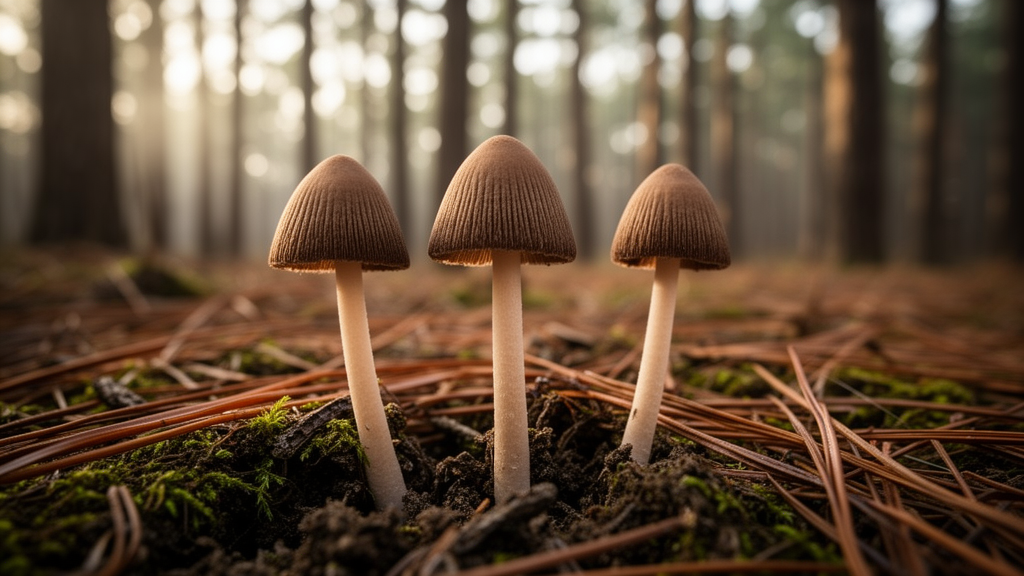
In the forests and plantations of northern China, a group of small, unassuming brown and yellow mushrooms is rewriting what scientists thought they knew about fungal toxins. A new study published in the journal MycoKeys describes two previously unknown species of Inocybe, a genus notorious for poisoning foragers, and reveals that these fungi carry unexpected combinations of neuroactive compounds. Using sensitive chemical analysis, the researchers found that some of these mushrooms simultaneously contain muscarine, the compound responsible for classic mushroom poisoning symptoms, and psilocybin, the hallucinogen better known from so-called magic mushrooms. The discovery challenges long-standing assumptions about how toxin production evolved in this widespread group of fungi.
Mushroom poisoning has become a serious food safety concern in China, where it ranks among the leading causes of foodborne illness outbreaks and associated deaths. According to recent surveillance data cited in the study, 505 mushroom poisoning incidents were recorded in China in 2023, affecting 1,303 patients and causing 16 deaths across 97 different poisonous species. In total, 660 poisonous mushroom species have been reported from the country, with roughly 220 of them implicated in actual poisoning cases. Among these, species of the family Inocybaceae form an important and species-rich group, and poisoning incidents caused by these fungi have been continuously reported from tropical to temperate regions of China in recent years.
The genus Inocybe, first established as an independent genus in 1863, is the largest genus within Inocybaceae, a family now recognized as distinct based on phylogenetic studies and comprising seven genera. Approximately 140 species of Inocybe have been reported from China as of 2025, and around 23 species of Inocybe sensu stricto are considered toxic. Many of these fungi contain muscarine, a small molecule that stimulates the parasympathetic nervous system. Muscarine poisoning typically begins rapidly, within 15 minutes to 2 hours of ingestion, and produces a characteristic triad of symptoms: increased sweating, salivation, and lacrimation. Some Inocybe species also produce psilocybin, which causes central nervous system effects within 10 to 30 minutes, including illusions, hallucinations in fewer than half of cases, an altered sense of time and space, synesthesia, and feelings of euphoria often described as mystical experiences. A few species even contain the deadly amatoxins.
The new research emerged from a systematic toxin screening survey across a broad taxonomic sampling of Inocybaceae in northern China. Specimens were collected from Beijing, Jilin, and Inner Mongolia (Nei Mongol), with fresh mushrooms photographed in the field and key features such as cap diameter, gill width, and stem dimensions measured shortly after collection. Samples were dried overnight at 45 degrees Celsius and deposited in herbaria including those of the National Institute of Occupational Health and Poison Control at the Chinese Center for Disease Control, the Changbai Mountain Nature Reserve, and Chifeng University. Among the collected material were two undescribed species belonging to the Inocybe aeruginascens group, along with the morphologically distinct known species Inocybe asterospora.
To establish whether these collections truly represented new species, the team combined detailed morphological examination with molecular phylogenetics. DNA was extracted from dried specimens and three genetic regions were amplified and sequenced: the internal transcribed spacer (ITS) region, the nuclear ribosomal large subunit (LSU), and the protein-coding rpb2 gene. The resulting multilocus dataset comprised 72 taxa and 2,740 characters. Maximum likelihood and Bayesian inference analyses, run with 1,000 ultrafast bootstrap replicates, resolved the ingroup into three distinct genera: Inocybe, Nothocybe, and Pseudosperma. Crucially, the six specimens of each proposed new species formed fully supported independent clades, with bootstrap values and posterior probabilities of 100 and 1.00 respectively, confirming their status as distinct evolutionary lineages.
The two new species were formally named Inocybe tumericolor and Inocybe subaeruginascens. Inocybe tumericolor, whose name refers to the turmeric-yellow color of its cap, is distinguished by a glabrous, warm yellow pileus, a whitish stipe, and gills that typically extend beyond the cap margin. It produces small mushrooms 20 to 30 millimeters across and grows singly or scattered in plantations of hybrid poplar in Jilin and Inner Mongolia. Inocybe subaeruginascens, named for its similarity to the European species I. aeruginascens, bears straw-yellow to dingy fawn caps and white stems with a subtle bluish tinge in the lower half, a feature that can easily be overlooked in the field. Its holotype was collected at the Temple of Heaven in Beijing, growing on the ground beneath the pagoda tree Sophora japonica, and it also occurs under poplars in Inner Mongolia. Both species differ from their closest relatives by roughly 3 to 4 percent sequence divergence in the ITS region, along with distinctive microscopic characters such as spore shape and the form of the thick-walled cystidia that stud their gills.
The most striking results came from the chemical analysis. The researchers performed a targeted multi-toxin analysis using liquid chromatography-tandem mass spectrometry (LC-MS/MS), quantifying 12 toxins including muscarine, two isoxazole derivatives, three tryptamine alkaloids, three amatoxins, and three phallotoxins. Dried mushroom powder was extracted with methanol and water, purified to remove pigments and lipids, and analyzed on a 4000 QTrap system, with the method validated according to European Union regulations using shiitake mushrooms as a blank matrix. Of the 12 toxins screened, only three were detected: muscarine, psilocybin, and psilocin. The other nine, including the lethal amatoxins and phallotoxins, were below detection limits in all tested samples.
The quantitative results revealed three distinct toxin profiles among the three species. Inocybe tumericolor contained high levels of psilocybin, ranging from 1,692.2 to 2,758.7 milligrams per kilogram of dried tissue, along with psilocin at 77.8 to 134.8 milligrams per kilogram, but no detectable muscarine. The known species Inocybe asterospora showed the opposite pattern in part: it contained muscarine at 79.6 to 1,182.6 milligrams per kilogram and psilocybin at 107.1 to 765.2 milligrams per kilogram, but no psilocin. Inocybe subaeruginascens carried all three compounds simultaneously, with muscarine at 480.8 to 752.6 milligrams per kilogram, psilocybin at 1,023.0 to 2,731.2 milligrams per kilogram, and psilocin at 71.7 to 148.4 milligrams per kilogram. This means that eating a single meal of I. subaeruginascens could theoretically deliver both parasympathetic stimulation and hallucinogenic effects.
These findings carry significant evolutionary implications. Previous studies had identified five European psilocybin-positive Inocybe species, all belonging to the smooth-spored temperate clade, exhibiting bluish or reddish coloration, and notably devoid of muscarine. Earlier phylogenetic work had supported the idea that the evolutionary loss of muscarine biosynthesis preceded the acquisition of psilocybin production. The discovery that I. subaeruginascens and the stellate-spored I. asterospora produce both psilocybin and muscarine challenges this previously inferred link between muscarine loss and psilocybin gain. Moreover, the detection of psilocybin in I. asterospora represents the first report of this toxin in a nodulose-spored lineage, substantially expanding the known phylogenetic distribution of psilocybin within the genus and suggesting that the evolutionary dynamics of secondary metabolite production in Inocybe are more intricate than previously assumed.
The clinical consequences may be equally important. Psilocybin is a prodrug that must be dephosphorylated to produce psilocin, the active metabolite that acts directly on serotonin 5-HT2A receptors to produce psychoactive effects lasting four to six hours, with most symptoms resolving within 24 hours. The consistent detection of preformed psilocin in I. subaeruginascens and I. tumericolor, and its absence in all examined I. asterospora specimens despite their high psilocybin content, indicates that the capacity to convert psilocybin to psilocin is not universal among psilocybin-producing Inocybe species. Preformed psilocin may bypass this metabolic step and accelerate the onset of hallucinogenic symptoms, potentially producing different clinical presentations in poisoned patients. The authors note limitations, including the inability to profile toxins in two related species due to limited material and small sample sizes for some collections, but they emphasize that accurate species-level identification and toxin profiling are essential for poisoning surveillance, early diagnosis, and effective treatment of Inocybe-related mushroom poisoning in China.
Subject of Research: Toxin profiles and species diversity of Inocybe fungi in northern China
Article Title: Mixed toxin profiles in two new and one known species of Inocybe ( Inocybaceae ) from northern China
Article References: Mixed toxin profiles in two new and one known species of Inocybe ( Inocybaceae ) from northern China. (n.d.). https://doi.org/10.3897/mycokeys.141.203741
Image Credits: AI Generated
DOI: 10.3897/mycokeys.141.203741
Keywords: Inocybe, mushroom poisoning, muscarine, psilocybin, psilocin, Inocybaceae, LC-MS/MS, phylogenetics, new species, northern China, mycology, toxin evolution
Cite Scienmag News
Drew Townsend. (October 16, 2026). Three Inocybe Mushrooms from Northern China Reveal Surprising Mixed Toxin Profiles. Scienmag. https://scienmag.com/three-inocybe-mushrooms-from-northern-china-reveal-surprising-mixed-toxin-profiles/
Drew Townsend. "Three Inocybe Mushrooms from Northern China Reveal Surprising Mixed Toxin Profiles." Scienmag, 16 October 2026, https://scienmag.com/three-inocybe-mushrooms-from-northern-china-reveal-surprising-mixed-toxin-profiles/. Accessed 16 October 2026.
Drew Townsend. "Three Inocybe Mushrooms from Northern China Reveal Surprising Mixed Toxin Profiles." Scienmag. October 16, 2026. https://scienmag.com/three-inocybe-mushrooms-from-northern-china-reveal-surprising-mixed-toxin-profiles/