


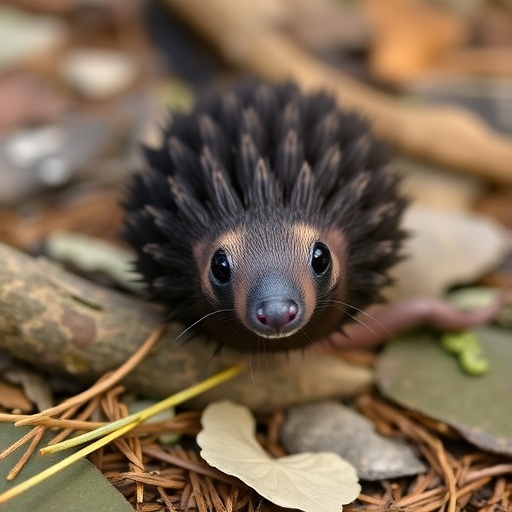
Imagine a creature that seems almost plucked from the depths of prehistoric realms—a mammal armored in overlapping, pinecone-like scales with a lengthy, robust tail and formidable, curling claws. This is the pangolin, a deceptively elusive creature native exclusively to parts of Africa and Asia. Despite their remarkable appearance and evolutionary uniqueness, pangolins have become the most trafficked mammals globally, primarily due to the illegal demand for their scales. This alarming status places them perilously close to extinction, underscoring urgent conservation challenges.
Recently, groundbreaking research published in the journal Communications Biology has unraveled the existence of a previously unrecognized species of Asian pangolin, named Manis aurita. This species, concealed for years among the dense arboreal landscapes of Nepal and Northern India, had remained undetected until a meticulous integration of morphological and genomic analyses unearthed its distinct identity. Recognizing M. aurita not only expands the biological taxonomy of pangolins but crucially informs targeted conservation strategies, potentially stymying illegal poaching activities before they escalate.
The journey to revalidate Manis aurita involved an interdisciplinary and multinational research effort that spanned over five years. Anderson Feijó, the Negaunee Assistant Curator of Mammals at the Field Museum, emphasizes that safeguarding species is contingent upon knowing their identities. “We can’t protect what we do not know,” he asserts, highlighting how the confirmation of M. aurita shines a light on a cryptic species previously misclassified under the broader Chinese pangolin category.
Narayan Koju from Nepal Engineering College, the study’s primary author, recalls the pivotal moments when field evidence began to suggest that Himalayan pangolins represented an evolutionary lineage distinct from their known counterparts. This extensive research leveraged museum collections and advanced genetic sequencing methods to build a compelling case for species revalidation, underscoring the profound value of long-term scientific collaboration and the stewardship of natural history archives.
This taxonomic reclassification also addresses a recent scientific development from 2025, where researchers differentiated the Chinese pangolin (Manis pentadactyla) into two species, naming the Himalayan population Manis indoburmanica. However, the rules of zoological nomenclature stipulate that the earliest correctly described species name takes precedence. Upon reviewing historical records and analyzing DNA from a preserved 1836 specimen housed in London’s Natural History Museum, the researchers discovered that M. indoburmanica is synonymous with M. aurita, necessitating the latter’s resurrection as the valid species name.
The utilization of ancient DNA from museum specimens—some nearly two centuries old—was pivotal in this taxonomic clarification. This approach exemplifies how advancements in genomic technologies can extract meaningful evolutionary information from historical samples, enabling scientists to unravel complex phylogenetic puzzles. The successful sequencing of the M. aurita type specimen not only resolved nomenclatural ambiguities but also illuminated evolutionary relationships within the genus Manis.
While the physical distinctions between M. aurita and the traditional Chinese pangolin may appear subtle, they carry profound implications. Manis aurita is characterized by a comparatively larger body, an elongated tail, and notably smaller ears—the latter inspiring its scientific name “aurita,” which alludes to ear morphology. These phenotypic nuances, coupled with discrete geographic distributions that do not overlap, provide essential criteria for effective species identification in both field research and forensic contexts.
The conservation significance of delineating pangolin species accurately cannot be overstated. As these mammals face relentless poaching driven by their coveted scales—highly prized in traditional Chinese medicine for their alleged aphrodisiac properties—understanding species-specific distribution channels becomes critical. Most pangolin trafficking involves scales rather than live animals, complicating efforts to trace poaching sources and implement localized protection measures. The integration of DNA barcoding and species-specific genetic markers from this study offers a powerful tool to trace seized scales back to their geographic origins, thus enabling focused anti-poaching enforcement.
Moreover, this refined taxonomic framework aids in optimizing captive breeding and reintroduction programs. Previous assumptions permitting the introduction of Chinese pangolins into Nepalese habitats, without recognizing M. aurita’s distinct lineage, risked genetic contamination and ineffective conservation outcomes. Clearly defining species boundaries ensures that restoration efforts respect evolutionary lineages and habitat specializations, thereby enhancing the probability of long-term survival.
The research also celebrates the indispensable role of museum collections as reservoirs of biological heritage. These collections provide unparalleled access to archival specimens that reflect historical biodiversity, allowing researchers to construct comprehensive datasets that wouldn’t be achievable through fresh samples alone, especially for elusive or endangered animals like pangolins. Museums, therefore, act as time capsules enabling integrative studies combining morphology, genetics, and biogeography—a triad crucial for modern taxonomy and conservation biology.
This study represents a landmark in pangolin research, made possible through a rich tapestry of international collaboration involving institutions such as Guangzhou University, Nepal Engineering College, the Chinese Academy of Sciences, the Smithsonian National Museum of Natural History, and the Field Museum. This cross-institutional endeavor exemplifies how cooperative science can decode biodiversity puzzles and equip conservationists with actionable intelligence.
In summary, the revalidation of Manis aurita marks a transformative step in understanding pangolin diversity, evolutionary history, and conservation needs. Harnessing integrative genomic analyses alongside meticulous morphological reassessment clarifies species boundaries that have long eluded scientists. Such clarity is indispensable in directing resources, enforcing anti-trafficking regulations, and designing ecological interventions that secure a sustainable future for one of the world’s most trafficked and enigmatic mammals. The study underscores that protecting biodiversity hinges not only on discovering new species but also on reevaluating and refining what we thought we knew—unlocking the secrets safeguarded in both jungle canopies and museum drawers.
News Publication Date: 1-Jul-2026
Web References:
https://doi.org/10.1038/s42003-026-10314-9
Cite Scienmag News
Margaret Porter. (July 1, 2026). This Pinecone-Like Creature Is the Most Trafficked Mammal on Earth. Scienmag. https://scienmag.com/this-pinecone-like-creature-is-the-most-trafficked-mammal-on-earth/
Margaret Porter. "This Pinecone-Like Creature Is the Most Trafficked Mammal on Earth." Scienmag, 1 July 2026, https://scienmag.com/this-pinecone-like-creature-is-the-most-trafficked-mammal-on-earth/. Accessed 4 September 2026.
Margaret Porter. "This Pinecone-Like Creature Is the Most Trafficked Mammal on Earth." Scienmag. July 1, 2026. https://scienmag.com/this-pinecone-like-creature-is-the-most-trafficked-mammal-on-earth/


