


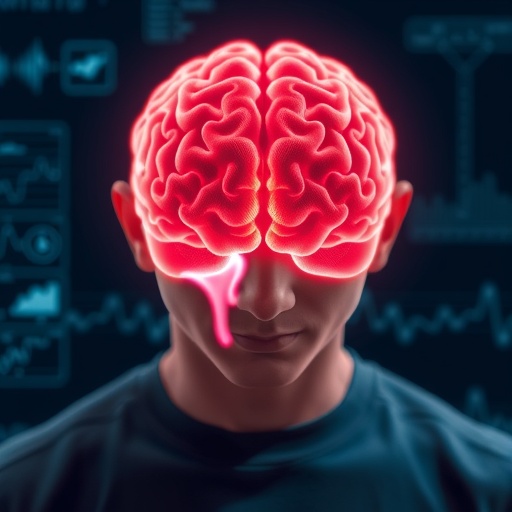
In a groundbreaking advance for the treatment of neurodegenerative diseases, researchers have embarked on a pioneering exploration of theta-band transcranial alternating current stimulation (tACS) in combination with cognitive training to combat mild Alzheimer’s disease. This randomized, double-blind, sham-controlled pilot study offers a promising glimpse into non-invasive neuromodulation strategies aimed at ameliorating cognitive decline, a hallmark characteristic of Alzheimer’s pathology. The intricate interplay of brain wave modulation and targeted cognitive exercises during the early stages of Alzheimer’s sets a foundation for new therapeutic paradigms, potentially revolutionizing how this debilitating disease is managed.
The study centers on the application of theta-band tACS, which involves delivering low-intensity electrical currents tuned to the theta frequency range (typically 4-8 Hz) to modulate cortical activity. Theta oscillations have long been implicated in critical memory and learning processes. By synchronizing neural circuits within this frequency range, scientists aim to enhance neuroplasticity, bolster synaptic connectivity, and ultimately improve cognition in patients exhibiting mild symptoms of Alzheimer’s disease. This precision targeting of oscillatory brain activity represents a nuanced approach compared to traditional pharmacological treatments, which often provide limited or temporary relief.
Participants in this rigorous clinical trial underwent a seamless integration of theta-band tACS sessions concurrent with strategic cognitive training exercises. The double-blind design ensured neither participants nor researchers knew who received real versus sham stimulation, minimizing bias and enabling more reliable interpretation of outcomes. This meticulous methodology underscores the commitment to scientific rigor, ensuring that any observed cognitive improvements could be confidently attributed to the stimulation protocol rather than placebo effects or external variables.
Central to the therapeutic premise is the concept that augmenting endogenous neural rhythms through externally applied alternating currents can enhance synaptic plasticity. The theta-frequency range is critically involved in hippocampal and prefrontal cortex circuits, both essential for memory consolidation, attention, and executive function. By cleverly leveraging these naturally occurring oscillations, tACS attempts to re-establish disrupted neuronal synchrony characteristic of Alzheimer’s pathology. This form of entrainment could theoretically reinstate more efficient network communication, thereby alleviating cognitive deficits that progressively impair daily functioning.
The cognitive training component complemented neuromodulation by engaging memory, attention, and executive function tasks relevant to everyday cognition. This combination is not merely additive but synergistic—electrical stimulation optimizes the brain’s receptiveness while cognitive tasks provide the experiential framework necessary for reinforcing newly potentiated neural pathways. This integrated approach reflects a sophisticated understanding of brain plasticity and the role of behaviorally driven learning modalities in chronic disease interventions.
Preliminary outcomes revealed encouraging trends toward improved cognitive performance in the active tACS group compared to controls receiving sham stimulation. Measures of memory recall, processing speed, and attention demonstrated statistically significant enhancements after a series of treatment sessions. While these refinements are modest, they are clinically meaningful, especially considering the progressive nature of Alzheimer’s and the paucity of effective therapeutic options at this early stage. The results ignite hope that harnessing endogenous oscillatory dynamics could pave the way for disease-modifying treatments.
Importantly, the non-invasive and well-tolerated nature of theta-band tACS positions it favorably within the clinical landscape. Participants reported minimal side effects—primarily mild scalp sensations—indicating a high safety profile essential for repeated and extended therapeutic use. The absence of systemic drug interactions further enhances its appeal, offering a complementary or alternative strategy to conventional pharmacotherapy without the burden of adverse systemic effects frequently encountered in this population.
This study builds upon a growing body of neuroscientific evidence linking disrupted neural oscillations to cognitive decline, highlighting the mechanistic relevance of brain rhythms in Alzheimer’s disease. Prior investigations have demonstrated altered theta activity correlates with memory impairments; thus, restorative stimulation within this frequency band targets a specific neural deficit. By translating these theoretical insights into a tangible clinical intervention, this trial bridges fundamental neuroscience and practical medicine, exemplifying translational research’s potential.
Moreover, the pilot trial’s sham-controlled design provides a robust framework for future larger-scale studies. The data gleaned not only validate the feasibility and safety of theta-band tACS combined with cognitive training but also inform optimal dosing parameters, session frequencies, and stimulation intensities. Refinements to these parameters may unlock greater therapeutic efficacy, potentially halting or even reversing early cognitive decline. The adaptive nature of tACS protocols could be tailored to individual neurophysiological profiles, heralding an era of personalized neuromodulation in dementia care.
Emerging as a frontrunner in innovative Alzheimer’s therapies, tACS leverages the brain’s inherent plastic capabilities rather than relying solely on chemical modulation. Unlike conventional cholinesterase inhibitors or NMDA receptor antagonists that target neurotransmitter systems, theta-band tACS directly engages neuronal network dynamics, presenting a fundamentally different treatment axis. This paradigm shift expands the armamentarium against Alzheimer’s, emphasizing brain rhythm restoration as a novel therapeutic frontier.
The intersection of neuromodulation and cognitive training in this study exemplifies a holistic approach, recognizing that biological and behavioral interventions in tandem yield superior outcomes. Such combinatorial strategies acknowledge the multifactorial nature of Alzheimer’s disease, where neurodegeneration disrupts both cellular physiology and functional cognitive networks. By addressing these multiple dimensions simultaneously, this approach reflects a sophisticated and promising clinical innovation.
Future research trajectories may explore the mechanistic underpinnings of how theta-band tACS modulates neural circuits at the synaptic and network level using neuroimaging and electrophysiological biomarkers. Understanding these pathways in detail will clarify optimization strategies and elucidate patient populations most likely to benefit. Additionally, extending trials to moderate and advanced Alzheimer’s cohorts can ascertain whether early-stage gains translate into sustained functional improvements across disease progression.
While this pilot trial represents a seminal step, substantial challenges remain. The quest to replicate findings in larger diverse populations, assess long-term durability of benefits, and integrate tACS with existing standard-of-care interventions will require coordinated multidisciplinary efforts. Nonetheless, the promise of a non-invasive, physiology-driven, and cognitively enhancing treatment injects new optimism into Alzheimer’s research—an arena notoriously resistant to innovation.
This pioneering study published in Translational Psychiatry embodies the burgeoning synergy between neuroscience, technology, and clinical therapeutics. The confluence of theta-band electrical brain stimulation with cognitive training opens an exciting chapter in neurodegenerative disease management. As research unfolds, this approach may redefine how clinicians approach cognitive rehabilitation, merging brainwave engineering with experiential learning to preserve identity and quality of life for individuals facing Alzheimer’s daunting cognitive challenges.
Cite Scienmag News
Cassandra Pierce. (January 31, 2026). Theta-Band Brain Stimulation Boosts Mild Alzheimer’s Training. Scienmag. https://scienmag.com/theta-band-brain-stimulation-boosts-mild-alzheimers-training/
Cassandra Pierce. "Theta-Band Brain Stimulation Boosts Mild Alzheimer’s Training." Scienmag, 31 January 2026, https://scienmag.com/theta-band-brain-stimulation-boosts-mild-alzheimers-training/. Accessed 4 September 2026.
Cassandra Pierce. "Theta-Band Brain Stimulation Boosts Mild Alzheimer’s Training." Scienmag. January 31, 2026. https://scienmag.com/theta-band-brain-stimulation-boosts-mild-alzheimers-training/


