

Wednesday, April 22, 2026
Science
No Result
View All Result
  • Login
  • HOME
  • SCIENCE NEWS
  • CONTACT US
  • HOME
  • SCIENCE NEWS
  • CONTACT US
No Result
View All Result
Scienmag
No Result
View All Result
Home Science News Policy

The ocean is becoming too loud for oysters

July 24, 2024
in Policy
Reading Time: 2 mins read
0
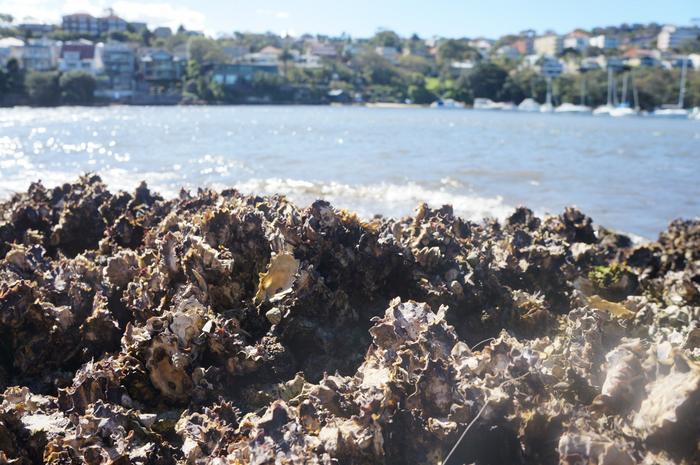
A native oyster bed on an urbanised coast credit Dominic McAfee
66
SHARES
601
VIEWS
Share on FacebookShare on Twitter
ADVERTISEMENT

Baby oysters rely on natural acoustic cues to settle in specific environments, but new research from the University of Adelaide reveals that noise from human activity is interfering with this critical process.

A native oyster bed on an urbanised coast credit Dominic McAfee

Credit: Dominic McAfee

Baby oysters rely on natural acoustic cues to settle in specific environments, but new research from the University of Adelaide reveals that noise from human activity is interfering with this critical process.

“The ocean’s natural sound is gradually hushing due to habitat loss, leading to a quieter natural environment increasingly drowned out by the crescendo of man-made noise pollution,” explained lead author Dr Brittany Williams, from the University’s Southern Seas Ecology Laboratories.

“Numerous marine larvae rely on natural sounds to navigate and select their dwellings, so this interference poses a problem for conservationists aiming to attract oysters to restored reefs using natural sounds.

“Noises from shipping, machinery and construction, for example, are pervasive and pose serious environmental change that affects both terrestrial and marine animals.”

According to the research, published in Proceedings of the Royal Society B, marine organisms appear particularly vulnerable to the intensification of anthropogenic noise because they use sound for a range of activities, including to sense their surroundings, navigate, communicate, avoid predators, and find mates and food.

“Our previous work demonstrated that novel acoustic technology can bolster oyster recruitment in habitat restoration projects, but this new research indicates potential limitations of this speaker technology,” said the University of Adelaide’s Dr Dominic McAfee, who was part of the research team.

In environments where there is a lot of human noise pollution, the speakers did not increase larval recruitment.

“This suggests that noise pollution might cloak the intrinsic sounds of the ocean, potentially exerting profound ramifications on marine ecosystem vitality and resilience,” said co-author Professor Sean Connell, from the University of Adelaide and the Environment Institute.

While acoustic enrichment may be less effective along noisy metropolitan coastlines and urbanised waterways, the researchers are still optimistic about the application of the technique in less trafficked areas.

“Where there is little anthropogenic noise, acoustic enrichment appears to enhance the process of recruitment which is key to restoration success,” said Dr Williams.


Journal

Proceedings of the Royal Society B Biological Sciences

DOI

10.1098/rspb.2024.0741

Article Title

Anthropogenic noise disrupts acoustic cues for recruitment

Share26Tweet17
Previous Post

Blood test may guide use of multiple myeloma immunotherapy

Next Post

Lower dose prostate cancer treatments retain efficacy while improving tolerability

Related Posts

blank
Policy

How Generative AI Tools Are Transforming the Software Engineering Workforce

April 22, 2026
blank
Policy

Kratom Consumption Surges in the US, Bringing Significant Health and Lifestyle Impacts

April 22, 2026
blank
Policy

Study Finds FDA’s ‘Healthy’ Label Increases Sales and Allows Premium Pricing for Healthier Snacks

April 21, 2026
blank
Policy

SETI Institute Unveils Discovery and Futures Lab to Investigate Human Aspects of Life Beyond Earth

April 21, 2026
blank
Policy

Alliance Study Reveals New Hope in Treatment of Locally Advanced Lung Cancer

April 21, 2026
blank
Policy

New Study Introduces the eLTER Framework for Standardized Long-Term Environmental Monitoring

April 21, 2026
Next Post
Lower dose prostate cancer treatments retain efficacy while improving tolerability.

Lower dose prostate cancer treatments retain efficacy while improving tolerability

  • Mothers who receive childcare support from maternal grandparents show more parental warmth, finds NTU Singapore study

    Mothers who receive childcare support from maternal grandparents show more parental warmth, finds NTU Singapore study

    27636 shares
    Share 11051 Tweet 6907
  • University of Seville Breaks 120-Year-Old Mystery, Revises a Key Einstein Concept

    1039 shares
    Share 416 Tweet 260
  • Bee body mass, pathogens and local climate influence heat tolerance

    676 shares
    Share 270 Tweet 169
  • Researchers record first-ever images and data of a shark experiencing a boat strike

    538 shares
    Share 215 Tweet 135
  • Groundbreaking Clinical Trial Reveals Lubiprostone Enhances Kidney Function

    525 shares
    Share 210 Tweet 131
Science

Embark on a thrilling journey of discovery with Scienmag.com—your ultimate source for cutting-edge breakthroughs. Immerse yourself in a world where curiosity knows no limits and tomorrow’s possibilities become today’s reality!

RECENT NEWS

  • Genetic Links to Post-Radiotherapy Fatigue in Prostate Cancer
  • Predicting Tracheostomy or Death in Severe BPD
  • Advances in Systemic Therapy and Bladder Preservation
  • New Study Reveals 2.8% of US Population Used Psilocybin in the Past Year

Categories

  • Agriculture
  • Anthropology
  • Archaeology
  • Athmospheric
  • Biology
  • Biotechnology
  • Blog
  • Bussines
  • Cancer
  • Chemistry
  • Climate
  • Earth Science
  • Editorial Policy
  • Marine
  • Mathematics
  • Medicine
  • Pediatry
  • Policy
  • Psychology & Psychiatry
  • Science Education
  • Social Science
  • Space
  • Technology and Engineering

Subscribe to Blog via Email

Enter your email address to subscribe to this blog and receive notifications of new posts by email.

Join 5,145 other subscribers

© 2025 Scienmag - Science Magazine

Welcome Back!

Login to your account below

Forgotten Password?

Retrieve your password

Please enter your username or email address to reset your password.

Log In
No Result
View All Result
  • HOME
  • SCIENCE NEWS
  • CONTACT US

© 2025 Scienmag - Science Magazine

Discover more from Science

Subscribe now to keep reading and get access to the full archive.

Continue reading
