


How do algorithms determine the way we interact with our memories?

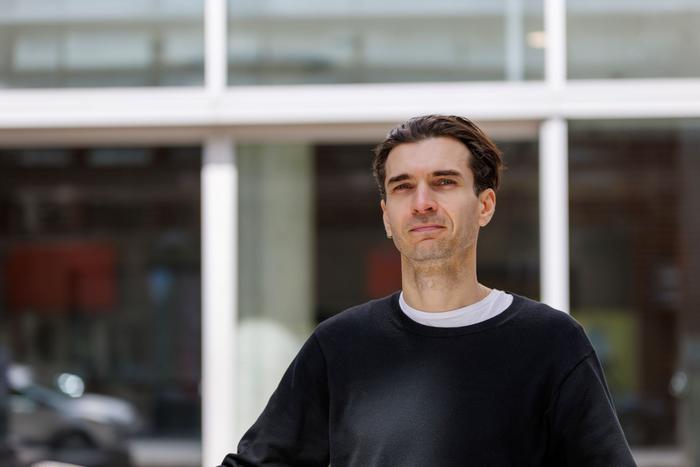
Credit: Concordia University
How do algorithms determine the way we interact with our memories?
It’s a uniquely 21st-century kind of question, and it is far from settled.
In a new paper in the journal Memory, Mind & Media, Concordia PhD candidate Chrys Vilvang argues that the way tech companies store, package and share personal content back to users is opaque. And, given one recent controversy, it’s open to important questions about selection and representation.
Vilvang’s paper looks at the discussion stemming from an April 2022 article on 9to5Mac, a tech news site dedicated to all things Apple. Its journalists were given access to the iOS 15.5 beta update, and they discovered it was blocking photographs from a dozen specific locations from appearing in the iPhone Photos app’s Memories. This is the function that creates short playback albums set to music usually designed to elicit smiles and tug on heartstrings.
The journalists quickly found that the dozen sites were all related to the Holocaust. Several were actual concentration camps, including Auschwitz-Birkenau, Treblinka and Dachau. But others were Holocaust memorial sites such as Yad Vashem in Israel, the Anne Frank House in Amsterdam and the United States Holocaust Memorial Museum in Washington, DC.
Vilvang turned to the article’s comments section to analyze the evolving public perception of automated memory technologies and their potential consequences. 9to5Mac readers are deeply invested in technology matters, and Vilvang was struck by the near universal skepticism of Apple’s decision.
“Most seemed very leery of what this could indicate for the future, or how it could be used to privilege a certain kind of representation,” he says. “But I was impressed by how deeply people were willing to go to express their unique issues with it and how they were willing to speculate what it could indicate, without speaking specifically about the Holocaust.”
My photos, my agency
Vilvang quotes several commenters in his paper, most of whom express annoyance at the removal of their power to decide what they can and cannot see.
“I don’t want someone else deciding what is ‘sensitive’ … and perhaps I WANT a memory of a particularly moving place to keep me grounded,” writes one.
“[Let] people be in charge of their memories,” writes another. “I, for one, have visited Dachau and have shot pictures…. It doesn’t bother me in the slightest when they appear. Quite the opposite, they serve as a powerful reminder.”
Vilvang says he has not heard any comment from Apple regarding the update, but he suspects that it came from a place of good faith.
“The motivation I think is probably well intentioned and probably straightforward: I assume that they did not think that topics that have such a degree of gravity should be represented in a tool that is largely geared toward positive interactions.”
As advanced as technology is today, he adds, Apple’s algorithms still cannot decide what might be subjectively relevant to one individual over another. By trying to keep the Memories function associated with happiness, it is deliberately making choices on its users’ behalf by blocking photos from sites that it deems problematic.
The future for this kind of application remains as murky as its present algorithms, Vilvang adds. If Apple decides to block Holocaust-themed photos, what might it block next?
“This illustrates the degree of intervention and intention that goes into blocking these specific sites for reasons that have not been articulated. And if we know companies are willing to intervene in these kinds of ways, then we need to critically question our own interactions with our past, knowing that it is being mediated by something over which we have no control.”
Read the cited paper: “Between automated memory and history: blocking ‘sensitive locations’ from Apple Memories.”
Journal
Memory Mind & Media
Method of Research
Content analysis
Subject of Research
People
Article Title
Between automated memory and history: blocking ‘sensitive locations’ from Apple Memories
Article Publication Date
7-Mar-2024
COI Statement
The author declares none.
Cite Scienmag News
Reid Dalton. (April 23, 2024). The move by Apple Memories to block potentially upsetting content illustrates Big Tech’s reach and limits, writes Chrys Vilvang. Scienmag. https://scienmag.com/the-move-by-apple-memories-to-block-potentially-upsetting-content-illustrates-big-techs-reach-and-limits-writes-chrys-vilvang/
Reid Dalton. "The move by Apple Memories to block potentially upsetting content illustrates Big Tech’s reach and limits, writes Chrys Vilvang." Scienmag, 23 April 2024, https://scienmag.com/the-move-by-apple-memories-to-block-potentially-upsetting-content-illustrates-big-techs-reach-and-limits-writes-chrys-vilvang/. Accessed 4 September 2026.
Reid Dalton. "The move by Apple Memories to block potentially upsetting content illustrates Big Tech’s reach and limits, writes Chrys Vilvang." Scienmag. April 23, 2024. https://scienmag.com/the-move-by-apple-memories-to-block-potentially-upsetting-content-illustrates-big-techs-reach-and-limits-writes-chrys-vilvang/

