


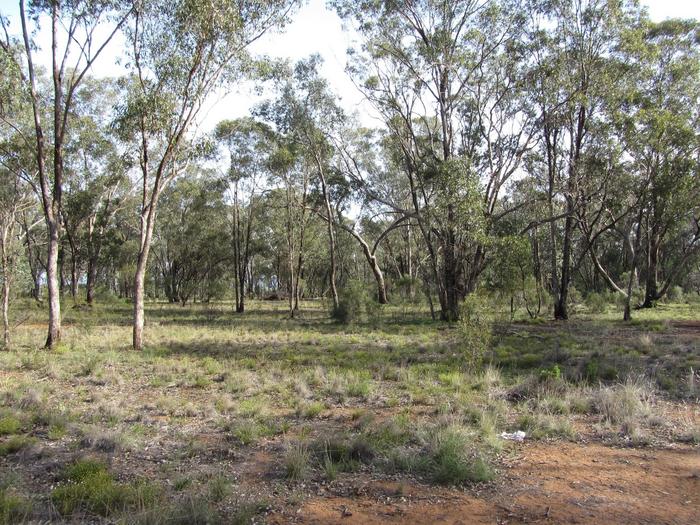
An international study led by Institute of Natural Resources and Agrobiology of Seville (IRNAS-CSIC), of the Spanish National Research Council (CISC), has shown that as the number of global change factors increases, terrestrial ecosystems become more sensitive to the impacts of global change. The results, published in the prestigious journal Nature Geoscience, show that the resistance of our ecosystems to global change decreases significantly as the number of environmental stressors increases, especially when this stress is sustained over time.

Credit: Manuel Delgado Baquerizo
An international study led by Institute of Natural Resources and Agrobiology of Seville (IRNAS-CSIC), of the Spanish National Research Council (CISC), has shown that as the number of global change factors increases, terrestrial ecosystems become more sensitive to the impacts of global change. The results, published in the prestigious journal Nature Geoscience, show that the resistance of our ecosystems to global change decreases significantly as the number of environmental stressors increases, especially when this stress is sustained over time.
This is the conclusion reached by the Biodiversity and Ecosystem Functioning Laboratory (BioFunLab) at IRNAS-CSIC after analyzing 1023 global change experiments worldwide in collaboration with ten international institutions including the German Center for Integrative Biodiversity Research (iDiv) Halle-Jena-Leipzig, the University of Alicante, the Northeast China Forestry University, the Massachusetts Institute of Technology (MIT) in the USA, and the University of New South Wales in Australia.
“Terrestrial ecosystems are subject to a myriad of climate change and environmental degradation factors, including global warming, drought processes, atmospheric pollution, fires or overgrazing among many others. We know that these global change factors impact the ability of our ecosystems to provide services such as carbon sequestration or soil fertility that are key in the fight against climate change and in food production. What we didn’t know is how an increase in the number of global change factors affects the ability of ecosystems to resist this global change” explains Manuel Delgado Baquerizo, BioFunLab leader and senior author of the paper. “Our research shows that as the number of global change factors to which we subject our ecosystems increases, these ecosystems become more and more sensitive and reduce their natural capacity to resist the impacts of environmental perturbations,” continues Delgado Baquerizo.
The study also demonstrates that the continued effects of global change on terrestrial ecosystems contribute to reducing the natural capacity of ecosystems to withstand an increase in the number of global drivers of change. This conclusion was reached by analyzing 15 years of data from a U.S.-based experiment involving impacts of multiple global change factors on ecosystem services as important as primary production. “Our results show that prolonged exposure to multiple drivers of global change, such as increased CO2 and warming, gradually decreases the capacity of ecosystems to maintain essential services such as primary productivity. This is crucial to understand the limitations we will face in vital resources such as water and nitrogen” explains Emilio Guirado, co-author of the paper from the University of Alicante.
“Our study shows that increasing global drivers of change will significantly reduce the resilience of ecosystems to global change. However, this effect is much more pronounced on the ability of ecosystems to provide us with ecosystem services than on the biodiversity of our ecosystems,” explains Guiyao Zhou, lead author of the paper and member of the BioFunLab.“These findings show that the sustainability of our ecosystems depends on reducing the number of global drivers of change associated with human activity,” concludes Zhou.
Journal
Nature Geoscience
Article Title
Resistance of ecosystem services to global change weakened by increasing number of environmental stressors
Article Publication Date
23-Aug-2024
Cite Scienmag News
Bethany Barker. (August 23, 2024). The higher the environmental stress, the lower the resistance to global change. Scienmag. https://scienmag.com/the-higher-the-environmental-stress-the-lower-the-resistance-to-global-change/
Bethany Barker. "The higher the environmental stress, the lower the resistance to global change." Scienmag, 23 August 2024, https://scienmag.com/the-higher-the-environmental-stress-the-lower-the-resistance-to-global-change/. Accessed 4 September 2026.
Bethany Barker. "The higher the environmental stress, the lower the resistance to global change." Scienmag. August 23, 2024. https://scienmag.com/the-higher-the-environmental-stress-the-lower-the-resistance-to-global-change/

