


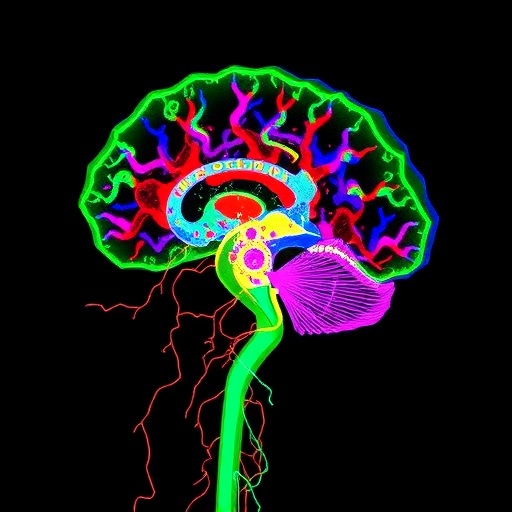
In the relentless pursuit to unravel the intricacies of neurodegenerative disorders, a groundbreaking study has introduced a paradigm-shifting methodology called “the degenerome.” This innovative approach, spearheaded by Hosp, Reisert, Schröter, and their colleagues, promises to illuminate white matter degeneration with unparalleled precision, offering new vistas into diseases like Parkinson’s where white matter integrity is critically compromised. By leveraging a streamline-wise analysis framework, this research transcends conventional voxel-based techniques, potentially revolutionizing neuroimaging and biomarker development for neurodegeneration.
Neurodegenerative diseases, notably Parkinson’s, have long posed complex challenges due to the subtleties of progressive tissue degradation within the brain’s white matter. Traditional imaging methods often lack the resolution or specificity to detect nuanced structural breakdowns along individual fiber pathways. The degenerome methodology addresses this gap by enabling detailed, fiber-by-fiber interrogation of white matter integrity, thereby capturing the spatial heterogeneity of degeneration with remarkable fidelity. This capability heralds a transformative shift from bulk measures to precise, anatomically contextualized insights.
Built upon advanced diffusion MRI tractography, the degenerome technique harnesses the power of streamline-wise analysis to parse the microstructural health of axonal bundles. Diffusion MRI has been pivotal in mapping white matter pathways but is limited by averaging effects over broad regions. The degenerome counters this limitation by analyzing white matter characteristics along each streamline, effectively creating a personalized “degeneration signature” that reflects subtle pathological changes across the brain’s connectome. This level of granularity permits a finer understanding of how neurodegeneration propagates through complex neural networks.
The implementation of the degenerome involved comprehensive imaging datasets, capturing diffusion signals across multiple brain regions vulnerable to Parkinsonian pathology. By reconstructing streamlines corresponding to canonical fiber tracts, the researchers quantified integrity metrics such as fractional anisotropy and mean diffusivity longitudinally along each streamline. The resulting maps vividly illustrate site-specific weakenings and disruptions, heralding a direct correlation between localized degeneration patterns and clinical symptomatology.
One of the major breakthroughs evident in this study is the ability to discern early-stage microstructural alterations that conventional approaches fail to detect. Through the degenerome, incipient fiber degeneration stages can be visualized before widespread tissue loss manifests overt clinical symptoms. This early detection potential is transformative in designing timely interventions, enabling prophylactic neuroprotective strategies to be tailored according to patient-specific degeneration trajectories.
Furthermore, the degenerome approach posits a powerful biomarker framework for tracking disease progression and therapeutic efficacy in clinical trials. Unlike static imaging markers, streamline-wise degeneration profiles offer sensitive dynamic readouts of white matter health, capturing the temporal evolution of neurodegenerative damage. This enables clinicians and researchers to monitor how interventions ameliorate or slow down deterioration along critical neural pathways, thus refining treatment regimens with real-time feedback.
The versatility of the degenerome is notable; while initially validated in the context of Parkinson’s disease, its principles are readily extendable to other neurodegenerative conditions marked by white matter pathology, such as multiple sclerosis, Alzheimer’s disease, and amyotrophic lateral sclerosis. By tailoring analysis pipelines to disease-specific fiber tracts and degeneration hotspots, the degenerome has the potential to become a universal tool for dissecting white matter alterations across a spectrum of neurological disorders.
Methodologically, the study overcame significant challenges related to tractography variability and noise inherent in diffusion MRI data. The authors implemented sophisticated preprocessing pipelines including rigorous motion correction, fiber clustering, and streamline outlier rejection to ensure robustness. By integrating cross-validation procedures and leveraging large-scale cohorts, the degenerome’s reproducibility and generalizability were rigorously validated, affirming its scientific rigor and clinical applicability.
Beyond its technical advancements, the degenerome offers profound conceptual insights into the neurobiology of degeneration. The observed spatial gradients of degeneration underscore the importance of anatomical connectivity and network vulnerability, implicating that neurodegenerative processes propagate selectively along intertwined fiber pathways. This network-centric view synergizes with emerging theories of prion-like spread of pathological proteins, providing a mechanistic rationale for observed degeneration patterns.
The clinical implications of this research are vast. Incorporating the degenerome into routine neuroimaging workflows could enhance diagnostic precision, enabling stratification of patients based on specific white matter degeneration signatures. This would facilitate personalized medicine approaches, tailoring therapeutic strategies to individual brain network vulnerabilities, potentially improving outcomes and slowing the relentless progression of debilitating symptoms.
Moreover, the degenerome’s capacity to chart longitudinal changes introduces possibilities for longitudinal patient monitoring. Serial imaging analyses can be leveraged to fine-tune treatment regimens adaptively, identifying responders and non-responders early in the clinical course. This adaptive feedback loop may catalyze a paradigm shift in managing neurodegenerative disorders from a one-size-fits-all to a precision-targeted approach.
Future directions for research inspired by the degenerome include integrating multimodal data streams—combining structural, functional, and molecular imaging markers—to build comprehensive models of neurodegeneration. Coupled with advances in machine learning, these data-rich models could uncover hidden patterns and predict individual prognosis with unprecedented accuracy, opening new frontiers in neuroscience and clinical care.
Collaborative efforts will be key to realizing the full potential of this methodology. By creating open-access degenerome databases and harmonizing imaging protocols across institutions, the neurology community can accelerate validation and refinement, fostering innovation. Additionally, the degenerome’s potential integration with neuroinformatics platforms could stimulate the development of predictive analytics pipelines conducive to clinical decision support systems.
In conclusion, the degenerome represents a landmark achievement in neurodegenerative disease research. Its capacity to resolve nuanced patterns of white matter degeneration at a streamline level advances both scientific understanding and clinical practice. As this technology gains traction, it promises to revolutionize how clinicians and researchers conceptualize, detect, and combat the inexorable cascade of neurodegeneration, heralding a new era of precision neurology centered around the brain’s intricate connective architecture.
Cite Scienmag News
Diana Fleming. (June 11, 2026). The Degenerome: New Method Tracks White Matter Integrity. Scienmag. https://scienmag.com/the-degenerome-new-method-tracks-white-matter-integrity/
Diana Fleming. "The Degenerome: New Method Tracks White Matter Integrity." Scienmag, 11 June 2026, https://scienmag.com/the-degenerome-new-method-tracks-white-matter-integrity/. Accessed 5 September 2026.
Diana Fleming. "The Degenerome: New Method Tracks White Matter Integrity." Scienmag. June 11, 2026. https://scienmag.com/the-degenerome-new-method-tracks-white-matter-integrity/


