


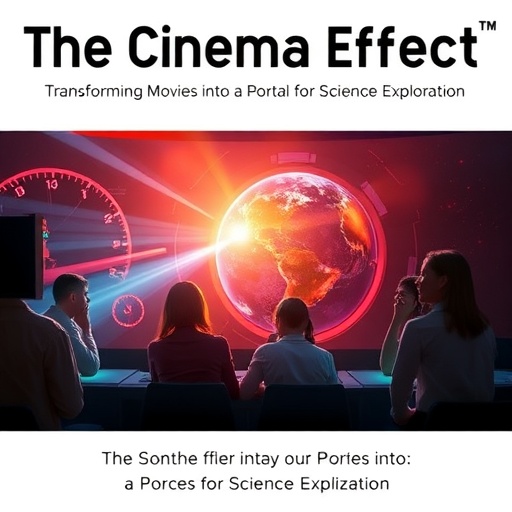
The “Science & Cinema” initiative presents a novel approach to science communication, skillfully blending the allure of popular films with expert scientific analysis to engage broad audiences on critical scientific topics. This innovative format leverages the emotional and narrative strengths of cinema, using carefully selected movie clips to spark reflection and educate viewers on the accuracy of scientific portrayals in film. By intertwining entertainment with education, the project seeks to deepen public understanding, particularly around urgent issues such as climate change, through a medium that naturally captivates diverse viewers.
At its core, Science & Cinema harnesses the power of storytelling inherent in movies to convey complex scientific concepts in an accessible and relatable manner. The format typically involves screening short excerpts from well-known films that touch upon scientific themes, followed by in-depth commentary from researchers specialized in the relevant fields. This commentary serves to deconstruct cinematic depictions, teasing apart factual accuracy from artistic license, thus enhancing viewers’ critical thinking about how science is represented on screen. Additionally, interactive discussions enable audiences to engage directly with experts, fostering a dynamic learning environment.
The genesis of this communication model can be traced to two public events organized by researchers at the University of Graz, held within two distinct cultural contexts: a sustainability day on campus and an urban art festival in Salzburg. These settings allowed the team to reach varying demographics, from university-affiliated youth deeply connected to scientific topics, to more heterogeneous groups with mixed prior interest levels in climate issues. This strategic dual venue approach enabled a comparative assessment of audience engagement and learning outcomes, highlighting the format’s versatility in diverse social milieus.
Focusing the narrative framework on climate change, the curated sequence of clips created a thematic progression that guided participants through interconnected environmental challenges. Beginning with portrayals of ice and glaciation in films like “The Day After Tomorrow” and “Snowpiercer,” the program examined melting ice caps and their global implications. It then transitioned to water-related crises depicted in “Ice Age,” “A.I.,” and “Waterworld,” illustrating scenarios of sea-level rise and water scarcity. Subsequent segments delved into extreme weather events via movies such as “Twister” and “Geostorm,” explored drought conditions referencing “Mad Max” and “Soylent Green,” and concluded with migration narratives exemplified in “The March.”
The discussions were moderated by Fritz Treiber, a science communicator and researcher, with expert scientific insight provided by Professor Ulrich Foelsche, a meteorologist and geophysicist affiliated with the University of Graz. Through meticulous analysis, Foelsche elucidated the scientific underpinnings of the cinematic scenarios, rectifying misconceptions and illuminating ongoing climate change research. This expert commentary not only clarified the science but also contextualized the cinematic fears and hopes reflected onscreen, thereby enriching audience comprehension.
Crucial to the project’s evaluative component was measuring its impact on viewers’ knowledge and attitudes. Pre- and post-event surveys, combined with focus group discussions, offered valuable data revealing shifts in understanding and engagement. Notably, the format proved effective in drawing in individuals not previously invested in climate discourse, particularly at the cinema event, where participants exhibited diverse backgrounds and levels of pre-existing interest. This inclusivity positions Science & Cinema as a promising tool to transcend the traditional boundaries of academic outreach.
The dynamic audience composition also generated stimulating debate and self-reflection. At the university event, participants were largely students and staff already familiar with environmental science, whereas the city cinema event attracted a broader audience, including those less predisposed to environmental activism. This mix resulted in a vibrant exchange of perspectives, with some attendees critically examining their behaviors and societal norms relating to climate change. Such reflective engagement underscores the power of narrative media to provoke meaningful dialogue beyond mere information delivery.
Emotional engagement emerged as a pivotal aspect of the experience. Beginning with lighter, humorous moments drawn from “Ice Age,” the program intentionally escalated to more intense and dramatic depictions, culminating in the migration-themed segment. This thoughtful curation enabled a gradual deepening of emotional investment, inviting viewers to connect fictional scenarios with real-world events, such as the significant migration waves witnessed in 2015. The emotional resonance prompted participants to question the plausibility of these depictions and the distinction between cinematic fiction and evolving scientific realities.
While acknowledging the limitations posed by the relatively small number of participants in the study, the researchers emphasize the format’s replicability and scalability. The ease of implementation, coupled with observed audience receptivity, suggests that Science & Cinema can be adapted to a variety of institutional contexts seeking to enhance public science literacy. The blend of cultural appeal and scholarly rigor offers a compelling avenue for expanding the reach and depth of science communication in an increasingly media-saturated society.
This project illustrates an effective intersection between the arts and sciences, promoting joint meaning-making—a collaborative interpretive process that acknowledges multiple perspectives in understanding complex phenomena. The format’s integration of expert-led analysis with audience input fosters a participatory model of science communication, moving beyond one-way transmission to embrace dialogue and critical inquiry. Such engagement is particularly vital for contested issues like climate change, where misinformation and emotional responses often complicate public discourse.
Moreover, the study reports that this communication strategy achieves a meaningful balance between entertainment and education, making science accessible without sacrificing accuracy. By contextualizing cinematic myths and exaggerations within real scientific frameworks, the initiative enhances viewers’ media literacy, equipping them with tools to critically evaluate science in popular culture. This dual capacity to inform and entertain may serve as a blueprint for future initiatives aiming to bridge the gap between scientific communities and the general public.
In conclusion, the Science & Cinema format represents a promising frontier in science outreach, leveraging the storytelling power of movies to ignite curiosity, provoke reflection, and educate audiences on pressing scientific issues. The success of the initial events champions this hybridized approach as a versatile and engaging method to communicate science beyond conventional platforms. Continued exploration and refinement could see this method flourish globally, contributing to a more scientifically informed and critically engaged society.
News Publication Date: 13-May-2026
Web References: DOI link
Cite Scienmag News
Russell Cooper. (May 13, 2026). The Cinema Effect: Transforming Movies into a Portal for Science Exploration. Scienmag. https://scienmag.com/the-cinema-effect-transforming-movies-into-a-portal-for-science-exploration/
Russell Cooper. "The Cinema Effect: Transforming Movies into a Portal for Science Exploration." Scienmag, 13 May 2026, https://scienmag.com/the-cinema-effect-transforming-movies-into-a-portal-for-science-exploration/. Accessed 4 September 2026.
Russell Cooper. "The Cinema Effect: Transforming Movies into a Portal for Science Exploration." Scienmag. May 13, 2026. https://scienmag.com/the-cinema-effect-transforming-movies-into-a-portal-for-science-exploration/


