


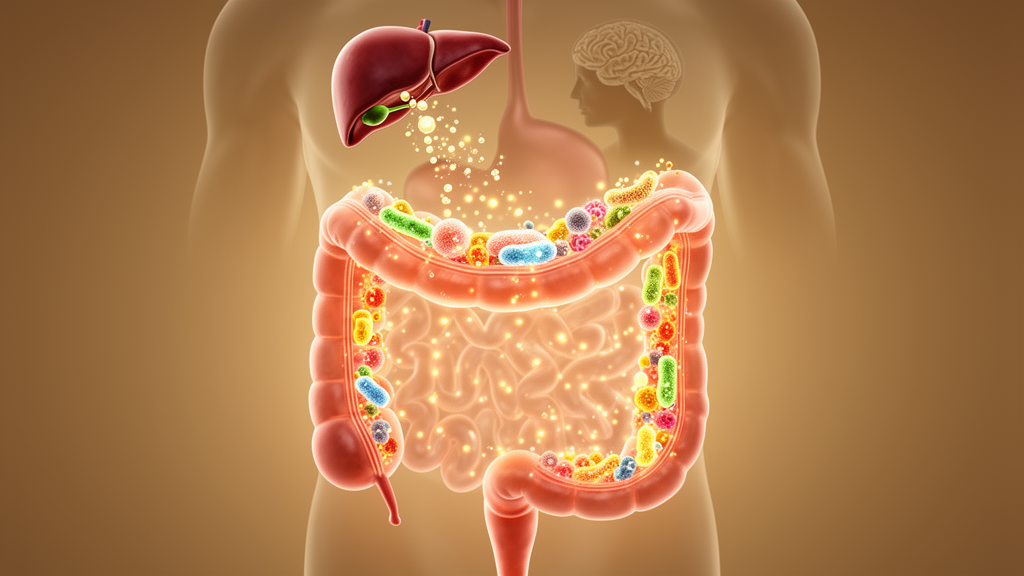
As the global population ages at an unprecedented pace — the World Health Organization projects the number of people aged 60 or older will rise from 1 billion in 2020 to 1.4 billion by 2030 — researchers are increasingly turning their attention to one of the body’s most underappreciated chemical factories: the gut microbiota. A new narrative review published in Frontiers in Nutrition by Zhen Wang and Yang Liu of Heilongjiang University of Chinese Medicine synthesizes evidence on how age-related changes in gut microbial metabolism influence immunometabolic effects and organ phenotypes across the brain, liver, cardiovascular system, and skeletal muscle. The review’s central message is both sobering and clarifying: measuring microbial abundance or the concentration of a single metabolite does not, by itself, capture microbial production, host exposure, or effects in target tissues.
The authors organize their synthesis around a deceptively simple but powerful distinction — the origin and host processing of metabolites. Some metabolites are produced directly by microorganisms, whereas host–microbe co-metabolites arise through metabolic steps involving both partners. Trimethylamine (TMA) produced by gut microbes is oxidized by the host liver to form trimethylamine N-oxide (TMAO), while kynurenine (KYN) is generated mainly through host tryptophan metabolism, although this pathway can be influenced by the microbiota and inflammatory status. Circulating levels of microbiota-associated metabolites must therefore be interpreted in light of substrate availability, intestinal absorption, host biotransformation, tissue distribution, and hepatic and renal clearance — a framework that challenges much of the conventional wisdom in the field.
The review begins by examining upstream factors that shape age-related remodeling of microbial metabolism. Gastrointestinal transit time and luminal pH influence substrate retention and the conditions for microbial growth; in a multi-omics study of healthy adults, longer transit time and higher pH were associated with lower levels of some carbohydrate-fermentation metabolites and higher levels of proteolytic metabolites. Dietary substrates reaching the colon, comorbidities, and medications — including proton pump inhibitors, metformin, antibiotics, and laxatives — all remained associated with microbial taxonomic features or metabolic pathways even after accounting for age, sex, body mass index, and polypharmacy. The mucosal immune environment, including the mucus layer, secretory immunoglobulin A, and antimicrobial factors, further shapes the ecological context in which the microbiota resides. In aged mice, a thinner colonic mucus layer and lower expression of immunoglobulin- and T-cell-related genes co-occurred with concurrent changes in microbiota composition, underscoring that age-related features of the gut microbiota vary with health status and cannot be attributed to age alone.
Among the most extensively studied metabolite classes are short-chain fatty acids (SCFAs) — acetate, propionate, and butyrate — produced by colonic microbial fermentation of dietary carbohydrates. A meta-analysis of 18 studies found lower fecal concentrations of all three SCFAs in relatively healthy older adults than in younger adults, while a separate observational study using stable-isotope pulse tracing found lower whole-body SCFA production rates and interpool fluxes in older adults. The mechanistic evidence from animal and cell studies is compelling: butyrate derived from Clostridia maintained epithelial hypoxia through peroxisome proliferator-activated receptor gamma signaling, and butyrate depletion was accompanied by increased epithelial oxygenation and reduced colonization resistance against fungi. SCFAs also signal through free fatty acid receptor 2 and 3, hydroxycarboxylic acid receptor 2, and can inhibit histone deacetylases, supporting receptor-mediated and epigenetic mechanisms that regulate colonic regulatory T cells and interleukin-10 expression. However, the authors caution that human comparisons and experimental findings come from different settings and do not establish that lower fecal SCFA concentrations in older adults cause impaired barrier or immune function.
Tryptophan metabolism reveals a similarly nuanced picture. Gut microbes convert tryptophan into various indole derivatives, while the host kynurenine pathway — driven by indoleamine 2,3-dioxygenase 1 (IDO1) and tryptophan 2,3-dioxygenase (TDO) — generates kynurenine. A systematic review found that blood tryptophan levels were negatively associated with age, whereas kynurenine and the KYN-to-tryptophan ratio were generally positively associated with age, though results varied across predominantly cross-sectional studies. In people with frailty, quinolinic acid and the quinolinic acid-to-kynurenine ratio were associated with higher interleukin-6 levels, greater likelihood of frailty, and poorer physical function. Microbial indole metabolites have not shown a consistent age-related pattern, but in a specific centenarian population, fecal indole-3-acetic acid and some other indole metabolites were higher than in younger older adults. Experimental studies support specific links: Lactobacillus reuteri converted tryptophan to indole-3-aldehyde, which promoted interleukin-22 production through the aryl hydrocarbon receptor and enhanced mucosal defense, while kynurenine activated AhR and promoted the generation of Foxp3-positive regulatory T cells in mouse T-cell systems.
Bile acids represent perhaps the most molecule- and population-specific metabolite class. The liver synthesizes primary bile acids including cholic acid and chenodeoxycholic acid, which gut microbes convert through deconjugation, 7α-dehydroxylation, and redox reactions into deoxycholic acid, lithocholic acid, and their derivatives. Human studies have not shown that all bile acids change in the same direction with age: in relatively healthy older adults, fecal cholic acid and chenodeoxycholic acid were lower, whereas fecal and serum lithocholic acid were higher. In Japanese centenarians, several lithocholic acid isomers — including 3-oxolithocholic acid and isoallolithocholic acid — were enriched in feces, and researchers identified an Odoribacteraceae strain capable of producing isoallolithocholic acid. Structural differences among specific bile acids affect immune-cell differentiation under experimental conditions: 3-oxolithocholic acid bound to retinoic acid receptor-related orphan receptor gamma t and inhibited T helper 17 cell differentiation, whereas isoallolithocholic acid promoted regulatory T-cell differentiation through mitochondrial reactive oxygen species and Foxp3 conserved non-coding sequence 3. Although both are lithocholic acid derivatives, they act through different pathways, and their immune effects cannot be inferred from total bile acid levels.
Host–microbe co-metabolites such as TMAO and p-cresyl sulfate (PCS) illustrate the importance of sequential microbial and host metabolism. Gut microbes convert dietary choline and L-carnitine to TMA, which is oxidized mainly by hepatic flavin-containing monooxygenase 3 to TMAO. In a cross-sectional study of 451 patients aged 65 or older with cardiovascular disease, plasma TMAO concentrations were higher in participants with frailty, but this association arose in the context of cardiovascular disease and participants with frailty also differed in kidney function and disease burden. PCS arises from microbial tyrosine metabolism followed by host sulfation, and a cross-sectional study of healthy participants aged 20 to 90 found higher serum PCS concentrations in those aged 65 or older, positively associated with age but not with serum tyrosine concentrations. Because PCS is highly protein-bound and its circulating levels are affected by host sulfation and renal clearance, the serum concentration difference cannot be attributed solely to increased microbial conversion of tyrosine. Branched-chain amino acids and their microbial metabolites — branched-chain fatty acids — show similarly inconsistent directions across populations: lower plasma BCAAs were associated with healthy aging in one longitudinal cohort, while higher serum BCAAs were associated with lower frailty scores in a longevity region of Guangxi.
The review then maps these metabolite classes onto organ-specific immunometabolic axes. In the gut–brain axis, butyrate and propionate altered actin organization and tight-junction protein localization in brain endothelial cells, attenuating lipopolysaccharide-induced impairment of barrier function, while dietary fiber and SCFAs inhibited inflammatory microglial responses. In Alzheimer’s disease, lower serum cholic acid and higher deoxycholic acid were found in participants with AD, with some secondary-to-primary bile acid ratios associated with poorer cognitive performance. In Parkinson’s disease, lower fecal but higher plasma SCFA concentrations were associated with poorer cognitive performance, and higher plasma phenylacetylglutamine and p-cresyl glucuronide remained associated with motor symptom severity after adjustment for confounders. In the gut–liver axis, lithocholic acid mainly induced inflammatory responses in Kupffer cells, whereas deoxycholic acid promoted an early profibrotic response in hepatic stellate cells, and a Bacteroides uniformis strain capable of producing 3-succinylated cholic acid improved liver pathology in experimental metabolic dysfunction-associated steatohepatitis. In the gut–cardiovascular axis, microbiota from aged donors impaired endothelium-dependent relaxation in young mice, while TMAO supplementation induced endothelial dysfunction and inhibition of microbial trimethylamine production lowered circulating TMAO and improved vascular oxidative stress in aged mice. In the gut–muscle axis, a systematic review of 32 studies found lower microbial richness and diversity in some populations with sarcopenia, while fecal microbiota transplantation from young donors increased muscle mass, grip strength, and exercise capacity in aged rats.
The review concludes by examining strategies for modulating microbial metabolic functions. Personalized nutrition based on microbial metabolic functions — combining food structure with baseline gut microbiota and metabolic features — has shown promise in controlled-feeding studies, where a diet rich in fiber and resistant starch with larger food particles increased fecal and serum SCFA concentrations while reducing the proportion of energy metabolizable by the host. Metabolite supplementation, such as cyclodextrin-complexed lithocholic acid in aged mice, improved muscle mitochondrial respiration, grip strength, and exercise endurance, with muscle-specific AMPK deficiency attenuating these improvements. Selective targeting of microbial enzymes — including irreversible inhibition of choline trimethylamine lyase CutC and covalent inhibition of bile salt hydrolases — offers a precision approach to altering metabolite exposure at the substrate-conversion step. Multi-omics-based responder stratification, including metabolic subtyping and microbiome age indices, provides tools for characterizing metabolic states and predicting intervention responses. However, the authors emphasize that prospective evidence that these strategies improve functional outcomes in older adults remains limited, and longitudinal studies that characterize health status and combine measurements of metabolite production and exposure with assessment of key confounders are needed to clarify the temporal relationship between metabolic changes and functional outcomes before candidate strategies can be translated into clinical practice.
Subject of Research: A narrative review of gut microbial metabolite production, host processing, and organ-specific immunometabolic effects in aging, highlighting observational human evidence and exploratory intervention strategies.
Article Title: Gut microbial metabolism in aging: from metabolite production to organ-specific immunometabolic effects
Article References: Wang, Z., & Liu, Y. (2026). Gut microbial metabolism in aging: from metabolite production to organ-specific immunometabolic effects. Frontiers in Nutrition, 13, Article 1984798. https://doi.org/10.3389/fnut.2026.1984798
Image Credits: AI Generated
DOI: 10.3389/fnut.2026.1984798
Keywords: gut microbiota, aging, immunometabolism, short-chain fatty acids, bile acids, TMAO, kynurenine pathway, frailty, gut-organ axis, personalized nutrition, microbial metabolites, inflammaging
Cite Scienmag News
Morgan Morrow. (October 15, 2026). The Aging Gut’s Chemical Factory: How Microbial Metabolites Shape Organ Health in Old Age. Scienmag. https://scienmag.com/the-aging-guts-chemical-factory-how-microbial-metabolites-shape-organ-health-in-old-age/
Morgan Morrow. "The Aging Gut’s Chemical Factory: How Microbial Metabolites Shape Organ Health in Old Age." Scienmag, 15 October 2026, https://scienmag.com/the-aging-guts-chemical-factory-how-microbial-metabolites-shape-organ-health-in-old-age/. Accessed 15 October 2026.
Morgan Morrow. "The Aging Gut’s Chemical Factory: How Microbial Metabolites Shape Organ Health in Old Age." Scienmag. October 15, 2026. https://scienmag.com/the-aging-guts-chemical-factory-how-microbial-metabolites-shape-organ-health-in-old-age/


