


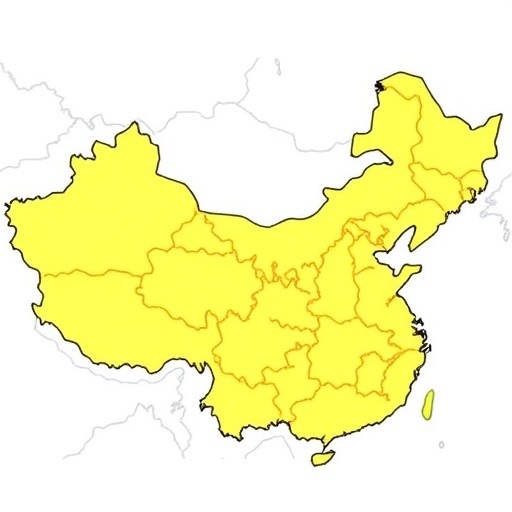
In the evolving landscape of healthcare delivery, the behavior of hospitals within medical alliances offers crucial insights into efficiency, equality, and systemic challenges. A groundbreaking study by Peng, Chen, and Coyte delves into one particularly contentious phenomenon: the cream-skimming practices of tertiary hospitals operating under medical alliances in China. This investigation, published in the esteemed International Journal for Equity in Health, sheds light on how high-level hospitals selectively attract specific patient groups, potentially exacerbating inequities in health service access across different patient populations.
Medical alliances in China have been promoted as a strategic policy tool to optimize resource distribution, alleviate pressure on overloaded tertiary hospitals, and foster collaboration among various healthcare providers. These alliances bridge tertiary hospitals—considered the pinnacle of medical care—with secondary and primary health institutions. The ideal is a seamless integration, facilitating patient referrals and shared care responsibilities. Yet, Peng and colleagues identify a paradox: tertiary hospitals, despite being embedded within these alliances, often engage in cream-skimming, prioritizing patients with less complex, more profitable conditions, thus undermining the equity goals of the policy.
At the core of this research is a nuanced exploration of cream-skimming behavior, a term originating from economic theory that denotes the selective admission or treatment of patients who are less costly or more profitable to care for. Such strategies can create a two-tier system, with low-risk patients receiving preferential treatment at well-resourced hospitals, while more complex or less profitable cases are delegated to lower-tier institutions. This dynamic challenges the foundational aims of medical alliances, which should theoretically balance patient loads more evenly and bolster comprehensive primary care capacities.
Peng, Chen, and Coyte employed rigorous quantitative methodologies encompassing patient-level data, hospital financial reports, and referral statistics from multiple regions within China. By analyzing these datasets, the research team was able to detect patterns indicative of cream-skimming, including disproportionate allocations of elective versus emergency admissions and variations in case complexity profiles between hospitals within the alliances. Their findings highlight a tacit system in which tertiary hospitals strategically focus on patients who enhance operational margins and reputational metrics.
One particularly striking revelation of the study is how performance evaluation systems, which concentrate on hospital throughput, patient satisfaction, and financial returns, inadvertently incentivize cream-skimming behavior. Hospitals seeking to climb competitive rankings may deprioritize high-risk, resource-intensive cases that could negatively impact these metrics. Instead, they favor patients with predictable, manageable medical conditions that enable streamlined treatment courses and better profitability. This confluence of financial incentives and performance measurement underscores systemic vulnerabilities that cloud policy efficacy.
From a technical standpoint, the study utilizes advanced econometric modeling to quantify the degree of cream-skimming, deploying multi-level regression analyses controlling for patient demographics, clinical severity, and referral pathways. The models delineate how hospital-level variables—such as size, funding source, and bureaucratic affiliations—correlate with the likelihood of selective patient admission. Such analytical rigor allows the authors to not only describe cream-skimming’s presence but also assess its driving factors and magnitude within China’s unique healthcare ecosystem.
Beyond statistical scrutiny, the investigation contextualizes cream-skimming within the broader socioeconomic framework of China’s healthcare reforms. The country’s rapid urbanization, aging population, and escalating chronic disease burdens complicate service delivery. Medical alliances were envisaged as mechanisms to decelerate the growth of expensive tertiary care demand by strengthening primary care capacity and improving referral efficiency. However, the persistence of cream-skimming suggests that without consistent alignment of incentives and accountability, reforms may inadvertently reinforce, rather than dismantle, entrenched disparities.
The implications of these findings resonate beyond China, offering a lens through which other nations can examine the unintended consequences of integrated health systems. Medical alliances and hospital networks are globally embraced to enhance continuity of care and optimize resource utilization. Yet, Peng et al. demonstrate that institutional behaviors driven by financial and reputational incentives can undermine collaborative frameworks, prompting policy makers to recalibrate evaluation measures and funding allocations to discourage selective admissions.
Ethically, cream-skimming raises profound concerns about justice and access. By systematically prioritizing lower-risk patients, tertiary hospitals risk relegating the most vulnerable—those with complex, costly health conditions—to under-resourced settings ill-equipped to address their needs adequately. This stratification jeopardizes the principle of equitable care fundamental to universal health coverage ambitions. Peng and colleagues call for the incorporation of equity-focused metrics in performance evaluations that capture not only volume but fairness in patient distribution.
The study also peers into the operational mechanics of medical alliances, revealing communication and coordination shortcomings that facilitate cream-skimming. Despite formalized referral systems, information asymmetries and trust deficits between tertiary and lower-tier hospitals hinder effective patient flow management. These organizational challenges amplify the lure for tertiary hospitals to selectively filter patient intake, preserving resource capacity for favorable cases and circumventing more demanding clinical burdens.
To counteract cream-skimming, the authors propose multifaceted policy strategies. These include reforming hospital incentive structures by integrating risk-adjusted funding models, enhancing transparency in patient referral data, strengthening enforcement of equitable admission guidelines, and fostering inter-institutional accountability within alliances. Such measures aim to realign institutional behaviors with the broader system goals of equity, efficiency, and quality care delivery.
The study also underscores the critical role of real-time data analytics and health information technologies in monitoring referral patterns and patient demographics across alliances. By enhancing surveillance capabilities, regulators can detect and address cream-skimming more swiftly. Furthermore, collaborative training programs intended to build trust and clinical competencies among alliance members could mitigate organizational barriers and promote patient-centered integration.
Importantly, the research by Peng, Chen, and Coyte transcends abstract policy critique by weaving patient narratives and frontline clinician perspectives into their analysis. These qualitative insights illuminate the lived experiences of inequities stemming from cream-skimming, offering human dimensions that complement the statistical evidence. Such multidisciplinary approaches enrich the discourse and refine solutions that are contextually sensitive and feasible.
This landmark study arrives at a pivotal moment as China and many other health systems grapple with reconciling cost-containment pressures with equitable access imperatives. Medical alliances are valuable yet complex tools requiring vigilant governance to ensure that their promise of integrated, patient-centered care is realized rather than undermined by opportunistic institutional behaviors.
In sum, Peng and colleagues’ exploration of cream-skimming behaviors among tertiary hospitals within Chinese medical alliances exposes a critical fault line in health system reform. Their combination of methodological depth, policy relevance, and ethical reflection crafts a compelling narrative that challenges practitioners, policy makers, and researchers worldwide to rethink how incentives, coordination, and equity coalesce within integrated care models. As health systems pursue ambitious transformations, this research stands as both a cautionary tale and a beacon guiding more just and effective strategies.
Cite Scienmag News
Courtney Benton. (August 29, 2025). Tertiary Hospitals’ Cream-Skimming in China Explained. Scienmag. https://scienmag.com/tertiary-hospitals-cream-skimming-in-china-explained/
Courtney Benton. "Tertiary Hospitals’ Cream-Skimming in China Explained." Scienmag, 29 August 2025, https://scienmag.com/tertiary-hospitals-cream-skimming-in-china-explained/. Accessed 6 September 2026.
Courtney Benton. "Tertiary Hospitals’ Cream-Skimming in China Explained." Scienmag. August 29, 2025. https://scienmag.com/tertiary-hospitals-cream-skimming-in-china-explained/


