


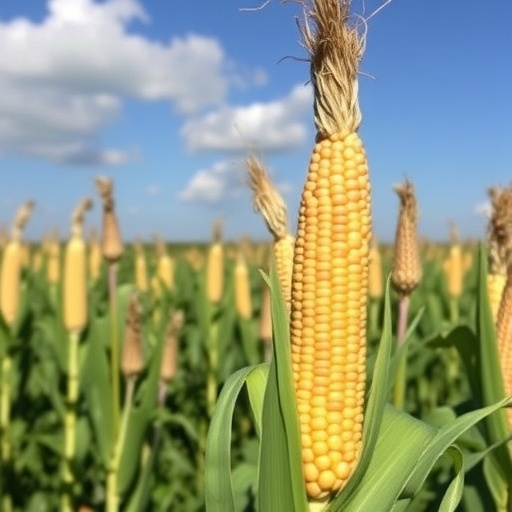
In a groundbreaking study that could redefine the future of crop improvement, researchers have unveiled a strategy to boost maize seed protein content by revisiting the ancient genetic heritage of its wild ancestor, teosinte. The research, published in a leading scientific journal, elucidates how teosinte harbors rare but superior alleles that markedly enhance nitrogen assimilation and protein accumulation in maize, a discovery that promises to address nutritional deficiencies without compromising yield.
Maize, one of the world’s staple crops, has undergone extensive domestication and selective breeding over millennia. This process, while improving yield and adaptability, has inadvertently led to a sharp decline in seed protein content—a vital component for human and animal nutrition. Scientists have long sought to understand the genetic and biochemical underpinnings of this decline to design strategies that restore or even enhance seed protein levels in modern maize varieties.
At the core of protein biosynthesis in plants lies nitrogen assimilation and the interconversion of key amino acids such as glutamine and asparagine. These amino acids serve as nitrogen carriers, and their abundance is tightly linked to overall protein content. Asparagine, synthesized from glutamine via the enzyme asparagine synthase, plays a pivotal role in nitrogen transport and storage, highlighting the importance of nitrogen metabolism in seed quality.
Previous studies had already identified a superior teosinte haplotype of the gene encoding asparagine synthase 4 (ASN4), which positively influences protein content. Building on this foundation, the new research team turned their attention to the glutamine synthesis pathway, seeking to uncover complementary genetic variants that could synergize with ASN4 to further boost nitrogen assimilation.
Using advanced genetic mapping and molecular cloning techniques, the researchers identified and isolated a novel gene they named teosinte high protein 3 (THP3). This gene encodes glutamate-oxaloacetate transaminase 1 (GOT1), a critical enzyme orchestrating nitrogen assimilation and the balance between carbon and nitrogen in plant metabolism. GOT1 catalyzes transamination reactions vital for amino acid biosynthesis, making it a logical target for improving nitrogen use efficiency.
The investigation revealed that the THP3 gene from teosinte, referred to as the THP3-T allele, possesses unique natural variations not present in modern maize alleles. These variations significantly enhance both the expression level of the gene and the enzymatic activity of GOT1, suggesting a potent capacity to increase amino acid production and, by extension, seed protein content.
Functional validation experiments lend compelling support to the superiority of the THP3-T allele. Overexpressing THP3-T in maize not only significantly elevated seed protein content but also altered the carbon-nitrogen composition of the seeds in beneficial ways. In stark contrast, the contemporary THP3-B allele native to modern maize failed to elicit such effects, underscoring the lost potential in domesticated germplasm.
Evolutionary analyses indicate that the THP3-T allele was subject to negative selection during the domestication and improvement of maize, likely because breeding efforts prioritized traits such as yield and stress resistance over seed nutritional quality. This phenomenon illustrates a classic case of genetic trade-offs in crop domestication, where beneficial alleles in one context become rare or lost in another.
The study goes beyond single-gene interventions by exploring the combined effect of THP3-T with the previously identified superior allele for ASN4, dubbed THP9-T. Remarkably, pyramiding these two teosinte alleles into elite maize hybrids produced a synergistic enhancement in both seed and whole-plant protein levels without detrimental impacts on grain yield. This dual-gene strategy offers a compelling blueprint for simultaneous improvement of crop nutrition and productivity.
These discoveries hold substantial promise for tackling global challenges related to malnutrition and sustainable agriculture. By reintroducing rare yet powerful alleles from wild relatives, breeders can enhance the nutritional value of maize, a vital calorie source for billions, while preserving agronomic performance. This approach could lessen reliance on synthetic fertilizers and protein supplements, aligning with environmental and economic goals.
Mechanistically, the study uncovers how the THP3-T allele amplifies GOT1 activity, optimizing nitrogen assimilation pathways and promoting the generation of nitrogen-rich amino acids. This biochemical enhancement cascades into elevated synthesis of seed storage proteins, which are crucial for both seedling vigor and human dietary quality. Importantly, the modifications do not disrupt carbon metabolism, maintaining overall plant health and yield stability.
The research offers a rare glimpse into the complex interplay between domestication, genetics, and plant metabolism. It highlights the untapped genetic reservoirs in crop wild relatives, emphasizing that traits lost through domestication can be reclaimed to address modern agricultural needs. As gene editing and advanced breeding technologies evolve, such allele mining from teosinte and other wild species is poised to become a cornerstone of next-generation crop improvement.
Looking forward, the integration of these findings into commercial breeding programs could pave the way for maize varieties with substantially enhanced protein content, reducing malnutrition in vulnerable populations worldwide. The study also establishes a framework for similar efforts in other crops where nutrition has been compromised by historical breeding priorities.
In conclusion, this research not only advances our fundamental understanding of nitrogen assimilation and protein biosynthesis in maize but also demonstrates a viable, powerful strategy for enhancing seed nutrition. Reintroducing beneficial alleles from teosinte, a wild ancestor, holds transformative potential for the future of sustainable agriculture and food security, bridging the gap between ancient genetic wisdom and modern crop science.
Cite Scienmag News
Alan Morgan. (June 3, 2026). Teosinte Alleles Boost Maize Nitrogen and Protein. Scienmag. https://scienmag.com/teosinte-alleles-boost-maize-nitrogen-and-protein/
Alan Morgan. "Teosinte Alleles Boost Maize Nitrogen and Protein." Scienmag, 3 June 2026, https://scienmag.com/teosinte-alleles-boost-maize-nitrogen-and-protein/. Accessed 5 September 2026.
Alan Morgan. "Teosinte Alleles Boost Maize Nitrogen and Protein." Scienmag. June 3, 2026. https://scienmag.com/teosinte-alleles-boost-maize-nitrogen-and-protein/


