


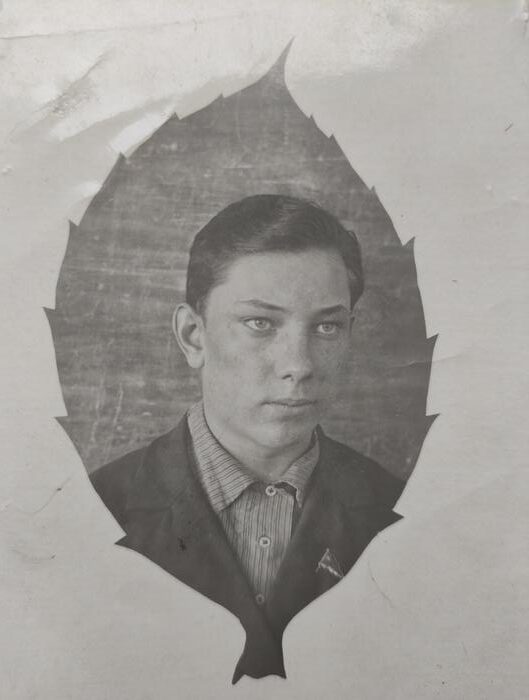
Newly unearthed diaries penned by teenage boys during the fraught years of pre-World War II Soviet Union illuminate the intimate struggles of young lives shaped by love, famine, ideological pressure, and the looming shadow of war. These overlooked personal records, dating from 1930 to 1941, reveal nuanced facets of adolescence under Stalin’s regime, offering a rare glimpse into the lived experiences behind official propaganda and historical narratives.
At the heart of this research, Ekaterina Zadirko of Trinity College, University of Cambridge, has analyzed 25 previously unseen diaries for her doctoral work. These writings showcase teenagers grappling with universal themes such as romance, ambition, identity, and societal expectations — all within an intensely controlled and dangerous political context. Most notably, the diary of Ivan Khripunov, a young peasant whose family faced exile and starvation, provides a strikingly candid account of surviving the devastating Soviet famine and the humiliations of “dekulakisation.”
These diaries serve as vital ethnographic documents charting how adolescent boys used literary self-expression to navigate their realities. Unlike typical historical sources steeped in ideology or official narrative, the diaries preserve authentic voices and reveal the creative methods youths employed to reconcile personal feelings with the demands of Soviet doctrine. Zadirko notes that writing was not simply an outlet but a high-stakes existential act, a private arena where young individuals claimed identity amid the pressures of a totalitarian society.
Ivan Khripunov’s entries are particularly poignant in their detail. Starting in 1937, when he was just 14, Ivan chronicled the harsh facts of survival: his father’s exile to Siberia, the family’s desperate hunger during the early 1930s famine, and the daily risks of collecting forbidden grain remnants—activities punishable under the infamous Law of Three Spikelets. Through the prism of Maxim Gorky’s literary style, Ivan imitated a model of endurance but unwittingly transgressed Stalinist norms by documenting state failures and personal suffering. This complex layering of political conformity mixed with subversive honesty underscores the diaries’ unique historical value.
These adolescent writings also disentangle the conflicting notions of love and comradeship under Stalin’s moral regime. Soviet authorities imposed rigid rules on sexuality and relationships, promoting an ideal of politically conscious partnerships over romantic passion. Diaries reveal teenage boys’ oscillation between Romanticist idealism—often expressed through poetry and reverent descriptions of young women—and a pragmatic evaluation of potential partners’ ideological commitment. This strange blend of personal desire and political obligation offers fresh insight into the emotional lives of Soviet youth often overlooked by historical accounts.
Moreover, teenage boys’ aspirations and anxieties about the future emerge vividly within these pages. The Stalinist promise of a socialist utopia demanded exceptionalism, placing immense psychological strain on youths to live exemplary lives. Diary entries reveal profound feelings of inadequacy and existential dread, as boys worried whether they possessed innate talent or were doomed to mediocrity. The oscillation between hope and despair, ambition and resignation, illustrates how even ordinary teenagers internalized the grand ideological myths of their time in complex and sometimes contradictory ways.
Not all diarists came from the same background. While Ivan was a peasant-son forced into hardship, others, like Sergei Argirovskii, hailed from urban intelligentsia families, and Aleksei Smirnov worked as a mechanic. This diversity in social origins enriches the collective narrative, illustrating the varying ways Sovietization impacted young males across class lines. The diaries convey a spectrum of adolescent experience, from mundane school life to the extraordinary pressures exerted by the regime’s expectations and impending war.
A significant portion of the diaries conclude abruptly in 1941, corresponding with the conscription of these boys into the Red Army as World War II engulfed the Soviet Union. Their transition “from the school bench to the battlefield” reflects a tragic loss of innocence, with some never returning home. Ivan Khripunov himself was reported missing less than a year after his draft notice, symbolizing the fate of countless Soviet youths who perished or were forever changed by global conflict.
Zadirko’s research complicates simplistic binaries that often dominate understandings of Soviet citizens as either indoctrinated believers or passive victims. Instead, these diaries reveal multifaceted individuals negotiating agency within oppressive structures. Soviet teenagers were not mere ciphers of ideology; they were active authors of selfhood, utilizing writing to preserve private truths amid public surveillance. This nuanced portrayal deepens our comprehension of life in Stalinist Russia, highlighting the contradictions and resilience embedded in everyday acts of self-expression.
The diaries further underscore the value of private writing in cultivating identity, a space contrasting starkly with today’s social media landscape, where adolescent self-presentation is increasingly performative and publicly scrutinized. Zadirko argues that these Soviet boys had the relative luxury of private reflection, unmediated by external judgment, which shaped their internal and social development in unique ways.
Technically, the diary format adhered to literary conventions inspired by figures like Gorky, blending autobiographical confession with broader social critique. This approach signaled an implicit understanding of form and audience, demonstrating adolescent writers’ sophisticated engagement with literature even under restrictive conditions. The juxtaposition of youthful poetic experimentation and harsh historical reality renders these diaries invaluable for both literary scholars and historians alike.
By surfacing these diaries through the digital archive Prozhito, which began in 2015, scholars can now access rare personal documents previously confined to regional archives or familial collections. This democratization of sources enables interdisciplinary inquiry into the intersections of literature, history, sociology, and psychology within totalitarian settings. The diaries prompt reconsideration of adolescence as a phase negotiating individuality and conformity in extreme political environments.
Ultimately, these teenage diaries from Stalin’s Russia illuminate universal themes of growing up amid adversity — love, ambition, fear, and identity — refracted through a uniquely challenging historical moment. They remind us that even under the most repressive regimes, young people strive to understand themselves and their place in the world, wielding the power of the written word as both shield and sword. As the frontiers of historical research expand with digital tools, these voices from the past continue to resonate, offering vital perspectives on adolescence, ideology, and resilience.
News Publication Date: 21-Jul-2025
References:
Ekaterina Zadirko, “This Is Not Art but the Most Real Life”: Ideology, Literature, and Self-creation in a Soviet Teenager’s Diary (1937–1941), Slavic Review (2025). DOI: 10.1017/slr.2025.10152
Cite Scienmag News
Courtney Benton. (July 31, 2025). Teenage Diaries from Stalin’s Russia Uncover Psychological Impacts of Love, Famine, and Societal Pressure. Scienmag. https://scienmag.com/teenage-diaries-from-stalins-russia-uncover-psychological-impacts-of-love-famine-and-societal-pressure/
Courtney Benton. "Teenage Diaries from Stalin’s Russia Uncover Psychological Impacts of Love, Famine, and Societal Pressure." Scienmag, 31 July 2025, https://scienmag.com/teenage-diaries-from-stalins-russia-uncover-psychological-impacts-of-love-famine-and-societal-pressure/. Accessed 4 September 2026.
Courtney Benton. "Teenage Diaries from Stalin’s Russia Uncover Psychological Impacts of Love, Famine, and Societal Pressure." Scienmag. July 31, 2025. https://scienmag.com/teenage-diaries-from-stalins-russia-uncover-psychological-impacts-of-love-famine-and-societal-pressure/


