


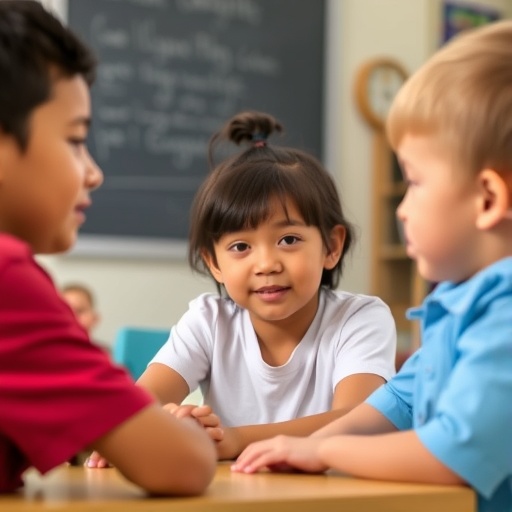
In the dynamic environment of the classroom, teacher feedback has long been recognized as a fundamental mechanism through which students gain insights into their learning progress and personal development. While this feedback undeniably shapes academic achievement, its broader impacts on students’ social and emotional skills remain less clearly understood. A groundbreaking study, soon to be published in the ECNU Review of Education, rigorously explores the multifaceted effects of teacher feedback on student social and emotional competencies, providing a nuanced perspective on how everyday classroom interactions influence holistic development.
This empirical investigation, conducted by a team of education researchers including Haili Cui, Mengmeng Zhang, and Xingyuan Gao, leverages data from the expansive Second Round of the Social and Emotional Skills Survey (SSES) 2023. The SSES, orchestrated by the Organisation for Economic Co-operation and Development (OECD), offers rich, internationally comparable data on young learners’ development. The study analyzed responses from an unprecedented sample size of 65,612 students drawn from 15 urban centers, spanning two critical developmental cohorts: children aged 10 and adolescents aged 15.
By focusing on these two distinct age groups, the study accounts for the possibility that perceptions of and reactions to teacher feedback may evolve as children mature. Such stratification is particularly beneficial in revealing how developmental stages intersect with cultural and educational variables to influence the reception and effectiveness of feedback practices. The researchers employed an advanced three-level hierarchical linear modeling approach to appropriately handle the nested data structure, ensuring statistically robust and contextually relevant findings.
One of the most significant technical innovations of the study was the classification of teacher feedback into three specific categories: affirmations of student strengths, constructive critique regarding areas needing improvement, and practical strategies for enhancing academic performance. This tripartite framework allows for a more granular examination of how feedback content might differentially impact students’ self-regulation, motivation, and emotional well-being, while also shedding light on pedagogical best practices.
Central to the analysis was the relationship between teacher feedback and the five dimensions of social and emotional skills as outlined in the OECD’s conceptual framework. These dimensions encompass a broad spectrum of competencies, including responsible decision-making, self-management, empathy, relationship skills, and social awareness. By operationalizing social-emotional development in this comprehensive manner, the study links classroom feedback directly to the mechanisms driving students’ social integration and emotional health.
The findings uncover compelling evidence that all three categories of teacher feedback are positively correlated with improved social and emotional skills. This discovery challenges traditional education paradigms that often prioritize corrective feedback exclusively geared towards academic outcomes. Instead, the data suggest that well-balanced feedback emphasizing strengths and actionable improvement strategies fosters not only cognitive achievement but also emotional resilience and social competence.
Further complexity emerges when examining how student background characteristics influence feedback perception. The analysis revealed that factors such as gender, age, immigrant status, and reading proficiency are significant predictors of how students perceive and internalize teacher feedback. Interestingly, the impact of immigrant status, socioeconomic background, and mathematical achievement appeared to differ meaningfully between younger and older students, highlighting the nuanced interaction between individual differences and developmental trajectories.
Perhaps most intriguingly, the study elucidates the mediating role of the teacher–student relationship in the feedback-social-emotional skills nexus. Beyond simply delivering information, teacher feedback operates as a social signal within the relational fabric of the classroom. When students perceive feedback as sincere and constructive, it can deepen their sense of respect and understanding, fostering a positive relational dynamic that in turn nurtures social and emotional growth.
This relational mechanism is crucial, as it suggests that the effects of feedback transcend mere academic guidance to fundamentally shape students’ perceptions of teacher support and trust. Consequently, classroom interactions imbued with thoughtful, personalized feedback can promote a supportive educational climate where social learning is seamlessly integrated with intellectual development.
From an applied perspective, these findings offer vital implications for educators and policy makers aiming to optimize student development. The study advocates for teacher training programs to emphasize the delivery of balanced feedback that not only identifies areas for enhancement but also celebrates student strengths and equips learners with concrete strategies for advancement. Such approaches may prove essential in cultivating student engagement and fostering comprehensive developmental outcomes.
Moreover, the evidence encourages rethinking school policies to prioritize social-emotional learning alongside traditional academic goals, recognizing that the two domains are inextricably linked through the quality and nature of teacher-student interactions. Educational leaders are urged to support practices and environments that promote respectful, constructive feedback cultures, which are foundational for sustained student well-being and success.
By drawing on a large-scale, international dataset, this study breaks new ground in the educational research landscape, illuminating the often-underappreciated social and emotional dimensions of teacher feedback. Its integration of technical modeling, developmental theory, and practical insights addresses a pressing gap in understanding how daily pedagogical practices influence holistic student development on a global scale.
As the educational community continues to grapple with the challenges of fostering socially and emotionally competent learners amid ever-evolving classroom dynamics, the knowledge generated by this research provides an evidence-based pathway forward. It underscores the transformative potential of teacher feedback when wielded thoughtfully, highlighting its power not only to elevate academic achievement but also to nurture the social and emotional fabric essential for lifelong learning and well-being.
Cite Scienmag News
Courtney Benton. (June 22, 2026). Teacher Feedback Boosts Development of Social and Emotional Skills, Study Finds. Scienmag. https://scienmag.com/teacher-feedback-boosts-development-of-social-and-emotional-skills-study-finds/
Courtney Benton. "Teacher Feedback Boosts Development of Social and Emotional Skills, Study Finds." Scienmag, 22 June 2026, https://scienmag.com/teacher-feedback-boosts-development-of-social-and-emotional-skills-study-finds/. Accessed 5 September 2026.
Courtney Benton. "Teacher Feedback Boosts Development of Social and Emotional Skills, Study Finds." Scienmag. June 22, 2026. https://scienmag.com/teacher-feedback-boosts-development-of-social-and-emotional-skills-study-finds/


