


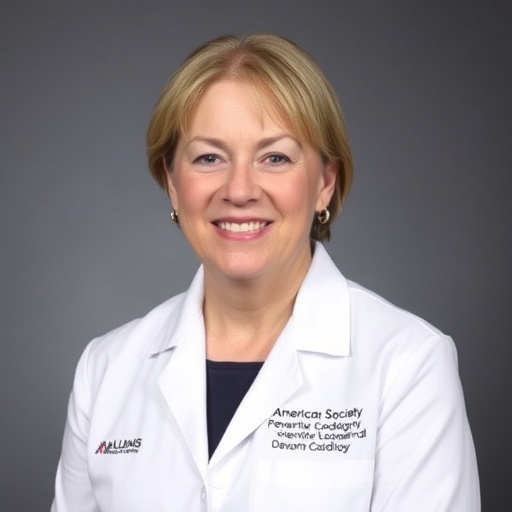
Fernandina Beach, Florida, August 3, 2026 — Katherine Wilemon, founder and chief executive officer of the Family Heart Foundation, has been named the 2026 Honorary Fellow Awardee by the American Society for Preventive Cardiology (ASPC). The award was presented during the ASPC 2026 Congress on Cardiovascular Disease Prevention in Scottsdale, Arizona, recognizing Wilemon’s work to improve the detection and treatment of inherited lipid disorders that can silently accelerate cardiovascular disease.
Wilemon is the first non-clinician to receive the ASPC Honorary Fellow Award. The distinction has traditionally honored physicians, clinical researchers and other medical professionals who have made significant contributions to preventive cardiology. Her selection reflects a broader shift in cardiovascular medicine, in which patient advocacy organizations increasingly influence research priorities, public education, clinical practice and health policy.
The Family Heart Foundation focuses primarily on familial hypercholesterolemia, or FH, and elevated lipoprotein(a), commonly written as Lp(a). FH is an inherited disorder that impairs the body’s ability to remove low-density lipoprotein cholesterol, or LDL cholesterol, from the bloodstream. As a result, people with FH can experience persistently high LDL levels from birth, exposing arteries to cholesterol for decades and increasing the risk of premature atherosclerosis, heart attack and stroke. Because the condition is genetic, close relatives may also be affected, often without realizing it.
Lp(a) represents a separate but related inherited cardiovascular risk. It is a cholesterol-containing particle whose concentration is determined largely by genetics and is generally not predicted accurately by standard cholesterol measurements. High Lp(a) can promote atherosclerosis and may contribute to the formation of blood clots and the calcification of heart valves. Unlike LDL cholesterol, Lp(a) levels are relatively stable throughout life, meaning that a single measurement can identify a long-term risk factor that may otherwise remain undetected.
Wilemon’s commitment to inherited heart disease prevention began after she experienced a heart attack at age 39. She later learned that she had not been diagnosed with FH and elevated Lp(a), conditions that could have signaled an earlier need for risk assessment and treatment. In 2011, she founded the organization now known as the Family Heart Foundation, initially as the FH Foundation, to help families avoid similar diagnostic delays and to encourage systematic screening for genetic cardiovascular risk.
During Wilemon’s 14 years of leadership, the foundation has established CASCADE FH, described as the only national registry dedicated to familial hypercholesterolemia. Patient registries collect standardized clinical information over time, allowing researchers to study how inherited disorders are diagnosed, treated and managed in real-world settings. These data can reveal gaps in care, measure the use of cholesterol-lowering therapies and help determine which interventions improve outcomes across different populations.
The organization has also developed FIND FH and FIND Lp(a), machine-learning models designed to help health systems identify people who may have undiagnosed inherited lipid disorders. Such tools can analyze patterns in electronic health records, including unusually high LDL cholesterol, premature cardiovascular events and family histories of heart disease. When integrated responsibly into clinical workflows, algorithmic screening may help physicians find at-risk patients who would not otherwise be referred for genetic evaluation or specialist care. The foundation says it is working with healthcare systems across the United States on implementation science and quality-improvement initiatives.
Through its Cholesterol Connect initiative, the Family Heart Foundation has provided free screening for high Lp(a) and LDL cholesterol to more than 40,000 people. The organization also operates a Care Navigation Center that supports thousands of individuals each month. Navigation services can help patients understand laboratory results, locate appropriate medical care, discuss treatment options with clinicians and assess whether family members should be screened. This family-centered approach is particularly important for FH because a first-degree relative of an affected person may have a substantially increased probability of carrying the same genetic condition.
“Through her work founding and leading the Family Heart Foundation, Katherine has transformed the landscape of care for people living with familial hypercholesterolemia and high Lp(a) as critical, actionable risk factors,” said David Maron, chair of the ASPC Congress. He credited Wilemon’s advocacy with giving patients a stronger voice, advancing policy change and encouraging earlier detection. Wilemon said the award belongs to the families, researchers, clinicians and partners working with the foundation to address systemic gaps in care. The organization estimates that more than 60 million Americans may be living with either elevated Lp(a) or familial hypercholesterolemia, underscoring the potential public-health impact of broader screening and prevention strategies.
The foundation is leading international coalitions aimed at developing systematic approaches for people with genetic cardiovascular risk while engaging healthcare professionals, policymakers and trained patient advocates. Its work illustrates how preventive cardiology is expanding beyond treatment after disease appears toward identifying biological risk decades earlier. For individuals with FH or high Lp(a), earlier recognition can create opportunities for sustained LDL reduction, family testing and closer monitoring before irreversible vascular damage occurs. Wilemon’s honorary fellowship therefore marks not only a personal achievement but also growing recognition that scientific progress in cardiovascular prevention depends on connecting laboratories, clinics, health systems and the communities they serve.
News Publication Date: August 3, 2026
Web References: https://familyheart.org/ ; https://thefhfoundation.org/our-mission/our-promise-and-impact
References: American Society for Preventive Cardiology 2026 Congress on Cardiovascular Disease Prevention; Family Heart Foundation announcement.
Cite Scienmag News
Frances Kline. (August 3, 2026). American Society for Preventive Cardiology Names Katherine Wilemon Honorary Fellow. Scienmag. https://scienmag.com/american-society-for-preventive-cardiology-names-katherine-wilemon-honorary-fellow/
Frances Kline. "American Society for Preventive Cardiology Names Katherine Wilemon Honorary Fellow." Scienmag, 3 August 2026, https://scienmag.com/american-society-for-preventive-cardiology-names-katherine-wilemon-honorary-fellow/. Accessed 4 September 2026.
Frances Kline. "American Society for Preventive Cardiology Names Katherine Wilemon Honorary Fellow." Scienmag. August 3, 2026. https://scienmag.com/american-society-for-preventive-cardiology-names-katherine-wilemon-honorary-fellow/


