

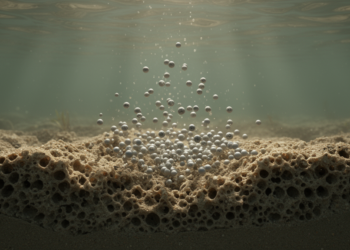
Baltic Sea Sediments Lose Their Power to Trap Sulfide as Hypoxia Persists
A 15-month Baltic Sea study found that recurring oxygen depletion progressively exhausts the sediment's capacity to retain sulfide, creating feedbacks ...
A 15-month Baltic Sea study found that recurring oxygen depletion progressively exhausts the sediment's capacity to retain sulfide, creating feedbacks ...

A new study links tumor hypoxia to ferroptosis suppression via SQOR-mediated coenzyme Q reduction, offering a potential strategy to overcome ...
New research reveals that hydrogen sulfide protects against diabetic vascular damage by modifying thioredoxin reductase 1, thereby suppressing inflammatory pathways ...
The distinction between sulfide and halide solid electrolytes begins at the level of their fundamental bonding chemistry, and this difference ...
New research reveals that the notorious gas hydrogen sulfide can protect neurons from reperfusion injury after stroke by suppressing RIPK1-driven ...
Researchers in Iran have shown that the oxidized form of the antipsychotic drug chlorpromazine acts as an efficient electrocatalytic mediator ...
A field study along a tropical nutrient and sulfide gradient shows that seagrasses reconfigure root exudates and compartmentalize microbial functions ...
A 96-day mesocosm study shows that sulfide produced by microbial sulfate reduction progressively dissolves vivianite in lake sediment, converting iron-bound ...
The race to build safer, more powerful batteries has brought a once-overlooked class of materials into the spotlight. Researchers from ...

Embark on a thrilling journey of discovery with Scienmag.com—your ultimate source for cutting-edge breakthroughs. Immerse yourself in a world where curiosity knows no limits and tomorrow’s possibilities become today’s reality!