

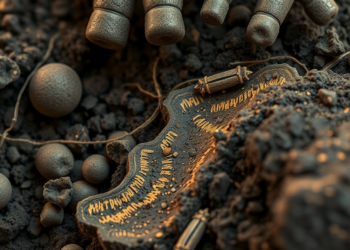
Soil microbes unlock toxic iron from exploded weapons residue, lab study finds
A laboratory simulation of Ukrainian battlefield soils shows that microbes accelerate the corrosion of exploded weapons residue, releasing pulses of ...
A laboratory simulation of Ukrainian battlefield soils shows that microbes accelerate the corrosion of exploded weapons residue, releasing pulses of ...

Iron-manganese (hydr)oxide-phosphate composites reduced bioavailable cadmium, lead, copper, and zinc in mining soil by up to 99.8 percent while rebuilding ...
Foliar sprays of the plant hormone 24-epibrassinolide help wheat tolerate polyethylene nanoplastic contamination by reprogramming root metabolism and restructuring the ...
Siderophore-producing bacterial consortia boosted grain iron by 88.2 percent and zinc by 131.9 percent in cowpea, offering a microbial route ...
A comprehensive new review argues that sustainable agriculture depends on stewarding the soil microbiome, from fungal food webs and mycorrhizal ...
A global analysis of 1,158 paired sites shows that afforestation and reforestation can jointly increase soil carbon storage and microbial ...
A 50-day pot experiment shows that three-dimensional NiFe-based layered double hydroxides suppress ryegrass growth, acidify soil, and erode fungal diversity ...
A three-year organic rice system in China's Panjin region produced grains richer in antioxidant flavonoids and vitamin E while reshaping ...
Researchers isolated 38 native bacterial strains from Brazilian coffee soils that fix nitrogen, solubilize phosphorus, and produce plant growth hormones, ...
The invisible world of bacteria, fungi, and other microorganisms living in the soil around plant roots may hold one of ...

Embark on a thrilling journey of discovery with Scienmag.com—your ultimate source for cutting-edge breakthroughs. Immerse yourself in a world where curiosity knows no limits and tomorrow’s possibilities become today’s reality!