

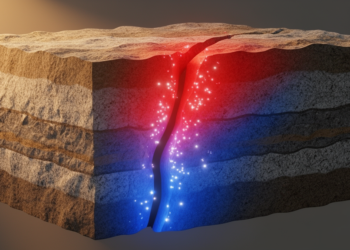
Stress Gradients, Not Just Stress Magnitudes, Could Transform Aftershock Forecasting
A new dynamic stress-evolution framework applied to the 2018 Hualien earthquake shows that stress gradients, rather than stress magnitudes, are ...
A new dynamic stress-evolution framework applied to the 2018 Hualien earthquake shows that stress gradients, rather than stress magnitudes, are ...

Italian researchers have developed a standardised workflow that cleans historical intensity data, simulates ground shaking from candidate faults, and statistically ...
A 45-year global analysis shows recorded earthquake disasters and economic losses have increased since 1980, while deaths relative to population ...
UC Riverside scientists developed a GPS-based algorithm that identified the exact section of Russia's Kamchatka subduction zone where a massive ...
Using nearly 29,000 records from 150 ocean-bottom stations in Japan's S-net network, researchers have built new prediction models showing that ...
A multi-method seismological study identifies locked, low b-value fault segments along the western Ordos margin as potential sources of future ...
More than 90% of magnitude-3-or-greater earthquakes triggered by fluid injection in Western Canada were preceded by detectable foreshocks, according to ...
Earthquake scientists have developed a revised computer-simulation method that could make it easier to predict how powerful thrust earthquakes shake ...
A mathematical model of how earthquake faults permanently deform the ground has revealed that the complex internal makeup of an ...
Earthquake science has long faced a difficult credibility test: forecasts must be made before earthquakes occur, then judged against observations ...

Embark on a thrilling journey of discovery with Scienmag.com—your ultimate source for cutting-edge breakthroughs. Immerse yourself in a world where curiosity knows no limits and tomorrow’s possibilities become today’s reality!