


Lidar Splits Light to Measure Hidden Ocean Plankton
A review in The Innovation details how high-spectral-resolution lidar on satellites like DQ-1 and EarthCARE now measures subsurface plankton and ...
A review in The Innovation details how high-spectral-resolution lidar on satellites like DQ-1 and EarthCARE now measures subsurface plankton and ...
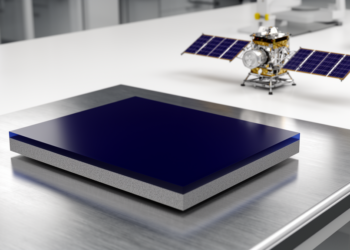
A new optical and thermal modeling framework identifies optimal perovskite/silicon tandem solar cell designs for satellites by simulating angle-dependent illumination ...
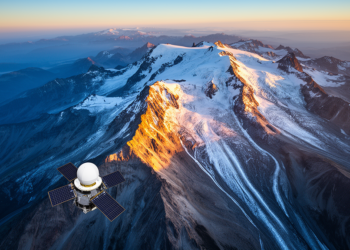
Mountains cover roughly a quarter of Earth's land surface, yet they remain among the most difficult places on the planet ...
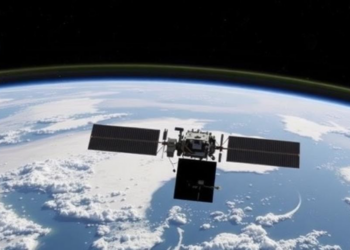
A yearlong Stanford-led experiment with 481 controlled methane releases found that dedicated methane-detecting satellites correctly identified nearly all plumes on ...

A new metaphorological analysis argues that today's calls for a second Copernican revolution in planetary thinking reproduce, rather than resolve, ...
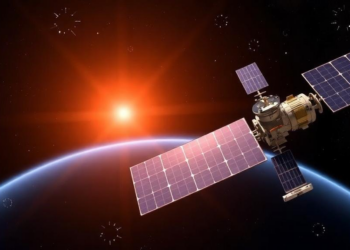
A University of Surrey review finds that modern silicon solar cells could cut satellite power costs by up to 90 ...

George Mason University's Edward Oughton will lead a $499,837 NSF-funded collaboration to build an AI-enabled, uncertainty-aware framework linking space weather ...
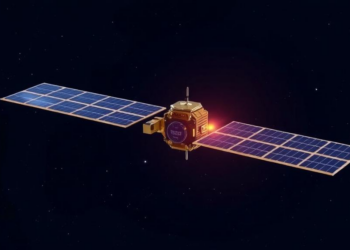
NTU Singapore's CRIMSON-1 satellite, its fourteenth orbital mission, is testing locally developed perovskite solar cells and onboard AI image processing ...

University of Surrey researchers argue in Nature Reviews Clean Technology that governments should make satellite Earth observation data a formal ...


Embark on a thrilling journey of discovery with Scienmag.com—your ultimate source for cutting-edge breakthroughs. Immerse yourself in a world where curiosity knows no limits and tomorrow’s possibilities become today’s reality!