


Venus Clouds May Hide a Powerful Light Absorber, New Model Suggests
A new radiative-transfer model quantifies how strongly the liquid inside Venus's cloud droplets must absorb ultraviolet and blue light, imposing ...
A new radiative-transfer model quantifies how strongly the liquid inside Venus's cloud droplets must absorb ultraviolet and blue light, imposing ...
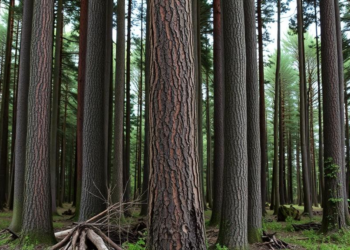
A new study modifies a widely used canopy radiation model so that forest stems and branches, long ignored as absorbers ...
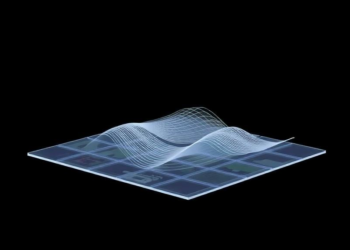
Researchers at the German Aerospace Center have developed a fast, stable, open-source numerical model that solves the linearized gravity-wave equations ...
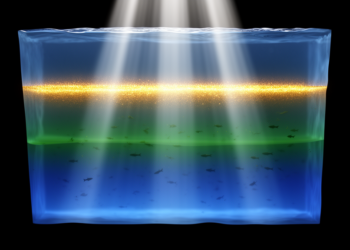
Scientists have integrated a high-resolution three-stream radiative transfer model into the NEMO ocean framework and demonstrated in the Black Sea ...
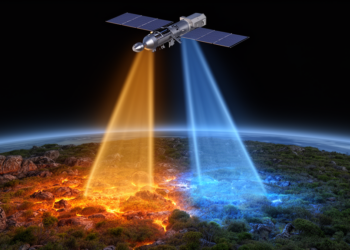
A new conditioning-controlled retrieval framework jointly derives broadband land surface temperature and emissivity from paired ground-based longwave irradiance measurements, achieving ...
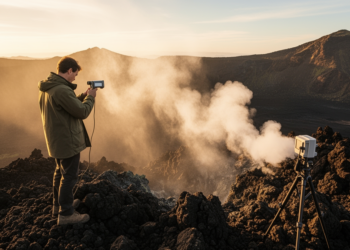
A new feasibility study shows that near-infrared FTIR spectroscopy of sky-scattered sunlight could enable continuous monitoring of volcanic halogen gases, ...
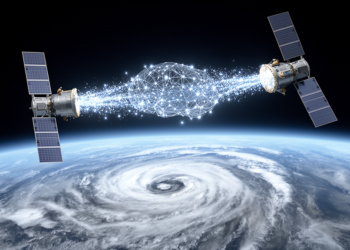
A new physics-constrained transfer learning framework lets AI retrieval algorithms trained on one weather satellite work accurately on another, improving ...
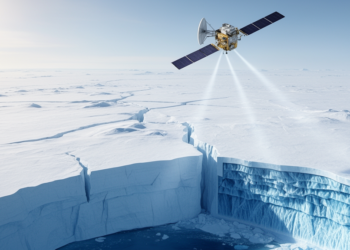
Researchers have combined fifteen years of ASCAT satellite radar data with firn and radiative transfer models to infer effective grain ...

A new open-source radiative transfer solver called EigenFlux combines mesh-based angular discretization, natural-reflectance stabilization, and eigenmode decomposition to remain accurate ...
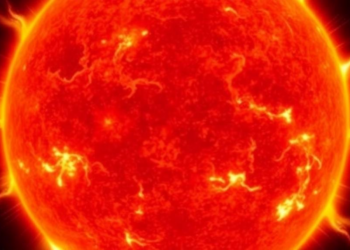
A new collection of studies shows that coronal rain, prominences, and solar eruptions are connected expressions of the same cooling ...


Embark on a thrilling journey of discovery with Scienmag.com—your ultimate source for cutting-edge breakthroughs. Immerse yourself in a world where curiosity knows no limits and tomorrow’s possibilities become today’s reality!